Aerosol Can Manufacturing Explained: How Aluminium and Tinplate Aerosol Cans Are Made
Guide Contents
- 1. Introduction
- 2. Aluminium vs Tinplate: Quick Comparison
- 3. Materials and core requirements
- 4. How aluminium aerosol cans are made
- 5. How tinplate aerosol cans are made
- 6. How cans arrive and integrate with the filling line
- 7. Regulatory and safety test requirements
- 8. Common manufacturing problems and how they are solved
- 9. Choosing aluminium or tinplate for your product
- 10. Conclusion
- 11. Frequently Asked Questions
- 12. External links
- 13. Related Articles
Introduction
Aerosol cans are engineered pressure vessels designed to contain product, propellant and a dispensing valve while withstanding internal pressure, handling and transport. The two dominant metal substrates in the aerosol industry are impact-extruded aluminium (typically two-piece) and tinplate steel (two- or three-piece constructions). Understanding how each is made, finished and tested is essential for product compatibility, safety and reliable filling-line operation. See our guide to how aerosol cans work for how the finished can interacts with the valve and propellant once filled.
Aluminium vs Tinplate: Quick Comparison
| Aspect | Aluminium | Tinplate |
|---|---|---|
| Raw Material | Aluminium alloys | Electrolytically-tin-plated mild steel sheet |
| Forming Method | Impact extrusion from a slug into a seamless two-piece body | Sheet forming, welded/three-piece or drawn-and-ironed two-piece bodies |
| Mechanical Properties | Light weight, good dent resistance | Different strength characteristics based on format |
| Surface Treatment | Specific corrosion protection and barrier coatings | Robust internal coatings for corrosion control |
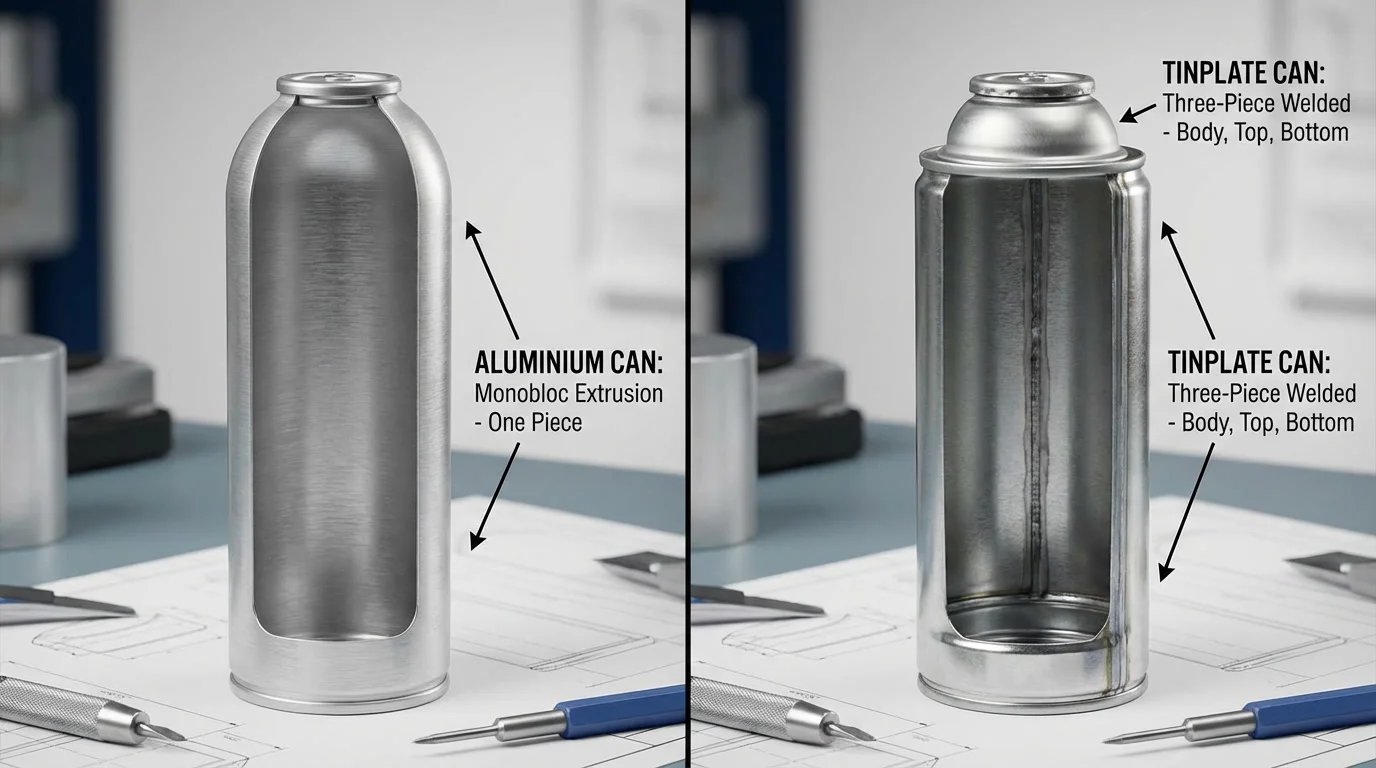
Aluminium and tinplate differ in raw material, forming method, mechanical properties and surface treatment requirements. Aluminium is most commonly formed by impact extrusion from a slug into a seamless two-piece body; tinplate cans are formed from sheet steel and may be manufactured as welded/three-piece or drawn-and-ironed two-piece bodies. These differences drive decisions on tooling cost, corrosion protection, barrier coatings and filling-line handling.
Key takeaway: aluminium → impact extrusion, seamless two-piece; tinplate → sheet forming, two- or three-piece options.
Key takeaway: material choice affects weight, dent resistance, corrosion control and cost.
Materials and core requirements
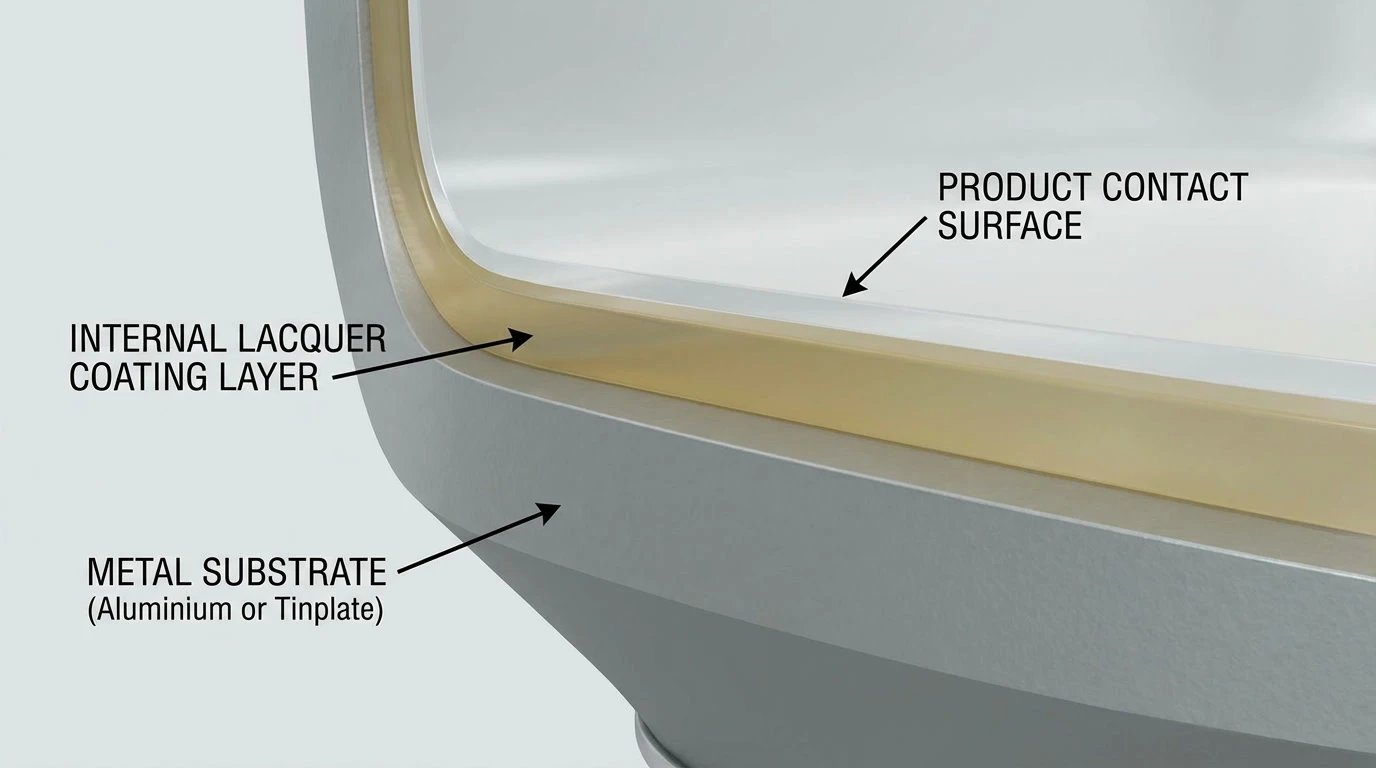
Metal aerosol cans must meet mechanical strength and chemical-compatibility requirements: yield/ductility for drawing/necking, consistent wall thickness, and substrate cleanliness for coatings to adhere. Internal coatings (lacquers/epoxy/polymer layers) are applied to prevent metal–product interactions and corrosion, and external inks/varnishes provide decoration and abrasion resistance.
Typical aluminium feedstock: punched slugs of aluminium alloys selected for impact extrusion.
Typical tinplate feedstock: electrolytically-tin-plated mild steel sheet for forming and seaming.
Coatings: internal lacquers (epoxy/phenolic/polyester chemistries) and external primers/inks are standard to prevent corrosion and migration. See our analysis of aerosol can corrosion causes and control for the electrochemical mechanisms these coatings are designed to prevent.
How aluminium aerosol cans are made
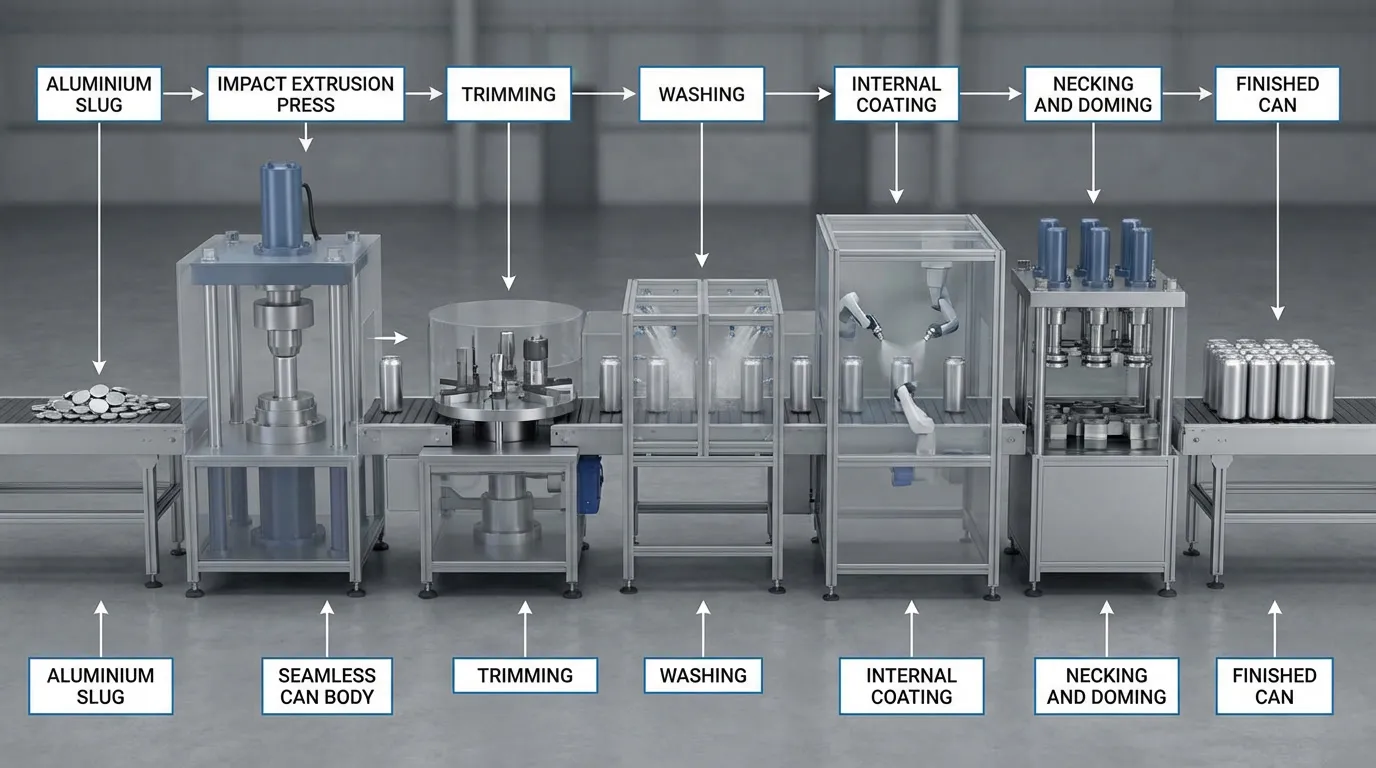
Aluminium aerosol cans are usually produced by impact extrusion from a circular slug. Impact extrusion forms a seamless body with good strength and no longitudinal seam; subsequent operations include trimming, washing, internal coating curing, necking (if required), printing/varnishing and end (dome) application. Each stage is controlled to tight dimensional and surface-quality tolerances because defects reduce burst strength and increase leak risk.
Slug preparation: discs are blanked from coil or cast and cleaned prior to extrusion.
Impact extrusion: a die forces the slug to flow and form a seamless can body and shoulder in one stroke.
Trimming & washing: the formed cup is trimmed to length and washed to remove oils/particles before coatings.
Internal lacquer application and cure: protective polymer coatings are applied and polymerized/cured at controlled temperatures to ensure adhesion and chemical resistance.
Necking, doming and final dimensional checks: the can mouth is formed to accept standard valve sizes; dome and base geometry are verified for pressure performance.
Quality control: wall thickness, ovality, burst/burst-pressure sampling, visual inspection and leak testing (water bath/pressure decay) are applied. Can manufacturing is one part of the broader discipline covered in our aerosol technology and formulations resource, which addresses how component engineering interacts with formulation chemistry.
How tinplate aerosol cans are made
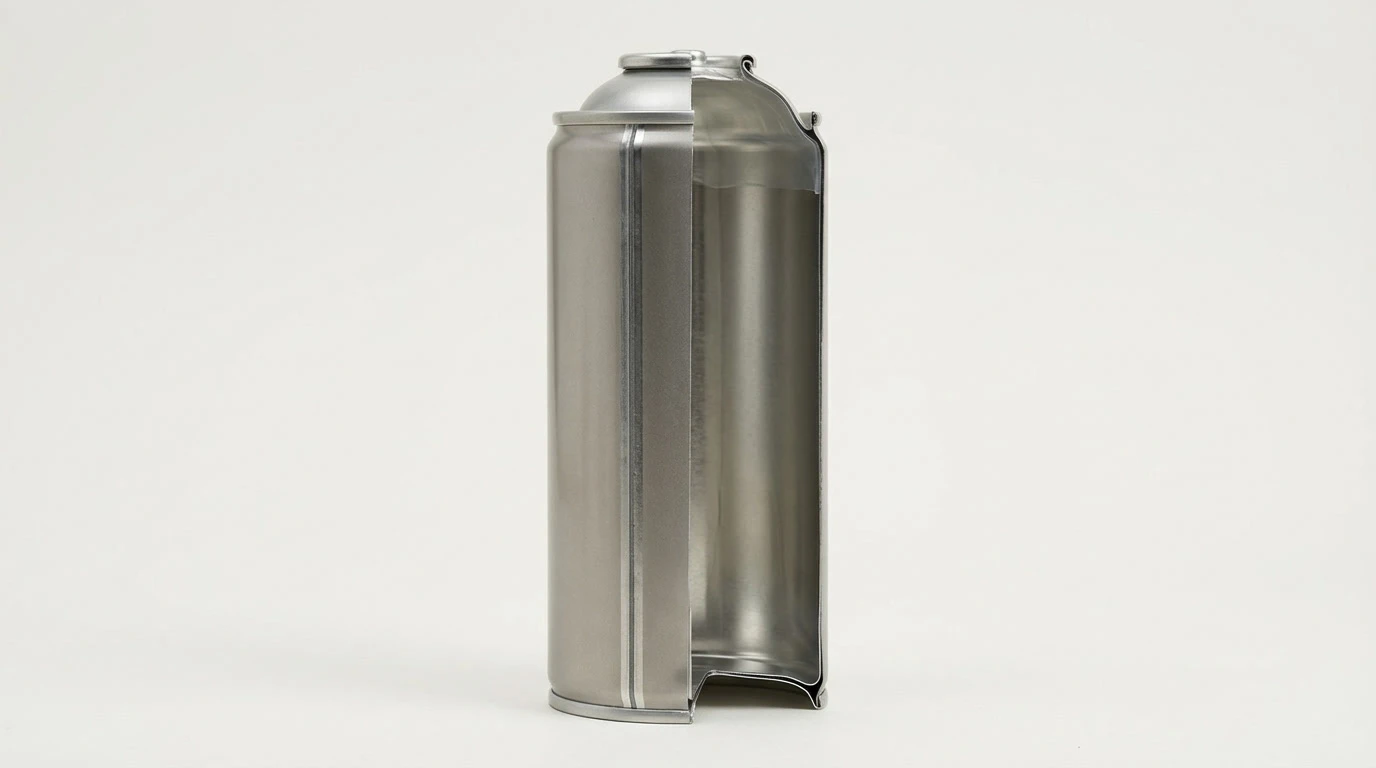
Tinplate aerosol cans originate from sheet steel that is tin-plated (electrolytic). Two major construction methods exist: two-piece (drawn-and-ironed or deep-drawn; seamless body + end) and three-piece (body formed by rolling and seam-welding, with separate top and bottom ends). After forming, cans are cleaned, internally coated, printed and seamed or fitted with ends; welded or mechanically seamed joints are inspected for hermeticity.
Sheet cutting and body forming: sheets or coils are cut, blanked and formed by drawing or bending+welding depending on design.
Welding / seaming (three-piece): longitudinal seams are welded or lap-seamed and finished; end seams are double-seamed.
Internal coating: an internal lacquer is applied and cured to isolate the product from the steel substrate and tin layer.
Printing, varnish and external finishing: inks and protective varnishes provide brand appearance and abrasion resistance.
Inspection and leak tests: dimensional checks, seam integrity tests and pressure/leak testing are performed before shipment to fillers. See our two-part analysis of formulation and coating-driven can corrosion for how coating selection interacts with the specific formulation the tinplate can will hold.
How cans arrive and integrate with the filling line
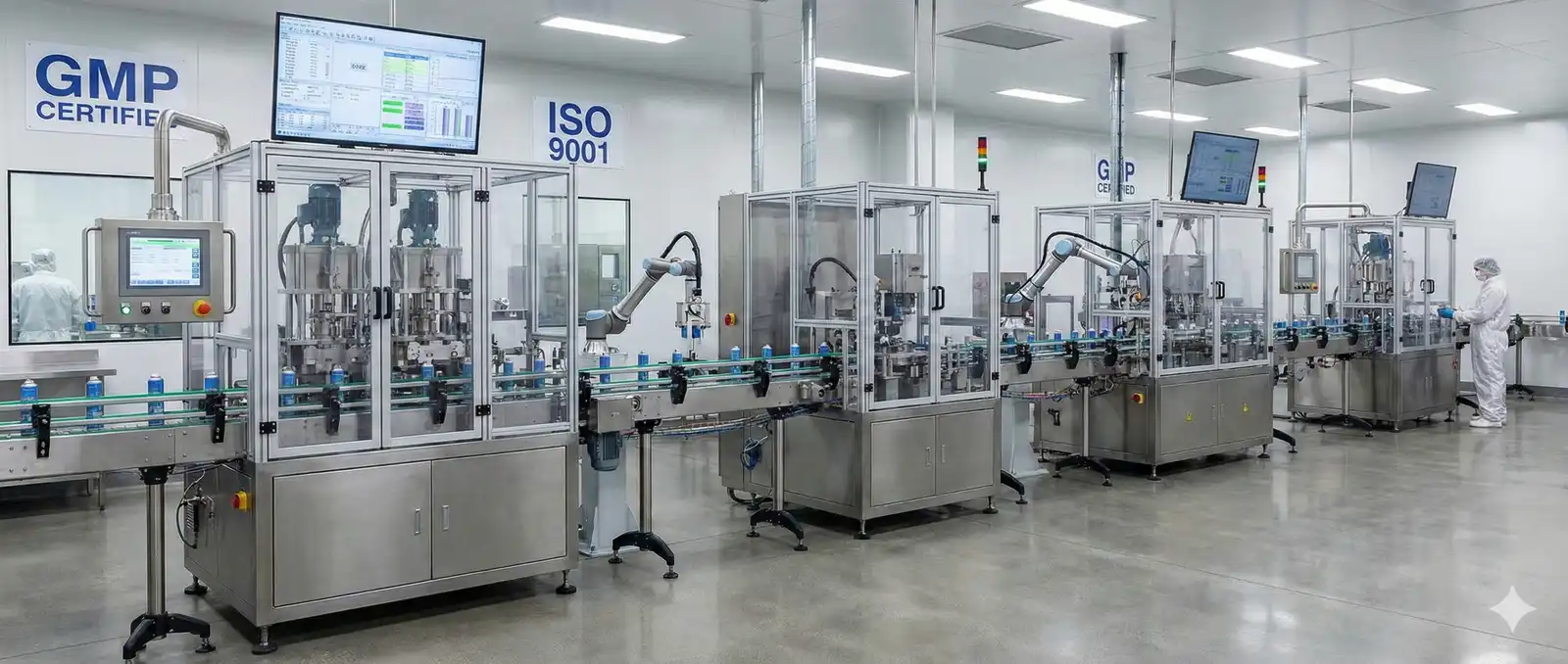
Finished aerosol cans are delivered to filling plants either as packed bulk (packed in trays/pallets) or on drums/rolls for specialized lines. On a filling line, cans are de-palletized, oriented, washed/dried as needed, weighed or flow-filled, gassed/pressurized or fitted with liquid charge, then valves are crimped and final inspections (leak, weight, visual) are performed. Proper can geometry and valve compatibility are essential to avoid crimp failure or leakage during filling and transport.
Can feeding & orientation systems present cans to the filling turret reliably.
Filling: volumetric or mass filling systems (for product charge) followed by propellant gassing or combined dosing depending on system.
Valve crimping: standard crimp sizes require correct flange dimensions and crimp tooling to form the hermetic seal.
Final checks: weight checks, pressure tests, water bath leak tests and visual inspections before packing. See our complete walkthrough of how contract aerosol filling works for the full outsourced filling workflow these cans feed into.
Regulatory and safety test requirements
Aerosol containers are regulated as non-refillable pressure vessels in many jurisdictions; in the U.S. common specifications are DOT 2P and 2Q which prescribe construction and performance tests. Industry guidance (FEA, national regulators) requires routine burst/pressure testing, leak testing and safe handling of flammable ingredients. Fillers and can manufacturers perform bench and destructive testing to confirm containers meet rated working pressure and burst thresholds, using standardized test methods maintained by ASTM International. See our guide to aerosol can safety and burst testing for how these pressure and DOT compliance calculations are performed.
DOT specifications: 2P/2Q classifications define materials and test pressure ranges for disposable aerosol containers.
Typical tests: normal-temperature pressure test, high-temperature pressure test, burst test, seam integrity and leak detection (water bath/pressure decay).
Industry guidance: FEA’s safety guidelines and national transport regulations govern flammable propellant handling, facility design and emergency planning.
Common manufacturing problems and how they are solved
Manufacturing and filling lines can experience defects that affect safety and shelf life — examples include coating adhesion failure, can paneling (buckling), crimp leakage, and seam defects. Each issue has specific root causes (material quality, forming speeds, coating cure, crimp tooling mismatch) and standard corrective actions such as process parameter adjustments, tooling maintenance, and enhanced inspection plans.
Coating adhesion failures → check substrate cleanliness, bake profiles and coating chemistry.
Paneling / buckling → ensure correct wall thickness, dome geometry and filling pressures are within rated limits.
Crimp leakage → verify valve flange dimensions, crimp tooling condition and crimp height/roll pressure.
Seam defects (tinplate) → non-destructive seam inspection and destructive seam testing to root-cause welding/rolling issues. See our detailed walkthrough of crimping, gassing, and leak detection for how crimp tooling condition and flange dimensions are verified on the filling line.
Choosing aluminium or tinplate for your product
Selecting the right can depends on product chemistry, pressure requirements, cost and branding. Aluminium offers lighter weight and seamless bodies (good for higher finish and certain product compatibilities); tinplate provides established supply chains and cost advantages for some formats but requires robust internal coatings for corrosive products. Choose based on compatibility testing (chemical resistance), mechanical performance and total landed cost including coating and filling adjustments. See our detailed cost and performance breakdown in aluminium vs tinplate aerosol cans for a full manufacturing and pressure-rating comparison.
Aluminium is often preferred where weight reduction, corrosion resistance with correct coatings, or premium appearance is desired.
Tinplate is commonly used where two- or three-piece formats, different seam/forming options or specific price points make sense.
Always run compatibility tests (coating × product), pressure lifecycle tests and accelerated aging for your specific formulation.
Conclusion
Aluminium and tinplate aerosol cans are produced by distinct, well-established industrial processes (impact extrusion vs sheet forming/seaming) and require specific finishing, coating and testing regimes to ensure safety and product compatibility. For filling-line operators and product developers, close coordination between can choice, valve specification and filling process parameters is essential to safe, reliable, and cost-effective aerosol production.
Final checklist: verify substrate and coating compatibility, test crimp and pressure performance, and follow applicable regulatory testing before commercial runs.
Frequently Asked Questions
How are aluminium aerosol cans manufactured?
Aluminium aerosol cans are produced by impact extrusion, in which a die forces a punched aluminium slug to flow into a seamless two-piece body and shoulder in a single stroke. The formed cup is then trimmed, washed, internally lacquer-coated and cured, necked to accept a standard valve, and dimensionally checked before printing and dispatch.
How are tinplate aerosol cans manufactured?
Tinplate aerosol cans are formed from electrolytically tin-plated mild steel sheet using either a two-piece drawn-and-ironed process or a three-piece construction with a rolled, seam-welded body and separately fitted top and bottom ends. Cans are then internally coated, printed, and inspected for seam integrity before shipment to fillers.
What is the difference between aluminium and tinplate aerosol cans?
Aluminium cans are formed by impact extrusion into a seamless two-piece body, offering lower weight and good dent resistance, while tinplate cans are formed from sheet steel into two- or three-piece constructions with different strength characteristics depending on format. Material choice affects weight, corrosion behavior, cost, and the internal coating strategy required for product compatibility.
Why do aerosol cans need internal lacquer coatings?
Internal lacquer coatings — including epoxy, phenolic, or polyester chemistries — isolate the metal substrate from the product formulation to prevent corrosion and metal-product interaction. Coating adhesion depends on substrate cleanliness and cure temperature, and coating failure is a common root cause of can corrosion and product contamination.
What safety tests do aerosol cans undergo before filling?
Aerosol containers are tested for dimensional accuracy, seam integrity, and pressure performance, including normal-temperature and high-temperature pressure tests, burst testing, and leak detection by water bath or pressure decay. In the United States, disposable aerosol containers are commonly built to DOT 2P or 2Q specifications, which define construction materials and test pressure ranges.
What causes crimp leakage in aerosol can manufacturing?
Crimp leakage commonly results from mismatched valve flange dimensions, worn crimp tooling, or incorrect crimp height and roll pressure during the filling line's valve-attachment step. Verifying flange dimensions against crimp tooling specifications and maintaining tooling condition are standard corrective measures.
External links
Need Technical Support for Aerosol Formulations?
Partner with Global Aerosols to audit, scale up, and troubleshoot your aerosol chemistry, canister pressure calculations, filling lines, and safety systems.
Email: consulting@globalaerosols.com
Website: https://www.globalaerosols.com
Phone: +91 9819548320 +91 8169102990
About the Specialist
Absar Khan is the principal consultant and chemical formulation architect at Global Formulation. He possesses cross-disciplinary engineering expertise spanning aerosol gassing systems, pharmaceutical manufacturing, sterile injectables, cosmetics, and green chemical plant setups. Absar leads scientific and engineering advisory teams supporting manufacturers globally in technology selection, GMP layouts, validation frameworks, and regulatory strategies.
LinkedIn Portfolio: Connect with Absar Khan on LinkedIn