How Contract Aerosol Filling Works | Complete Guide for Startups & Brands
Guide Contents
- 1. What Is Contract Aerosol Filling?
- 2. Contract Filling vs In-House Aerosol Manufacturing
- 3. Why Brands Choose Contract Aerosol Filling
- 4. The Complete Contract Aerosol Filling Workflow
- 5. Key Equipment Used in Contract Aerosol Filling Plants
- 6. Regulatory and Compliance Requirements
- 7. Costs Involved in Contract Aerosol Filling
- 8. Common Problems and Failure Points
- 9. How to Choose the Right Contract Aerosol Filler
- 10. Contract Aerosol Filling in India vs Global Markets
- 11. Is Contract Aerosol Filling Right for Your Business?
- 12. Frequently Asked Questions
- 13. External Technical References
- 14. Learn More About the Aerosol Ecosystem
- What Is Contract Aerosol Filling?
- Contract Filling vs In-House Aerosol Manufacturing
- Why Brands Choose Contract Aerosol Filling
- The Complete Contract Aerosol Filling Workflow
- Regulatory and Compliance Requirements
- Costs, Risks, and Failure Points
- Choosing the Right Contract Aerosol Filler
- India vs Global Aerosol Manufacturing
- Frequently Asked Questions
Contract aerosol filling is a specialized manufacturing model where a brand outsources aerosol can filling, sealing, and often packaging to a licensed, compliant filling facility. This approach allows startups and established brands to bring aerosol products to market without investing in high-risk infrastructure, hazardous area compliance, and regulatory approvals.
Because aerosols involve pressurized systems, flammable propellants, and regulated transport, contract filling is not merely outsourcing. It is a structured transfer of operational risk to facilities designed, licensed, and audited specifically for aerosol manufacturing.
For entrepreneurs, students, and product developers, understanding how contract aerosol filling actually works is essential. Many aerosol project failures occur not due to marketing weakness, but because of incorrect assumptions around formulation compatibility, filling processes, regulatory ownership, and commercial constraints.
What Is Contract Aerosol Filling?
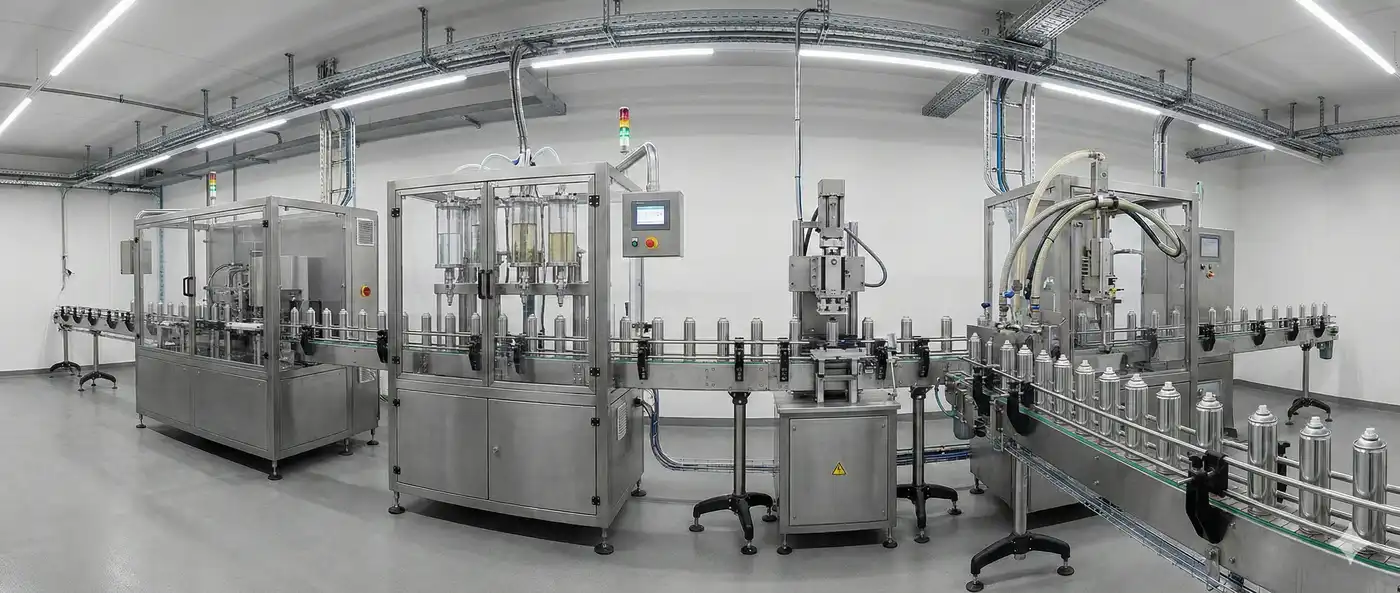
Contract aerosol filling refers to the use of a third-party facility that is legally licensed and technically equipped to fill aerosol products under pressure. These facilities operate dedicated filling lines capable of handling liquefied gas propellants, compressed gases, and non-flammable systems while meeting safety, quality, and regulatory requirements.
Unlike standard contract manufacturing, aerosol filling demands specialized infrastructure such as explosion-proof zones, controlled propellant storage, crimping systems, leak detection equipment, and trained operators. These requirements make aerosol filling a regulated industrial activity rather than a simple packaging service. For a broader technical foundation, see our Aerosol Manufacturing 101 guide, which covers formulation, propellants, and safety systems across the full manufacturing process.
- Licensed and audited aerosol filling plants
- Operation under pressure vessel and hazardous area regulations
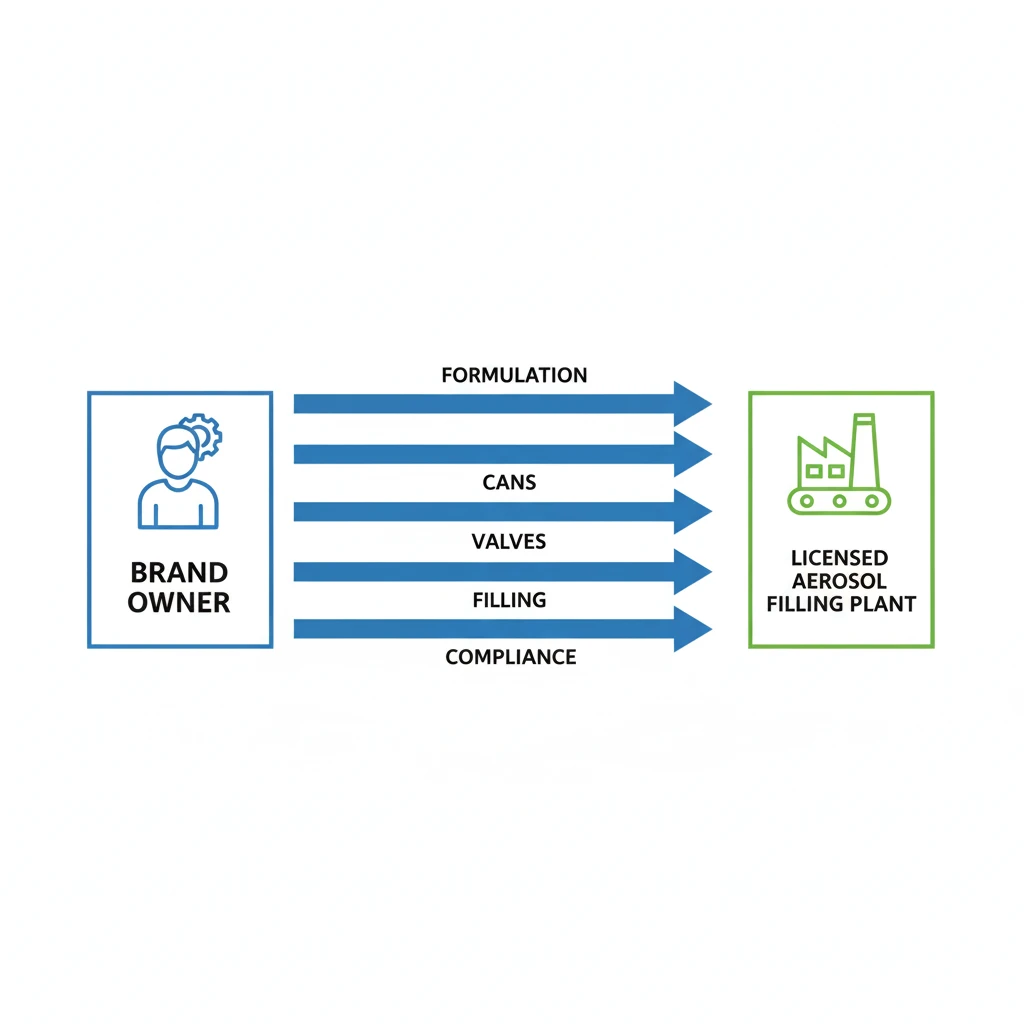
- Clearly defined responsibility split between brand owner and filler
- Batch-controlled manufacturing with full traceability
Contract Filling vs In-House Aerosol Manufacturing
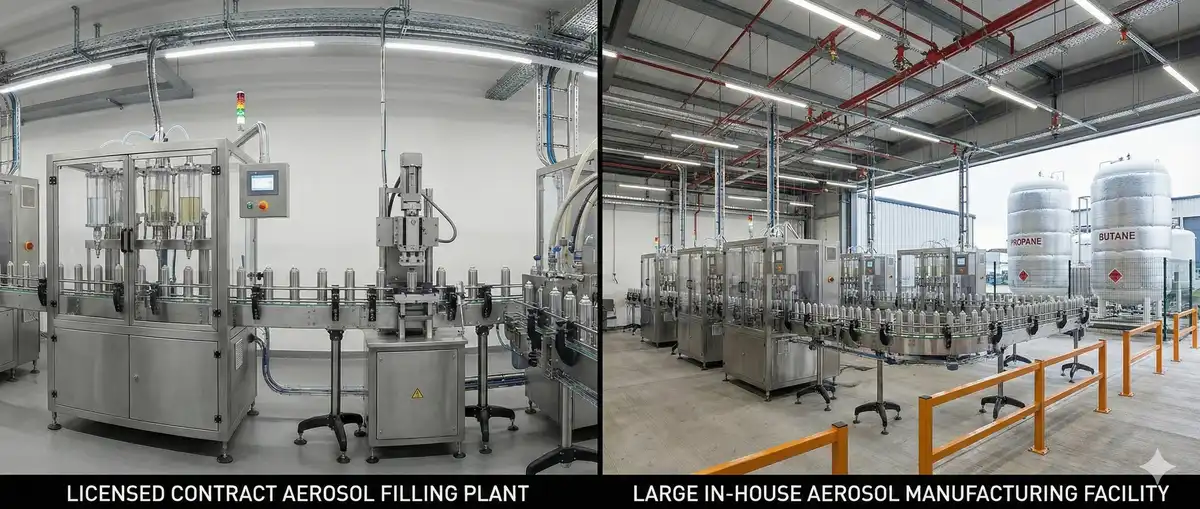
In-house aerosol manufacturing requires substantial capital investment and extended regulatory lead times. Facilities must comply with fire safety norms, explosive atmosphere zoning, propellant storage regulations, and environmental controls, all of which significantly increase project complexity.
Contract filling shifts this burden to an established operator. However, it does not eliminate responsibility for product safety or regulatory compliance; it redistributes responsibility based on legal agreements and jurisdictional rules. This decision sits within the broader discipline covered in our aerosol technology and formulations resource, which addresses how process, packaging, and formulation choices interact across the full product lifecycle.
| Aspect | Contract Filling | In-House Manufacturing |
|---|---|---|
| Capital Investment | Low to Moderate | Very High |
| Licensing & Approvals | Existing facility licenses | Full licensing required |
| Time to Market | Fast | Slow |
| Operational Risk | Shared | Fully owned |
Why Brands Choose Contract Aerosol Filling
Aerosol products involve higher safety and compliance risk than conventional liquid or solid products. Contract filling allows brands to leverage existing expertise, validated equipment, and trained personnel without exposing themselves to hazardous operational environments.
From a commercial perspective, contract filling is a strategic manufacturing decision rather than a shortcut. Brands that underestimate aerosol complexity often encounter leakage issues, regulatory delays, or post-market failures. Evaluating the decision correctly is one reason many founders bring in outside expertise — see our guide on choosing the right aerosol product consultant for how to vet technical partners before committing to a filler.
- Avoidance of high-risk plant investment
- Faster regulatory-ready market entry
- Access to proven filling technology
- Reduced safety and compliance exposure
The Complete Contract Aerosol Filling Workflow
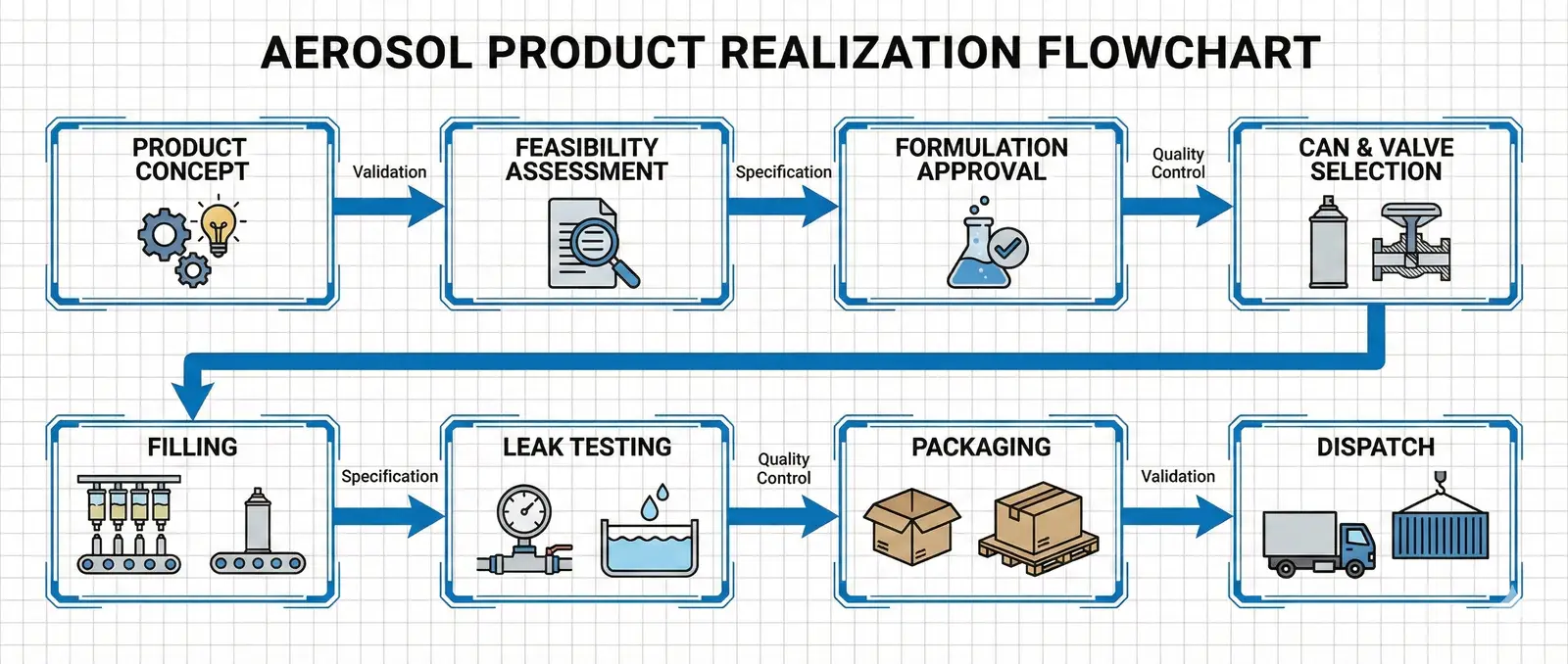
Contract aerosol filling follows a defined industrial sequence designed to manage pressure, chemical compatibility, safety, and regulatory traceability. Each step is critical; skipping or compressing stages significantly increases the risk of technical failure and legal liability.
Product Concept and Feasibility Assessment
Every aerosol project begins with a feasibility review. The contract filler evaluates whether the proposed product can be safely manufactured using available propellants, valve systems, can materials, and filling technology.
- Product category and hazard classification
- Propellant type and pressure range
- Can material and internal coating compatibility
Formula Ownership and Responsibility Models
Contract aerosol filling does not automatically include formulation development. Formula ownership determines intellectual property control, regulatory liability, and confidentiality obligations throughout the product lifecycle.
- Brand-owned formulation supplied to the filler
- Filler-owned base formulation licensed to the brand
- Jointly developed formulations under confidentiality agreements
Raw Material and Compatibility Verification
Before filling, all raw materials are evaluated for compatibility with aerosol cans, valves, seals, and propellants. Many aerosol failures originate from overlooked chemical interactions rather than filling defects.
- Solvent interaction with internal can coatings
- Elastomer compatibility with active ingredients
- Stability under pressurized conditions
Can, Valve, and Actuator Selection
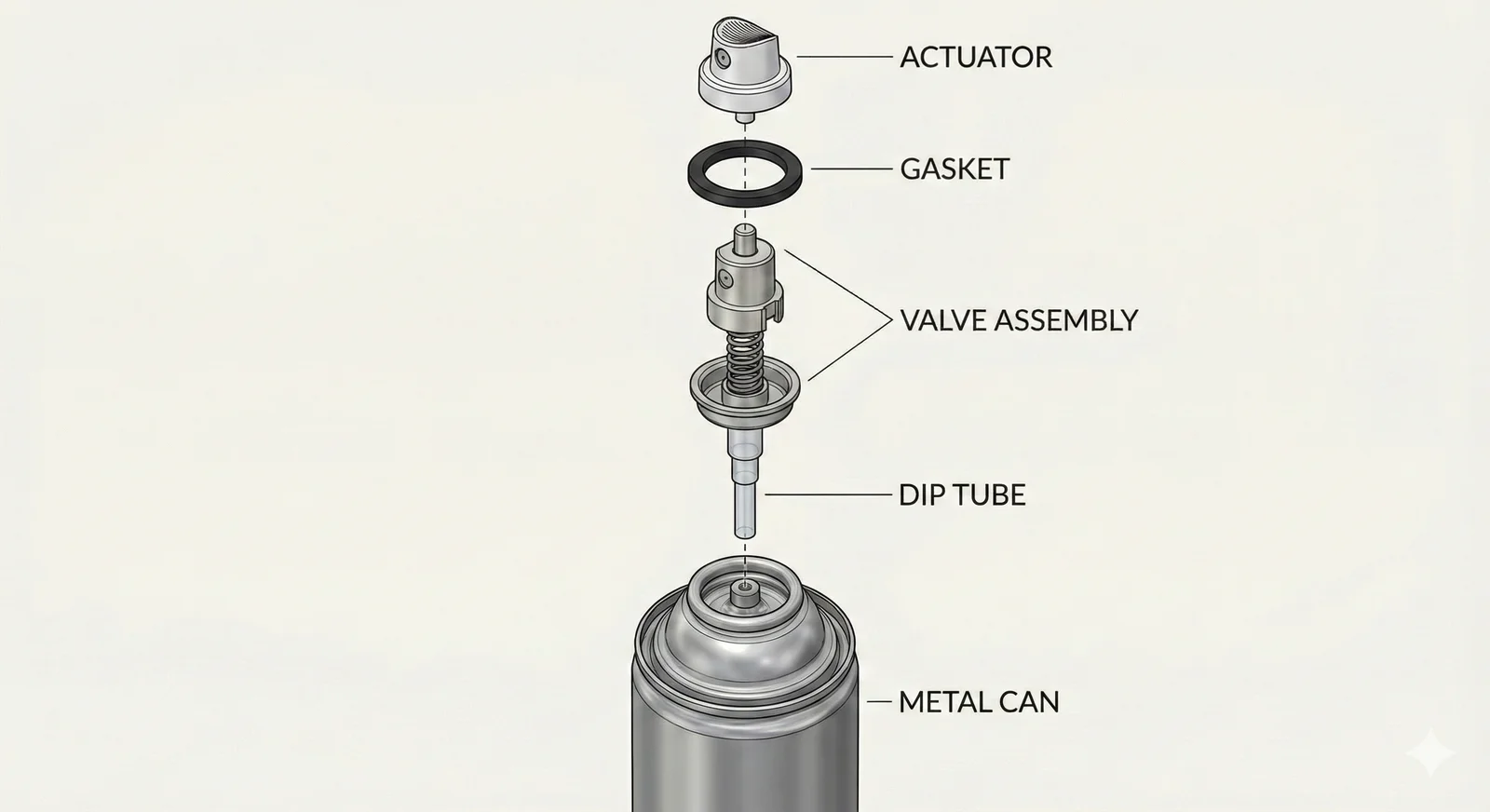
Aerosol performance is highly dependent on component selection. Valves and actuators control spray rate, pattern, and pressure release, making their selection a functional engineering decision rather than a cosmetic choice. See our guide to aerosol actuator design for how orifice geometry and actuator type interact with the formulation and propellant to determine spray output.
- Viscosity and solids content of formulation
- Desired spray pattern and discharge rate
- Pressure rating and crimp dimensions
Filling Line Operations
Aerosol filling is conducted on dedicated filling lines designed for controlled liquid filling and propellant charging. The sequence and method depend on whether the propellant is liquefied gas or compressed gas.
- Liquid product filling
- Valve placement and crimping
- Propellant filling under controlled pressure
Leak Testing, Weight Checks, and Coding
Every filled aerosol must pass leak detection and weight verification checks to ensure safety and consistency. These are mandatory quality control steps and form part of regulatory compliance. See our walkthrough of crimping, gassing, and leak detection for how these four filling-line stages work together to catch defects before a batch ships.
- Hot water bath or electronic leak testing
- Gross and net weight verification
- Batch coding and traceability marking
Final Packaging and Dispatch
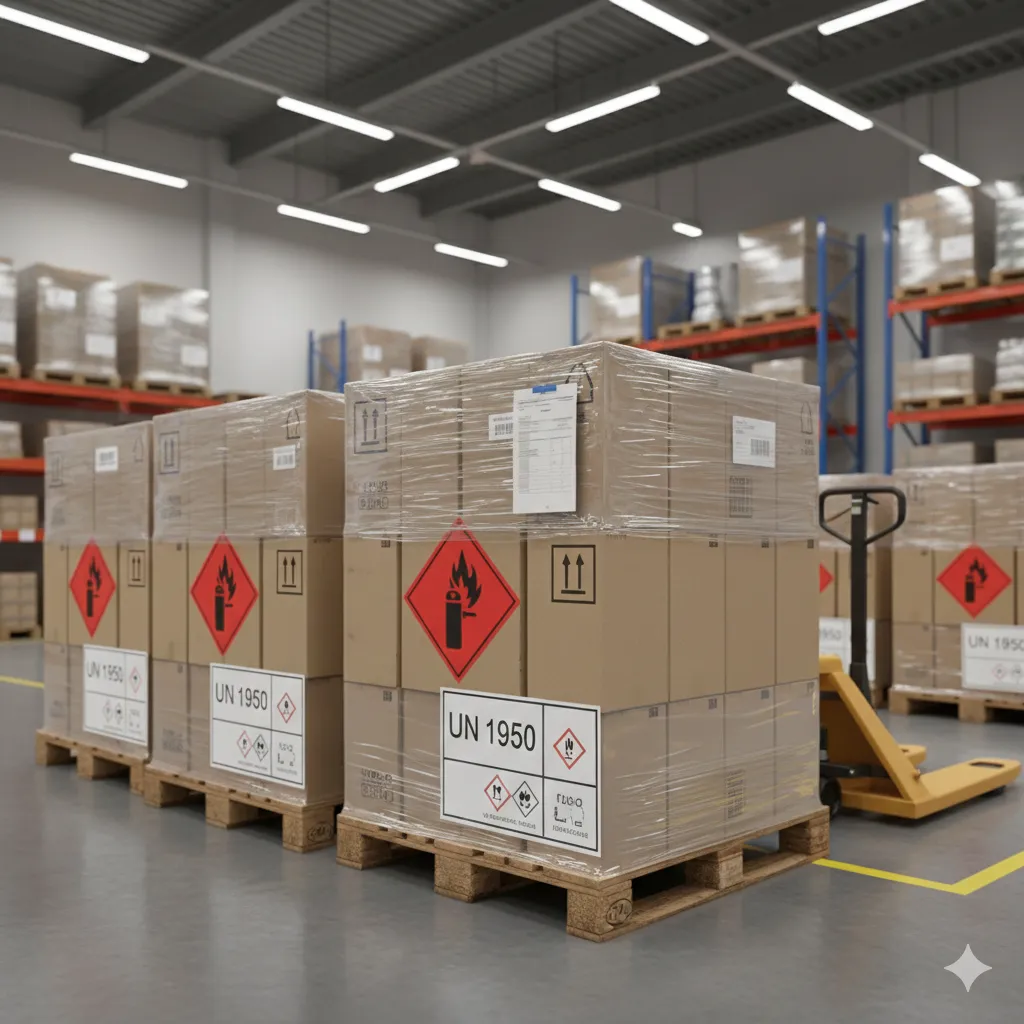
After approval, aerosols are packed into compliant cartons and prepared for regulated transport. Aerosols are classified as dangerous goods, and packaging must meet transport regulations. See our guide to DOT and UN aerosol transport regulations for the hazmat classification and packaging requirements that govern road, sea, and air shipment.
- UN-approved outer packaging
- Hazard labeling and marking
- Transport documentation compliance
Key Equipment Used in Contract Aerosol Filling Plants
Contract aerosol filling plants are specialized industrial environments. Equipment selection directly impacts safety, throughput, and product consistency.
- Liquid filling machines
- Valve crimping systems
- Propellant gassing units
- Leak testing equipment
- Explosion-proof ventilation systems
Regulatory and Compliance Requirements
Aerosols are regulated due to internal pressure, flammability risk, and transport hazards. Compliance applies to both the contract filler and the brand owner, depending on jurisdiction and contractual structure. In the United States, hazmat transport of aerosols falls under PHMSA hazardous materials regulations, which set the packaging, labeling, and documentation requirements a contract filler and brand owner must jointly satisfy.
| Region | Key Regulations |
|---|---|
| India | PESO, Gas Cylinder Rules, Legal Metrology |
| Global | ADR, IMDG, IATA, VOC and environmental regulations |
Costs Involved in Contract Aerosol Filling
Contract aerosol filling costs depend on volume, product complexity, compliance requirements, and supply chain structure. Pricing must be evaluated holistically rather than on per-unit filling charges alone.
- Filling and processing charges
- Minimum order quantities
- Packaging and component costs
- One-time tooling or setup charges
Common Problems and Failure Points
Most aerosol failures arise from incorrect assumptions rather than equipment malfunction. Understanding known failure modes is critical for risk mitigation. See our detailed breakdown of why aerosol cans leak for how propellant pressure, valve seals, and crimp defects combine to cause the leakage failures brands most commonly encounter.
- Valve leakage due to incompatibility
- Poor spray performance
- Pressure loss during shelf life
- Regulatory non-compliance during transport
How to Choose the Right Contract Aerosol Filler
Selecting the right contract filler requires evaluating technical capability, regulatory maturity, and transparency rather than focusing solely on quoted cost.
- Relevant product category experience
- Compliance and audit history
- Confidentiality and IP protection practices
- Problem-solving and technical support capability
Contract Aerosol Filling in India vs Global Markets
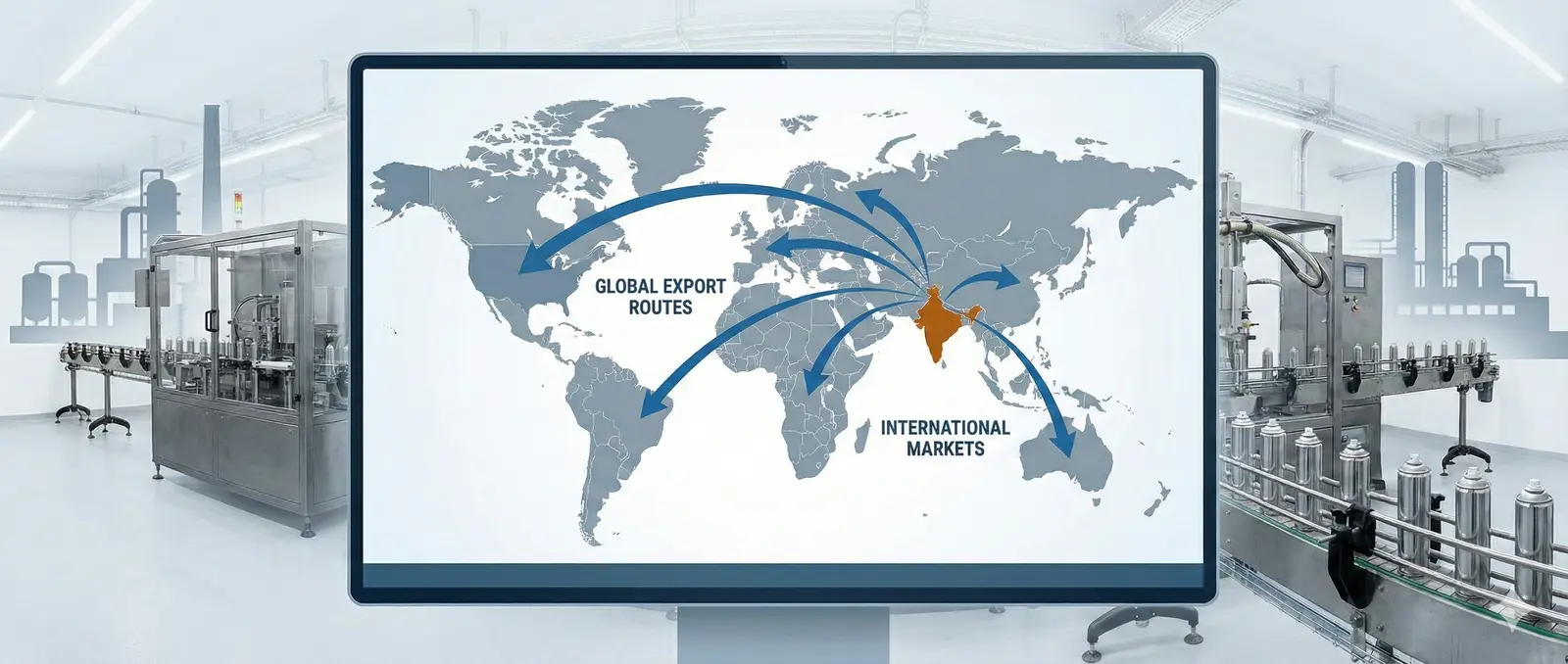
India offers cost and scalability advantages, but export-oriented brands must ensure international compliance readiness. Manufacturing location does not override destination country regulations. Brands exporting into the EU should review our guide to the EU Aerosol Dispensers Directive for the pressure testing, labeling, and CE marking requirements that apply regardless of where the product is filled.
- Lower manufacturing costs in India
- Export compliance requirements
- Documentation and transport readiness
Is Contract Aerosol Filling Right for Your Business?
Contract filling is ideal for brands prioritizing speed, safety, and capital efficiency. As volumes increase, in-house manufacturing may become commercially viable.
- Startups and early-stage brands
- Specialized or seasonal aerosol products
- Export-focused product lines
Frequently Asked Questions
What is contract aerosol filling?
Contract aerosol filling is a manufacturing arrangement in which a brand outsources the filling, crimping, and propellant charging of its aerosol product to a third-party facility that is licensed and equipped for pressurized filling operations. The filler operates dedicated equipment for liquid filling, valve crimping, and propellant gassing under the safety and regulatory controls the brand would otherwise need to build independently.
How is contract aerosol filling different from standard contract manufacturing?
Standard contract manufacturing commonly fills non-pressurized products with conventional equipment, while aerosol filling requires explosion-proof zones, controlled propellant storage, crimping systems, and leak detection equipment because the product is pressurized and often contains a flammable propellant. This makes aerosol filling a regulated industrial activity governed by pressure vessel and hazardous area rules rather than a simple packaging service.
Who is responsible for product safety in a contract aerosol filling arrangement?
Responsibility is shared and defined by contractual agreement and jurisdictional rules; outsourcing the filling operation does not eliminate the brand owner's responsibility for formulation safety, labeling accuracy, or regulatory compliance. Brands must clarify formula ownership, quality control responsibility, and regulatory liability in writing before production begins.
What quality checks are performed during aerosol filling?
Every filled aerosol can passes leak detection — commonly hot water bath testing or electronic leak testing — along with gross and net weight verification and batch coding for traceability. These checks confirm that the crimp seal, valve, and propellant charge meet the pressure and fill-weight specifications before the batch is released for packaging.
What determines the cost of contract aerosol filling?
Cost depends on production volume, formulation complexity, minimum order quantities, packaging and component costs, and any one-time tooling or setup charges for custom actuators or cans. Per-unit filling charges alone do not reflect the full cost structure, since compliance requirements and component sourcing vary significantly between product categories.
Is contract aerosol filling suitable for export-oriented brands?
Yes, but export-oriented brands must confirm that the filler's processes and the product's classification meet the destination market's transport and regulatory requirements, since manufacturing location does not override destination country rules. This includes compliance with international transport frameworks such as the UN Model Regulations for dangerous goods, IMDG for sea freight, and IATA for air transport.
External Technical References
For authoritative regulatory frameworks and industry-recognized technical standards governing aerosol manufacturing, filling, transport, and safety, the following external resources are widely referenced by manufacturers, regulators, and compliance bodies worldwide.
Learn More About the Aerosol Ecosystem
Aerosols are integrated systems where formulation chemistry, packaging materials, filling technology, safety engineering, and regulations are inseparable. A deeper understanding of the aerosol ecosystem helps prevent costly mistakes, improves long-term product reliability, and ensures regulatory readiness across markets.
Need Technical Support for Aerosol Formulations?
Partner with Global Aerosols to audit, scale up, and troubleshoot your aerosol chemistry, canister pressure calculations, filling lines, and safety systems.
Email: consulting@globalaerosols.com
Website: https://www.globalaerosols.com
Phone: +91 9819548320 +91 8169102990
About the Specialist
Absar Khan is the principal consultant and chemical formulation architect at Global Formulation. He possesses cross-disciplinary engineering expertise spanning aerosol gassing systems, pharmaceutical manufacturing, sterile injectables, cosmetics, and green chemical plant setups. Absar leads scientific and engineering advisory teams supporting manufacturers globally in technology selection, GMP layouts, validation frameworks, and regulatory strategies.
LinkedIn Portfolio: Connect with Absar Khan on LinkedIn