Automotive Aerosol Products: Manufacturing & Market Guide
Guide Contents
- 1. The Evolution of Aerosols in the Automotive Sector
- 2. Core Categories of Automotive Aerosol Solutions
- 3. The Technical Architecture of a Premium Aerosol
- 4. Manufacturing Standards and Regulatory Compliance
- 5. Strategic Roadmap for Startups and Entrepreneurs
- 6. Expert Guidance: Formulating for Success
- 7. Automotive Aerosol Products FAQs
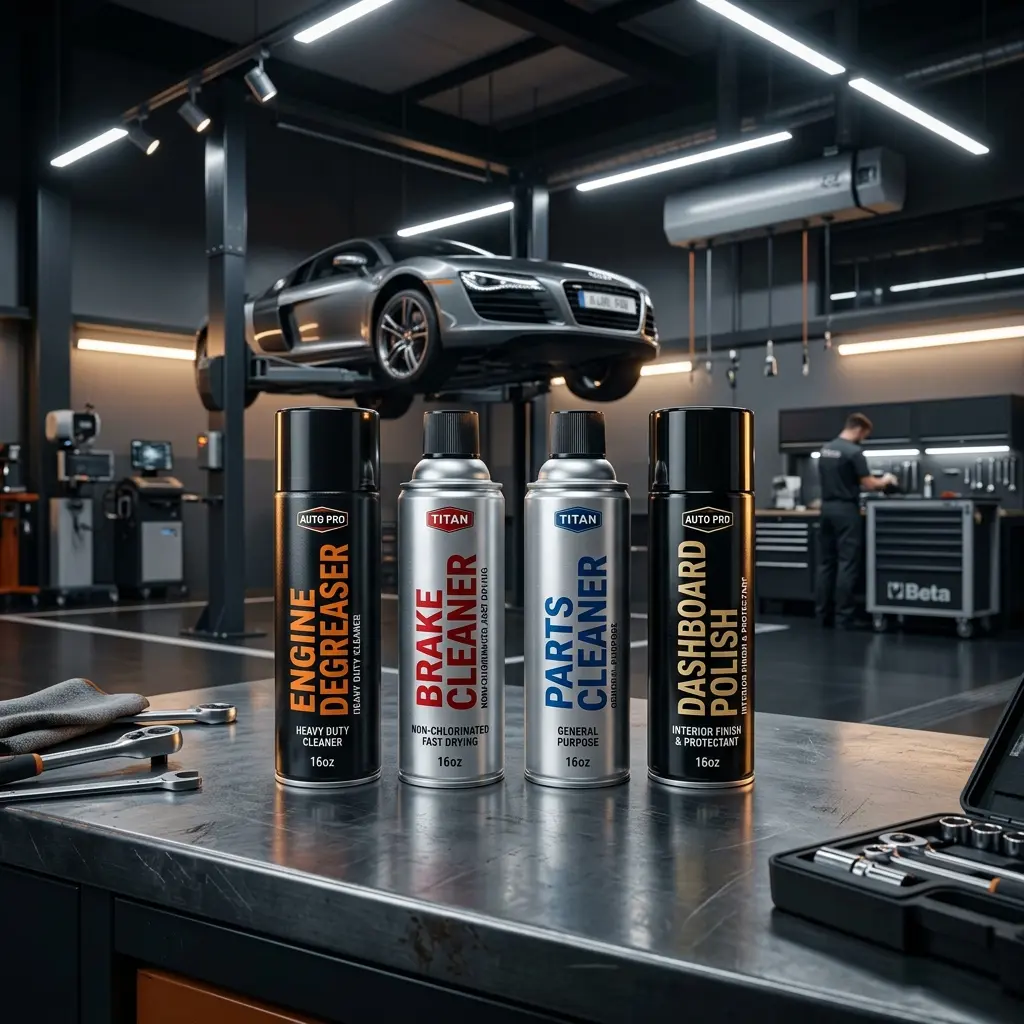
In the modern automotive industry, the demand for precision, efficiency, and portability has positioned automotive aerosol products as the gold standard for vehicle maintenance and repair. From professional workshops to enthusiast garages, these pressurized delivery systems offer unparalleled control over chemical application, ensuring that active ingredients reach the most inaccessible components of a vehicle’s anatomy.
For entrepreneurs and startups, the automotive aerosol market is a vertical shaped by the increasing complexity of vehicle systems and the growth of DIY maintenance. Understanding the intersection of formulation chemistry, mechanical engineering, and market dynamics is the first step toward building a brand that resonates with both industrial users and retail consumers. This guide serves as a technical and strategic blueprint for those looking to master the aerosol ecosystem. Automotive products sit within the wider range of industrial aerosols.
1. The Evolution of Aerosols in the Automotive Sector
The automotive aftermarket relies heavily on pressurized aerosol products for cleaning, lubrication, corrosion protection, and diagnostics. Aerosol delivery allows mechanics to project active solvents deep into brake assemblies, sprockets, and engine blocks with high precision. This delivery format reduces mechanical maintenance time and minimizes product waste on the shop floor. The paragraphs and bullets below trace how the aerosol format developed and what it delivers to technicians.
The transition from bulk liquid chemicals to aerosolized formats has fundamentally changed how technicians approach vehicle service. Historically, cleaning and lubricating tasks were labor-intensive, involving messy brushes and trays that led to significant chemical waste and environmental contamination. The introduction of the aerosol can revolutionized this by providing a self-contained, pressurized unit that eliminates the need for external application tools.
Today, the automotive aerosol industry is not just about convenience; it is about performance optimization. Modern vehicles utilize a vast array of materials—from high-strength alloys to sensitive electronics—each requiring specific chemical treatments. Aerosols allow for the delivery of highly volatile solvents and specialized lubricants in a fine mist or concentrated stream. This maximizes the surface area coverage while minimizing the volume of product required.
- Precision Delivery: Targeted spray patterns allow for deep penetration into mechanical assemblies.
- Stability: Hermetically sealed cans prevent evaporation and oxidation of sensitive active ingredients.
- Versatility: Ability to handle complex formulations involving varying viscosities and surface tensions.
- Waste Reduction: Controlled discharge ensures that only the necessary amount of product is utilized per application.
In India, the commercial vehicle fleet has been aging. Industry data put the average age of medium and heavy commercial vehicles at around 10 years by FY2025, with over 40% of the fleet past 12 years old. An older fleet needs more frequent maintenance, which raises demand for maintenance aerosols. For startups, this creates an opening to introduce localized, high-performance aerosol solutions that compete with global brands on quality while offering better value and serviceability.
2. Core Categories of Automotive Aerosol Solutions
Automotive aerosol solutions are categorized by their chemical function and the mechanical stresses they must withstand. From high-pressure brake cleaners and penetrating oils to rust preventives and electrical contact sprays, each category has unique formulation requirements. Matching the solvent evaporation rate with the target application is key to product performance. The table below lists the primary product sectors.
The diversity of automotive aerosol products can be categorized by their functional application within the vehicle's lifecycle. Understanding these categories is essential for product development, as each requires a unique balance of solvent power, lubricating properties, and substrate safety. A well-rounded product line spans mechanical performance, aesthetic care, and protective treatments.
Entrepreneurs must identify which segment aligns best with their technical capabilities and target audience. For instance, high-performance brake cleaners are essential for safety-critical maintenance, whereas dashboard polishes focus on consumer-facing aesthetics. Each category has its own set of technical challenges, such as managing flammability in degreasers or ensuring long-term UV protection in interior care products. Our guides to penetrating oil aerosols and aerosol rust preventive coatings cover two of these categories in depth, and ASTM B117 defines the salt-spray test used to verify corrosion protection.
| Category | Key Products | Primary Function |
|---|---|---|
| Mechanical & Maintenance | Engine Degreaser, Penetrating Oil | Removing heavy grease, freeing rusted bolts. |
| Performance Cleaning | Brake Cleaner, Throttle Body Cleaner | Cleaning sensitive components without residue. |
| Electrical Care | Dielectric Contact Cleaner | Safe cleaning of sensors, ECU pins, and switches. |
| Aesthetics & Interior | Dashboard Polish, Tyre Shiner | UV protection and surface restoration. |
| Protective Coatings | Underbody Anti-Rust, Zinc Primers | Corrosion prevention for metal chassis parts. |
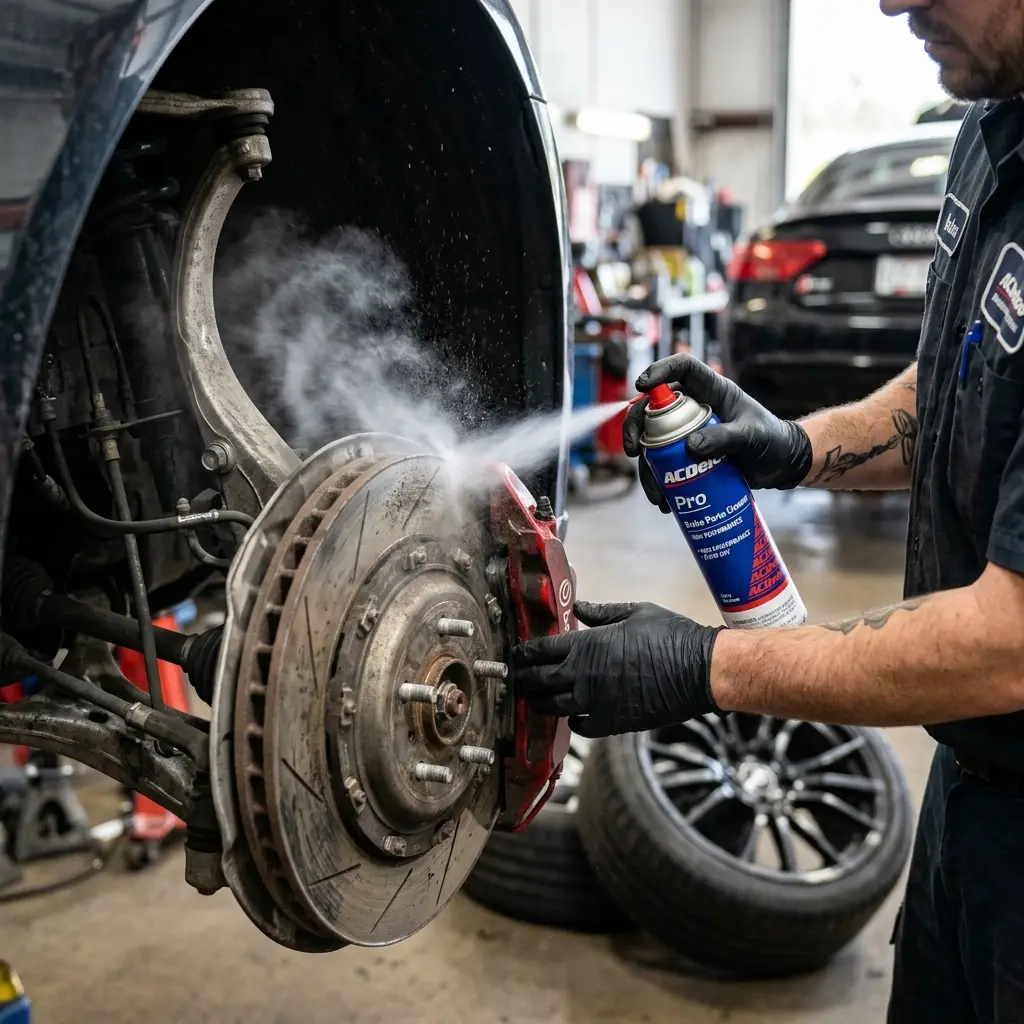
Special attention must be paid to the growing segment of "Specialized Electronics Care." As vehicles become "computers on wheels," the demand for non-conductive, fast-evaporating cleaners has skyrocketed. Products like Dielectric Contact Cleaners are now indispensable for maintaining the integrity of ADAS sensors, infotainment systems, and electric vehicle (EV) battery management systems. Our guide to aerosol contact cleaners covers the chemistry in detail. This niche represents a significant opportunity for startups focusing on high-tech automotive maintenance.
3. The Technical Architecture of a Premium Aerosol
A premium automotive aerosol is an integrated system where the solvent concentrate, propellant chemistry, and valve mechanics are optimized collectively. Because automotive products contain highly volatile solvents and heavy active lubricants, the seals and gaskets must resist degradation. Designing the correct swirl chambers inside the actuator nozzle prevents sputter and dripping. The bullets below list the key architectural elements.
A premium automotive aerosol is a complex equilibrium of three core components: the active formulation, the propellant system, and the mechanical hardware (can, valve, and actuator). Failure in any one of these areas results in a product that either fails to perform its intended function or poses a safety risk to the user. Engineering an aerosol requires deep knowledge of thermodynamics and fluid mechanics.
The active formulation is the heart of the product, consisting of solvents, lubricants, or surfactants designed for a specific task. However, without the correct propellant, even the most advanced formula will not discharge correctly. Propellants provide the "motive power". They are either liquefied gases (like LPG or DME) or compressed gases (like CO2 or Nitrogen), each impacting the spray pattern and pressure profile throughout the life of the can.
- Solvent Synergy: Blending solvents with different evaporation rates to ensure effective cleaning without damaging plastic or rubber parts.
- Propellant Selection: Using LPG for high-pressure delivery or CO2 for environmentally sensitive or non-flammable applications.
- Valve Engineering: Selecting 360-degree valves that allow the product to be sprayed from any angle—crucial for tight engine bays.
- Actuator Precision: Designing nozzle patterns that range from wide-angle mists for large surfaces to "extension straw" streams for pinpoint accuracy.

For startups, the challenge lies in balancing performance with cost. Over-engineering a product can make it uncompetitive, while under-engineering leads to brand damage. Expert technical guidance in technology selection—such as choosing between tinplate and aluminium cans—can significantly impact both the shelf life and the perceived premium quality of the product.
4. Manufacturing Standards and Regulatory Compliance
Automotive aerosol manufacturing is subject to strict environmental, safety, and transport requirements. Facilities handling flammable propellants like LPG must operate under explosion-proof conditions and deploy automated leak detectors. Label declarations must clearly state flammability hazards, VOC levels, and disposal protocols. The paragraphs and bullets below cover the core regulatory frameworks.
Manufacturing automotive aerosols is a high-stakes endeavor that requires strict adherence to safety and quality protocols. Unlike standard liquid bottling, aerosol filling involves handling pressurized gases and highly flammable liquids, necessitating specialized facilities with explosion-proof equipment and advanced ventilation systems. NFPA 30B, covered in our NFPA 30B storage classification guide, sets fire protection and storage requirements for facilities that manufacture, store, or display aerosol products. Compliance with Good Manufacturing Practices (GMP) is not just a regulatory hurdle; it is a foundation for product reliability.
Regulatory frameworks vary by region but share three themes: flammability labeling, Volatile Organic Compound (VOC) limits, and pressure vessel safety standards. In California, CARB's consumer products program sets VOC limits by product category, and our guide to CARB aerosol VOC regulations covers reformulation strategies. Transport follows hazmat rules such as 49 CFR, summarized in our guide to DOT and UN aerosol transport regulations. Hazard information travels in the SDS format that OSHA's Hazard Communication Standard prescribes. In the global market, meeting these standards is a prerequisite for export and authority. Startups must invest in robust quality control systems that test every batch for pressure stability, leakage, and spray performance to ensure consumer safety and brand integrity.
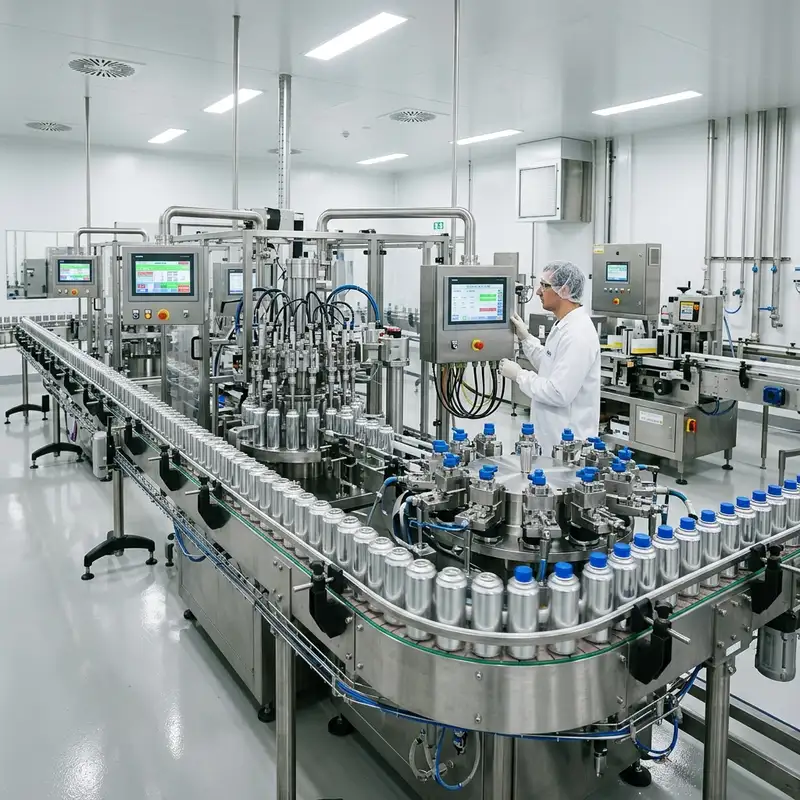
- Explosion-Proof Filling: Using specialized "gassing houses" to isolate flammable propellants during the filling process.
- Hydrostatic Testing: Ensuring that the aerosol containers can withstand pressures significantly higher than their working range.
- VOC Compliance: Formulating products that meet increasingly stringent environmental regulations without sacrificing cleaning power.
- Traceability: Implementing batch coding systems to track every unit from the production line to the end-user.
The path to industrial excellence involves more than just equipment; it requires a culture of safety. For entrepreneurs, partnering with experienced industrial consultants can accelerate the process of setting up a compliant facility, from technology selection to plant layout and regulatory validation. This ensures that the business is built on a scalable and safe foundation.
5. Strategic Roadmap for Startups and Entrepreneurs
Entering the automotive chemical market requires a strategic approach to product formulation, supplier audits, and regulatory certifications. Startups should validate their packaging compatibility early to prevent long-term corrosion and leakage failures in storage, as our guide to aerosol can corrosion formulations and coatings explains. Utilizing contract manufacturing services allows brands to scale quickly without high capital investment. The paragraphs and table below lay out the roadmap.
Launching an automotive aerosol brand requires a strategic blend of technical innovation and market positioning. The first step is to identify a clear "pain point" in the current market—for example, a lack of high-quality electronics cleaners or a need for more eco-friendly degreasers. By focusing on a niche, startups can build authority and a loyal customer base before expanding into broader categories.
One of the most effective strategies for new entrants is to leverage contract manufacturing, as described in our guide to how contract aerosol filling works. This allows entrepreneurs to bring high-quality products to market without the massive capital expenditure required to build a full-scale filling facility. Working with a contract filler provides access to specialized expertise, R&D labs, and established supply chains, allowing the startup to focus on branding, marketing, and distribution.
| Phase | Key Activities | Goal |
|---|---|---|
| Discovery | Market research, Niche identification | Define the Value Proposition. |
| Development | Formulation R&D, Packaging design | Create a Minimum Viable Product (MVP). |
| Validation | Technical audits, Beta testing | Ensure safety and performance. |
| Scaling | Mass distribution, Contract manufacturing | Achieve market penetration and growth. |
Branding in the automotive sector should emphasize "Technical Trust." Professional users look for clear technical data, performance certifications, and reliable delivery systems. For the retail market, eye-catching design must be balanced with clear instructions and safety warnings. Utilizing tools like 3D Can Artwork Design studios can help startups visualize their products and perfect their branding before going to print.
6. Expert Guidance: Formulating for Success
At Global Aerosols, we understand that the difference between a successful product and a market failure lies in the fine details of technical execution. Our mission is to support entrepreneurs and industrial leaders in navigating the complexities of the aerosol ecosystem. Whether you are at the formulation stage or looking to scale your manufacturing operations, expert guidance is the most valuable asset you can possess.
The aerosol industry is constantly evolving, with new propellant technologies, sustainable solvents, and smart packaging solutions emerging every year. Staying ahead of these trends requires a partner who is deeply embedded in the science and engineering of the field. By bridging the gap between innovative ideas and industrial reality, we help our clients create products that set new standards for quality and performance.
Visualizing your brand is now easier than ever. Visit our 3D Can Artwork Design studio for Tinplate Cans or explore options for Aluminium Cans to see how your design looks on a real cylindrical can.
7. Automotive Aerosol Products FAQs
What are the main categories of automotive aerosol products?
The main categories are mechanical and maintenance products, performance cleaners, and electrical care products. Examples are engine degreasers and penetrating oils, brake and throttle body cleaners, and dielectric contact cleaners. Aesthetic and interior products such as dashboard polish and tyre shiner form another category. Protective coatings such as underbody anti-rust sprays and zinc primers complete the range.
Which propellants are used in automotive aerosols?
Propellants are either liquefied gases such as LPG and DME or compressed gases such as CO2 and nitrogen. Each affects the spray pattern and the pressure profile over the life of the can. LPG suits high-pressure delivery, while CO2 suits non-flammable or environmentally sensitive applications. Valve and actuator choices then shape how that pressure reaches the surface.
Why do automotive aerosols use 360-degree valves?
A 360-degree valve lets the product be sprayed from any angle, which is crucial in tight engine bays where the can cannot stay upright. Actuator nozzles then set the pattern, from wide-angle mists for large surfaces to extension-straw streams for pinpoint accuracy.
What safety and quality controls apply to manufacturing automotive aerosols?
Filling flammable propellants requires explosion-proof equipment, advanced ventilation, and specialized gassing houses that isolate the propellant. Each batch is tested for pressure stability, leakage, and spray performance, and hydrostatic testing confirms that containers withstand pressures above their working range. Batch coding provides traceability from the production line to the end user.
How do VOC rules affect automotive aerosol formulations?
VOC rules restrict the volatile organic content of consumer products, and California's CARB sets these limits by product category across more than 130 categories. Automotive cleaners such as brake cleaners and engine degreasers fall within that framework. Formulators must meet the limits without sacrificing cleaning power.
Can a startup launch an automotive aerosol brand without its own filling plant?
Yes. Contract filling gives a startup access to established filling lines, R&D laboratories, and supply chains without the capital expenditure of a full-scale facility. The startup then focuses on branding, marketing, and distribution while the contract filler handles production.
Need Technical Support for Aerosol Formulations?
Partner with Global Aerosols to audit, scale up, and troubleshoot your aerosol chemistry, canister pressure calculations, filling lines, and safety systems.
Email: consulting@globalaerosols.com
Website: https://www.globalaerosols.com
Phone: +91 9819548320 +91 8169102990
About the Specialist
Absar Khan is the principal consultant and chemical formulation architect at Global Formulation. He possesses cross-disciplinary engineering expertise spanning aerosol gassing systems, pharmaceutical manufacturing, sterile injectables, cosmetics, and green chemical plant setups. Absar leads scientific and engineering advisory teams supporting manufacturers globally in technology selection, GMP layouts, validation frameworks, and regulatory strategies.
LinkedIn Portfolio: Connect with Absar Khan on LinkedIn