Aerosol Rust Preventive Coatings: Soft-Film vs Hard-Film Wax Formulations

An aerosol rust preventive coating is a specialized chemical barrier formulation delivered under pressure to shield metallic surfaces from atmospheric moisture, salt fog, oxygen, and corrosive industrial environments. It works by depositing a continuous hydrophobic film integrated with polar corrosion inhibitors that chemisorb onto ferrous and non-ferrous substrates. This matters for maintenance, repair, and operations (MRO) engineers, contract packagers, and original equipment manufacturers (OEMs) because selecting between soft, self-healing films and hard, dry wax barriers directly dictates component shelf-life, transportation protection, and post-storage removal costs.
Industrial corrosion costs manufacturing and logistics sectors billions annually in premature part degradation and warranty claims. In aerosol packaging, temporary rust protection sprays offer precision atomization, rapid coverage of complex geometries, and controlled film deposition without requiring heavy dipping tanks or complex airless spray systems. Understanding the chemical mechanisms that govern film consolidation, rheology, and polar surfactant orientation is essential when engineering high-performance industrial aerosol products.
Chemistry of Aerosol Rust Preventive Coatings & Barrier Dynamics
The protective performance of any aerosol metal protection aerosol coating depends on its ability to form an unbroken physical and electrochemical barrier between the underlying metal lattice and ambient corrosive agents. Formulations rely on film-forming bases—such as refined mineral oils, oxidized petrolatums, microcrystalline waxes, and synthetic hydrocarbon resins—dissolved in volatile organic carriers. As the aerosol stream strikes the substrate, rapid solvent flash-off concentrates the non-volatile film formers into a cohesive protective layer.
Electrochemical corrosion requires three core elements: an active anode, a cathode, and an electrolyte pathway (typically water vapor containing dissolved ionic salts). Aerosol rust preventives interrupt this galvanic cell through dual-action protection:
- Physical Moisture Barrier: Hydrophobic wax or oil matrices present a low surface energy barrier that prevents liquid water and moisture vapor from wetting the metal surface.
- Electrochemical Passivation: Polar corrosion inhibitors migrate to the metal-coating interface, establishing a tightly packed monomolecular oriented layer that increases anodic polarization and blocks electron transfer.
- Capillary Displacement: Low-viscosity solvent cutbacks lower surface tension, allowing the fluid to creep into microscopic surface asperities and displace existing micro-droplets of condensation.
Proper film consolidation is strongly influenced by solvent evaporation kinetics. If the solvent flashes too rapidly during aerosol discharge, the coating can entrap micro-voids or form an uneven "orange peel" texture. Conversely, excessively slow solvent evaporation causes vertical sagging and pooling on complex industrial workpieces, compromising edge coverage where corrosion usually initiates. For broader foundational concepts on chemical additives and base fluids, explore our guide on Aerosol Chemistry 101.
Soft-Film Rust Preventive Aerosol vs Hard-Film Wax Aerosol Coating
Industrial formulations generally divide into soft-film (oily, greasy, or thixotropic) systems and hard-film (dry wax, resinous, or asphaltic) coatings. Each class exhibits distinct physical characteristics, protective durations under standard testing protocols, and mechanical handling resilience. Choosing the optimal technology requires balancing environmental exposure severity against the operational ease of cleaning the part prior to assembly or final painting.
Soft-film rust preventive aerosol products deposit a non-drying, viscous liquid or semi-solid film. These formulations remain permanently pliable and thixotropic, meaning the film can self-heal if scratched or disrupted during mechanical handling. They excel in indoor storage, enclosed machine assemblies, inter-process inventory preservation, and applications where parts must be placed directly into service with minimal solvent degreasing.
In contrast, hard-film wax aerosol coating systems employ high-melting-point microcrystalline waxes, modified alkyd resins, or oxidized petroleum wax esters suspended in solvent carriers. Upon evaporation of the volatile carrier, the coating sets into a firm, dry-to-touch, non-tacky film. This tough wax barrier resists dust accumulation, withstands direct rainfall and high humidity during outdoor storage, and prevents film transfer when coated components contact packaging materials or worker gloves.
| Property / Metric | Soft-Film (Oily / Greasy) | Hard-Film (Dry Wax / Resinous) | Thixotropic Semi-Rigid |
|---|---|---|---|
| Film Character | Non-drying, oily, liquid | Firm, dry-to-touch wax | Self-healing semi-solid gel |
| Typical Film Thickness | 5 – 15 microns | 25 – 75 microns | 15 – 40 microns |
| ASTM B117 Salt Fog Life | 24 – 100 Hours | 500 – 2,000+ Hours | 200 – 500 Hours |
| Indoor Protection Duration | up to 12 Months | 36+ Months | 18 – 24 Months |
| Outdoor Exposed Durability | Not Recommended | Excellent (Severe Outdoor) | Moderate (Covered Storage) |
| Ease of Solvent Removal | Very Easy (Mild Degreaser) | Moderate to Difficult | Easy to Moderate |
| Self-Healing Capability | High (Spontaneous migration) | Low (Rigid wax structure) | Moderate (Under mild stress) |
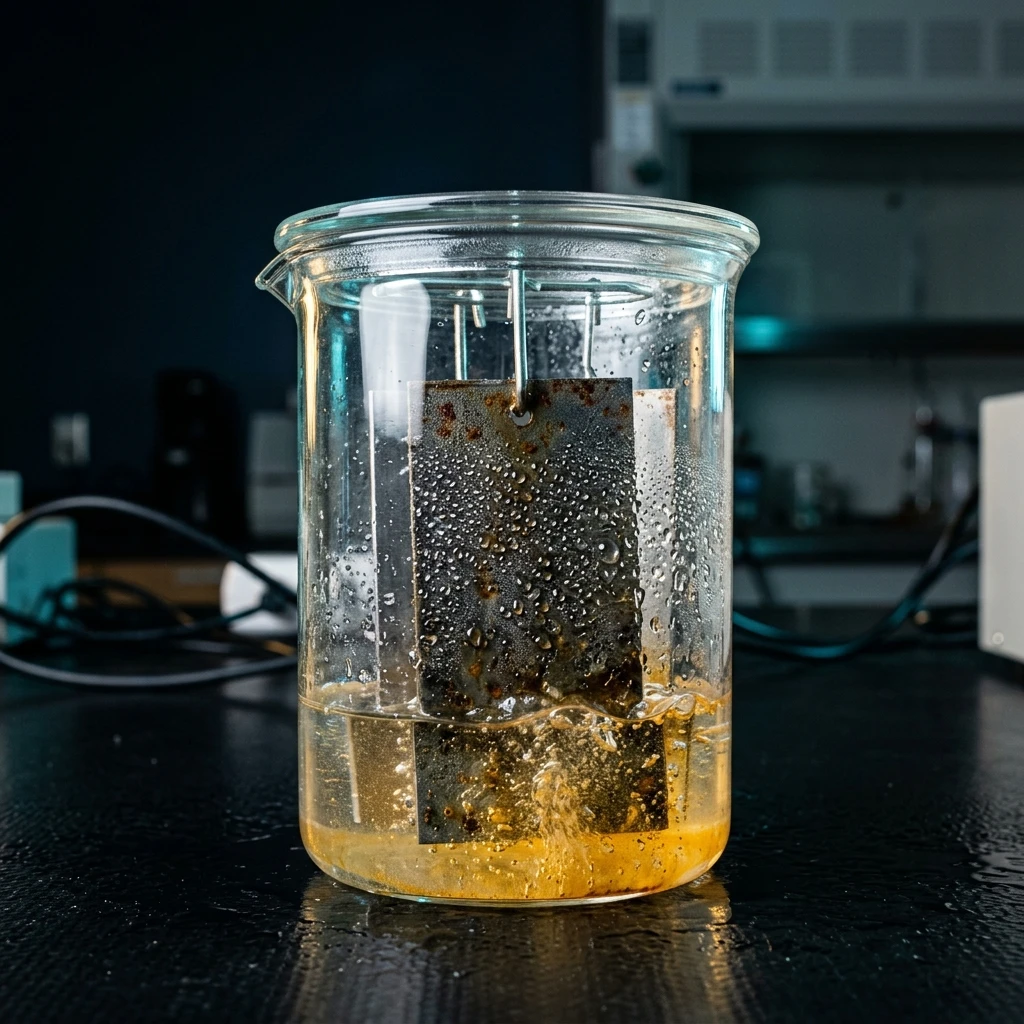
Laboratory apparatus evaluating salt spray resistance and film consolidation of aerosol rust preventive coatings on dark test benches.
Corrosion Inhibitor Aerosol Chemistry & Polar Additive Selection
While hydrocarbon oils and waxes provide physical bulk, the true active protection in a high-grade corrosion inhibitor aerosol comes from polar chemical additives. Unmodified mineral oils or waxes permit gradual moisture vapor diffusion across thin film cross-sections. Incorporating polar surface-active compounds creates an ionic bond with the metal substrate, producing a hydrophobic molecular shield beneath the primary film layer.
The primary classes of polar corrosion inhibitors used in aerosol rust preventives include neutral and overbased calcium sulfonates, barium sulfonates (subject to environmental restrictions in certain regions), oxidized petrolatum salts, alkyl succinic acids, fatty acid imidazolines, and amine carboxylates. According to research cataloged in chemical databases such as PubChem, petroleum sulfonates exhibit exceptional affinity for iron atoms in steel alloys, displacing absorbed water molecules through preferential polar adsorption.
Surfactant orientation plays a vital role in surface wetting. The aerosol spray must possess a low contact angle on clean or slightly oil-contaminated steel to guarantee spontaneous spreading. If the surface energy of the aerosol formulation exceeds the critical surface tension of the substrate, the film will bead up, leaving microscopic bare spots (holidays) where oxidation will rapidly strike. For related technical insights into environmental canister interactions, review our detailed analysis of Internal Aerosol Can Corrosion and Can Corrosion Mitigation Strategies.
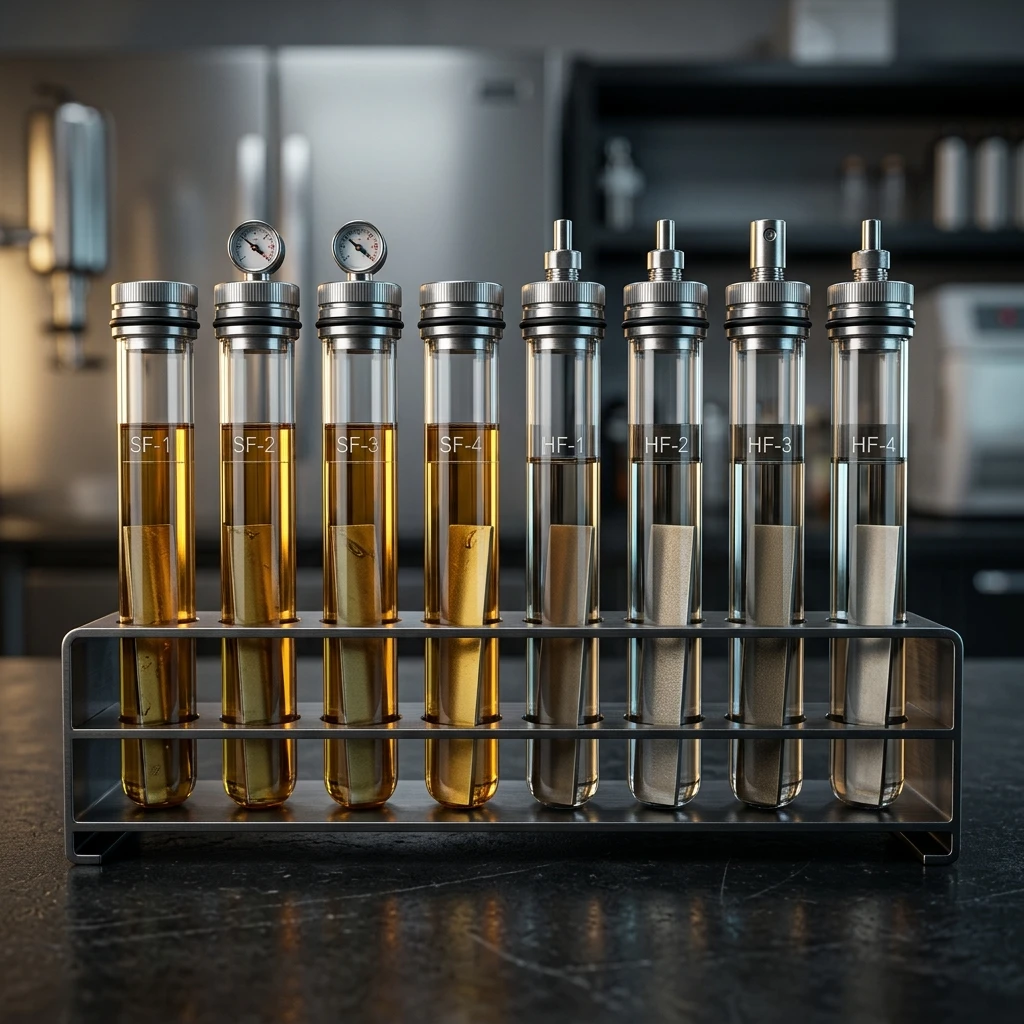
Comparative evaluation of soft-film vs hard-film wax aerosol coating performance under high-humidity laboratory exposure tests.
Temporary Rust Protection Spray Applications Across MRO & OEM Industries
The practical versatility of temporary rust protection spray products makes them indispensable across manufacturing, automotive, aerospace, marine, and military MRO sectors. Aerosol delivery allows field technicians and machine operators to apply uniform protective films onto intricate assemblies, blind threaded holes, internal cavities, and precision tooling without specialized equipment.
Key industrial application scenarios dictate specific formulation requirements:
- Tooling & Injection Mold Storage: Plastic injection molds require soft-film or dry-wax preventives that leave zero residue in ejector pins and can be quickly flushed out with aerosol solvent cleaners prior to production restart.
- Export Machined Component Transport: Steel shafts, bearings, and gears shipped via ocean freight demand heavy-duty hard-film wax coatings capable of surviving 60+ days of high humidity, sea salt spray, and thermal cycling in cargo containers.
- Structural Steel & Tubular Goods Preservation: Hollow structural tubing and pipe threads utilize thixotropic semi-fluid sprays that coat internal walls via extension straw actuators without sagging into heavy puddles.
- Inter-Stage Automotive Stamping Protection: In-process sheet metal parts require ultra-thin oily rust preventives that do not interfere with subsequent stamping dies or spot welding operations.
Proper surface preparation remains vital. Industrial safety guidelines published by OSHA HazCom Standards emphasize that degreasing solvents used before coating application must be fully flashed to prevent solvent entrapment beneath the newly applied rust barrier. To explore specialized industrial lubricant sprays, visit our article on Industrial & Specialty Aerosols.
Solvent Carrier Evaporation Dynamics & Propellant System Selection
Designing an aerosol rust preventive involves selecting an ideal solvent carrier and compressed or liquefied gas propellant system. The solvent carrier solubilizes high-viscosity waxes and resins, lowers liquid bulk viscosity for efficient aerosol breakup, and wets the metal substrate. Hydrocarbon solvents such as aliphatic naphthas, mineral spirits, heptane, and isoparaffins are widely chosen due to their excellent solvency for waxes and controlled flash points.
The propellant system directly dictates atomization quality, spray pattern density, and pressure stability over the life of the can:
- Liquefied Petroleum Gas (LPG): Hydrocarbon propellants (propane/isobutane blends) act as co-solvents within the liquid phase. As the mixture exits the actuator orifice, instant propellant flashing shatters the solvent-wax liquid stream into fine droplets, creating a wide, uniform fan spray pattern.
- Dimethyl Ether (DME): DME offers strong solvency for polar resins and water-displacing additives, but requires careful elastomer selection (such as EPDM or specialized fluoroelastomers) to prevent valve gasket swelling.
- Compressed Gases (CO₂ / N₂): Carbon dioxide and nitrogen provide non-flammable propellant options. However, because compressed gas pressure decays as the liquid volume empties, formulations must utilize lower bulk viscosity to prevent coarse, spattering spray delivery near the end of canister life.
Solvent selection must also conform to regional volatile organic compound (VOC) regulations. Formulators operating under strict environmental rules often incorporate VOC-exempt solvents such as acetone, methyl acetate, or parachlorobenzotrifluoride (PCBTF) to reduce environmental footprint while maintaining rapid drying characteristics.
Accelerated Corrosion Testing (ASTM B117) & QC Verification Protocols
To quantify the protective capability of an aerosol rust preventive coating, standardized accelerated environmental testing is performed in accordance with international protocols. The baseline standard across the aerosol industry is the ASTM International B117 Standard Practice for Operating Salt Spray (Fog) Apparatus.
During ASTM B117 testing, polished cold-rolled steel test panels (1008/1010 alloy) are spray-coated with the target aerosol formulation, allowed to dry for 24 hours under controlled ambient conditions (23°C ± 2°C, 50% RH), and suspended at a 15- to 30-degree angle inside a sealed salt fog chamber. The chamber maintains a continuous atomized fog of 5% sodium chloride solution at 35°C (95°F). Performance is evaluated by tracking the number of hours elapsed before the appearance of 1% surface red rust or blistering.
Additional standard quality control verification methods include:
- ASTM D1748 Humidity Cabinet Test: Evaluates rust prevention on steel panels exposed to 100% relative humidity at 49°C (120°F). Soft-film preventives typically target 30 to 60 days without rust initiation.
- ASTM D4082 Water Displacement Test: Verifies the ability of a spray coating to instantly separate water from wet metal surfaces and establish an adhesive protective film.
- Non-Volatile Content (NVC) Determination: Gravimetric measurement of solid film formers remaining after heating sample aliquots to ensure fill-weight consistency during commercial production.
Implementing rigorous quality control protocols ensures batch-to-batch consistency in film thickness, atomization fan width, and corrosion protection hours. For contract manufacturers preparing to transition laboratory prototypes to high-speed commercial aerosol filling lines, review our detailed guide on moving From Lab to Commercial Launch.
Frequently Asked Questions
What is the key functional difference between a soft-film and hard-film aerosol rust preventive?
How do polar corrosion inhibitors enhance temporary rust protection sprays?
Which aerosol propellant blend is best suited for solvent-cutback wax coatings?
How are aerosol rust preventive coatings tested for salt spray resistance?
Can hard-film wax aerosol coatings be painted over directly?
How does solvent evaporation rate impact the final film density of sprayed rust preventives?
Need Expert Aerosol Consulting?
Our team provides end-to-end aerosol technical consultancy — from formulation development and propellant selection to filling line setup, regulatory compliance, and market launch strategy.
Get a Free ConsultationRelated Articles
- Internal Aerosol Can Corrosion: Causes & Prevention
- Can Corrosion Mitigation: Linings & Inhibitors
- Aerosol Manufacturing 101: The Complete Technical Guide
- How Aerosol Cans Work: Propellant, Pressure, Valve & Spray Dynamics
- Aerosol Propellants Explained: LPG vs DME vs HFC vs N₂ vs CO₂
- Aerosol Chemistry 101: Solvents, Binders, Surfactants & Additives
- From Lab to Factory: Aerosol R&D to Commercial Manufacturing
- How to Choose the Right Aerosol Product Consultant
Absar Khan
Absar Khan is a senior aerosol industry consultant with deep expertise spanning aerosol formulation, propellant technology, valve engineering, filling line setup, and regulatory compliance across global markets. His work integrates aerosol chemistry, GMP manufacturing practices, safety and flammability assessment, quality systems, and regulatory strategy for markets including India, the EU, and the US. As Founder and Lead Consultant at Global Aerosols, Absar leads technical and engineering teams delivering end-to-end aerosol solutions — from initial formulation and lab trials through pilot-scale testing, commercial manufacturing setup, and full market launch.