A technically accurate, engineering-focused guide explaining how aerosol propellants control pressure
behavior, spray force, atomization quality, solvency, safety, and real-world performance.
Aerosol performance is not defined only by formulation chemistry or valve design. The propellant
system is a core engineering variable that directly controls internal pressure, spray
force, atomization quality, emptying behavior, and long-term product stability. Selecting the wrong
propellant often results in weak spray, inconsistent discharge, phase separation, or regulatory
non-compliance—especially in demanding climates such as India. If you haven't chosen a propellant
family yet, start with our comparison of LPG, DME, HFC, N₂, and CO₂ propellants before evaluating performance trade-offs here.
This technical guide explains, using established aerosol science, how LPG, DME, HFCs, CO₂, and
N₂ differ in physical behavior and how those differences translate into real-world aerosol
performance. The focus is on vapor pressure curves, spray physics, and solvency effects—without
speculation or marketing claims.
Why Propellant Selection Is Critical in Aerosol Products
Propellants serve two fundamental functions in aerosols: they generate pressure and
deliver mechanical energy to atomize the product through the valve and actuator. Unlike
pumps or compressors, aerosol propellants rely on thermodynamic equilibrium inside a sealed container,
making their physical properties central to system behavior.
A change in propellant type can alter spray force, droplet size distribution, and discharge rate even
when all other components remain unchanged. This is why propellant selection must be treated as an
engineering decision, not a commodity choice. See our
aerosol propellants and valves resource for the broader engineering context
propellant selection sits within.
Internal pressure stability over temperature
Spray consistency from full to empty can
Compatibility with formulation and packaging
Compliance with flammability and environmental regulations
Understanding Vapor Pressure Curves
Vapor pressure defines the pressure exerted by a propellant in equilibrium with its liquid phase at a
given temperature. In aerosols, vapor pressure determines the driving force behind spray
generation. Each propellant has a characteristic vapor pressure curve that dictates how
pressure changes with temperature.
Liquefied gas propellants maintain relatively constant pressure during discharge, while compressed gases
show pressure decay as product is expelled. This difference explains many observed performance
variations across propellant systems. Reference vapor pressure curves for individual propellant
components are published in the NIST WebBook thermodynamic database.
See our guide to propellant blend formulation
for how binary LPG mixture ratios are used to target a specific vapor pressure.
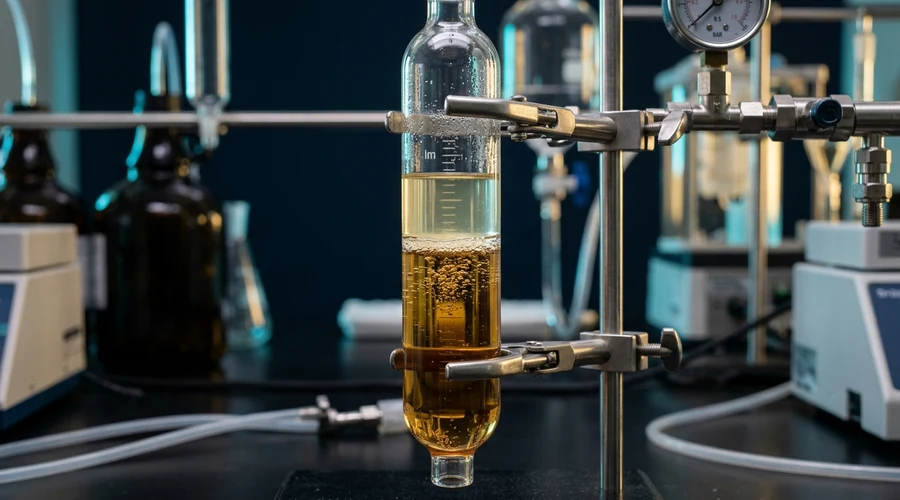
Figure 1: Laboratory evaluation of vapor-liquid equilibrium and phase stability between liquefied propellant and concentrate formulation.
Vapor Pressure Behavior by Propellant Type
Propellant
Vapor Pressure Behavior
Performance Impact
LPG (Propane/Butane)
Moderate to high, blend-adjustable
Stable spray force
DME
Lower than LPG
Smoother pressure profile
HFCs
Engineered, predictable
Controlled discharge
CO₂
High initial, rapid decay
Strong initial spray only
N₂
Continuous decay
Weakening spray over time
Spray Force and Atomization Physics
Spray force in an aerosol system originates from a pressure differential between the can
interior and ambient atmosphere. This pressure drop accelerates the formulation through the valve
orifice, creating shear forces that break the liquid into droplets. Atomization quality depends on
pressure magnitude, flow velocity, and fluid properties.
Propellants influence atomization not by chemistry alone, but by how consistently they maintain pressure
during discharge. Higher and more stable pressure produces finer droplets and more uniform spray
patterns. The actuator's orifice geometry converts this pressure into the final spray — see our guide to
aerosol actuator design for how orifice diameter and swirl
chamber geometry interact with propellant pressure to shape droplet size.
Propellant
Spray Force
Atomization Quality
LPG
High
Good breakup, long throw
DME
Moderate
Fine droplets
HFCs
Controlled
Consistent pattern
CO₂
High initially
Rapid degradation
N₂
Low to moderate
Inconsistent near end
Solvency vs Non-Solvency Propellants
Solvency refers to a propellant’s ability to dissolve or partially dissolve formulation components such
as resins, oils, or active ingredients. This property affects formulation simplicity, phase stability,
and packaging compatibility.
Solvent behavior must be aligned with formulation goals. Improper use can cause swelling of seals,
extraction of elastomers, or destabilization of concentrates. Physical and solvency property data for
individual propellants is documented in PubChem. See our
dedicated guide to DME as an aerosol propellant
for its solvency parameters and valve elastomer compatibility in more depth.
Category
Propellants
Key Characteristics
Solvent
DME
Reduces need for co-solvents; higher material interaction
Technical Comparison of Common Aerosol Propellants
When evaluated objectively, each propellant system offers trade-offs that must be aligned with
application, climate, and regulatory constraints. No single propellant is superior across every
metric — LPG and HFC hold pressure most consistently, DME contributes solvency that the others lack,
and CO₂ and N₂ trade spray consistency for non-flammability. The table below summarizes the four
factors formulators weigh most heavily when selecting a propellant system; see our detailed comparison
of compressed gas vs liquefied gas
aerosols for the underlying pressure-profile mechanics behind these differences.
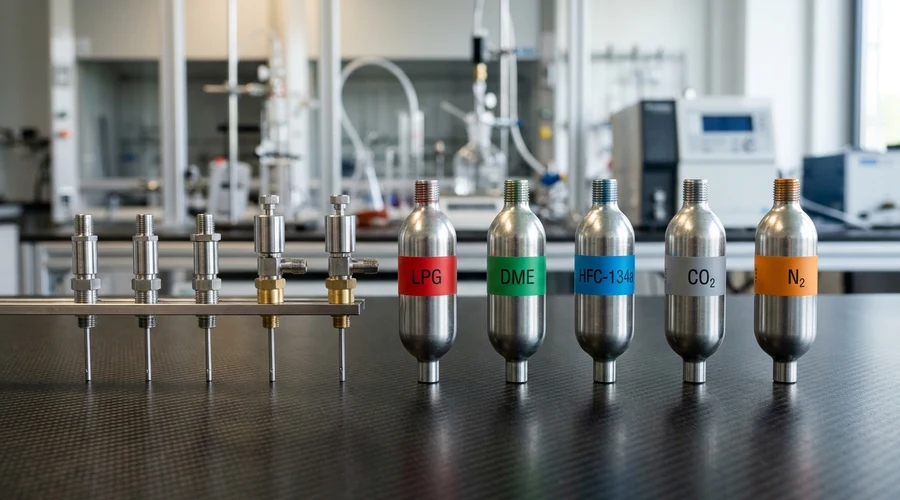
Figure 2: Physical properties, pressure stability, and handling classification across major industrial aerosol propellants.
Factor
LPG
DME
HFC
CO₂
N₂
Pressure Stability
High
Moderate
High
Low
Low
Solvency
No
Yes
No
No
No
Flammability
High
High
Low
None
None
Cost (India)
Low
Moderate
High
Moderate
Moderate
Application-Based Propellant Selection
Propellant choice must align with end-use requirements rather than general performance metrics.
Industrial coatings, personal care products, and technical aerosols impose different demands on spray
behavior and formulation compatibility. Regulatory pressure to reduce global warming potential is
driving adoption of low-GWP alternatives tracked by the
UNEP Ozone Secretariat under the Kigali Amendment — see our guide
to HFO-1234ze as a low-GWP propellant for one
such alternative gaining traction in personal care and pharmaceutical aerosols.
Paints and coatings: LPG or LPG/DME blends
Cleaners and degreasers: LPG or CO₂
Personal care products: DME or HFCs
Technical aerosols: N₂ or CO₂
Common Performance Failures Linked to Propellant Choice
Many aerosol failures originate from mismatches between propellant physics and product design. These
issues are often misattributed to valves or formulations when the root cause is thermodynamic.
Flammability risk in particular is governed by the propellant's flash point — see our explainer on
why flash point matters in aerosol safety for how this single
property drives flammability classification. Storage classification for flammable propellant blends
follows NFPA 30B.
Pressure drop before can is empty
Weak spray in cold conditions
Phase separation over shelf life
Excessive flammability risk
Inconsistent spray pattern
Engineering the Spray, Not Just Filling a Can
An aerosol product is a closed thermodynamic system, not just a container for chemicals.
Propellant selection determines whether the system behaves predictably across temperature, usage rate,
and storage conditions.
Because vapor pressure, solvency, and flammability are properties of the propellant itself rather than
the formulation around it, no amount of downstream adjustment to the actuator, valve, or fragrance load
can fully compensate for a propellant mismatched to the product's performance requirements. Treating
propellant selection as an early, deliberate engineering decision — rather than a late-stage sourcing
choice — is what separates a product that performs consistently for its full shelf life from one that
weakens, separates, or fails a burst test after the fact.
Frequently Asked Questions
How does propellant choice affect aerosol spray force?
Spray force originates from the pressure differential between the can interior and ambient atmosphere, which accelerates the formulation through the valve orifice. Propellants that maintain higher, more stable pressure throughout discharge — such as LPG and engineered HFC blends — produce finer droplets and more consistent spray patterns than propellants with a rapidly decaying pressure curve.
What is the difference between liquefied and compressed gas propellants?
Liquefied gas propellants, including LPG and DME, maintain relatively constant vapor pressure during discharge because liquid propellant continues evaporating to replace what is expelled. Compressed gases such as CO₂ and N₂ have no liquid reservoir to replenish, so their pressure decays progressively as the can empties, producing a weaker spray toward the end of product life.
Which aerosol propellants have solvency properties?
DME is the primary solvent propellant used in aerosols, capable of dissolving resins, oils, and active ingredients and reducing the need for co-solvents. LPG, CO₂, and N₂ are non-solvent propellants that require external solvents in the formulation, giving them more predictable material compatibility with valve elastomers and packaging.
Why does aerosol spray weaken in cold temperatures?
Vapor pressure is temperature-dependent, so as ambient or product temperature drops, the propellant generates less driving pressure and delivers a weaker spray. This effect is more pronounced with compressed gas propellants like N₂, which already lose pressure through the can's life, than with liquefied gas propellants whose vapor pressure curve is defined by the blend composition.
How do formulators choose a propellant for a specific application?
Propellant selection is aligned with end-use requirements: paints and coatings commonly use LPG or LPG/DME blends for strong, consistent spray force, cleaners and degreasers use LPG or CO₂, personal care products often use DME or HFCs for fine atomization and formulation compatibility, and technical aerosols use N₂ or CO₂ where non-flammability is required.
What performance failures are commonly linked to propellant selection?
Common propellant-related failures include pressure drop before the can is empty, weak spray in cold conditions, phase separation over shelf life, and inconsistent spray pattern — issues that are often misattributed to the valve or formulation when the underlying cause is a thermodynamic mismatch between the propellant and the product design.
Partner with Global Aerosols to audit, scale up, and troubleshoot your aerosol chemistry, canister pressure calculations, filling lines, and safety systems.
Absar Khan is the principal consultant and chemical formulation architect at Global Formulation. He possesses cross-disciplinary engineering expertise spanning aerosol gassing systems, pharmaceutical manufacturing, sterile injectables, cosmetics, and green chemical plant setups. Absar leads scientific and engineering advisory teams supporting manufacturers globally in technology selection, GMP layouts, validation frameworks, and regulatory strategies.