Flash Point Explained: Why It Matters in Aerosol Safety

Guide Contents
- 1. Understanding Flash Point – The Basic Concept
- 2. Why Flash Point Is So Critical in Aerosol Products
- 3. Common Aerosol Ingredients That Affect Flash Point
- 4. Flash Point Testing Methods Used for Aerosols
- 5. Flash Point & Regulatory Compliance in India and Globally
- 6. How Flash Point Impacts Aerosol Product Design & Cost
- 7. Common Mistakes Startups Make Regarding Flash Point
- 8. How to Control & Optimize Flash Point in Aerosols
- 9. Flash Point Case Study Examples (Real-World Learning)
- 10. Final Takeaway – Why Flash Point Is a Non-Negotiable Safety Parameter
Flash point is one of the most critical yet least understood safety properties in aerosol science. It directly governs fire risk, storage classification, transport regulations, insurance approvals, and even formulation strategies. For startups, students, and aerosol manufacturers, misunderstanding flash point can lead to catastrophic safety failures, regulatory rejection, or costly product recalls.
In aerosol systems, flammable liquids and gases are not only present in open conditions but are also stored under pressure. This makes flash point far more than a laboratory value—it becomes a real-world safety parameter with commercial consequences across the entire aerosol lifecycle.
Understanding Flash Point – The Basic Concept
Flash point is a physical property used to describe the lowest temperature at which a liquid gives off sufficient vapor to form an ignitable mixture with air near its surface. It does not mean sustained combustion, but it indicates the temperature at which ignition becomes possible under controlled conditions. This value is essential for classifying chemicals as flammable or combustible.
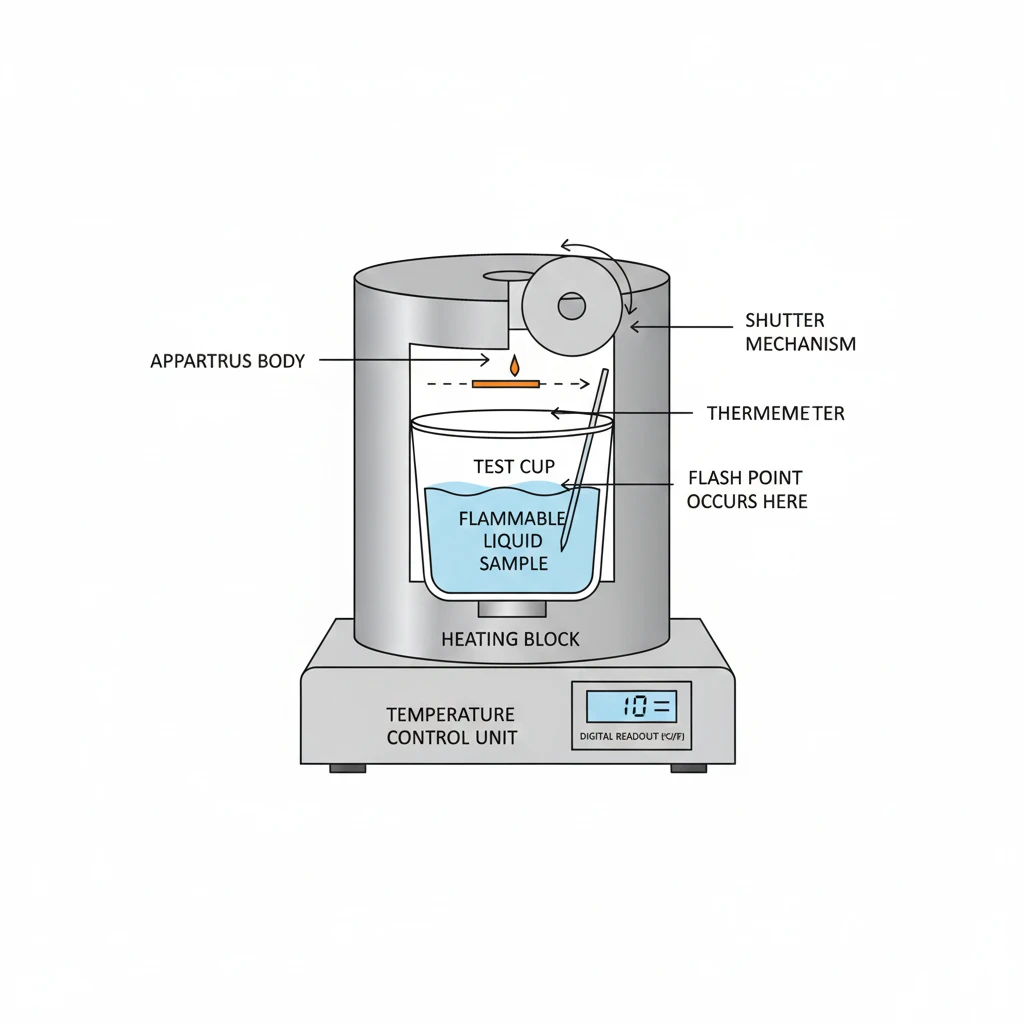
Flash point testing is standardized worldwide and is performed using closed or open cup methods under defined heating rates and ignition sources. The measured value depends on vapor pressure, liquid composition, and the surrounding atmosphere. In aerosols, both solvents and propellants contribute simultaneously to the effective flash point of the product.
- Lowest temperature where vapors can ignite
- Indicates vapor formation rate at given temperature
- Used for chemical hazard classification
Difference Between Flash Point, Fire Point & Auto-Ignition Temperature
Flash point is often confused with fire point and auto-ignition temperature, but these are distinct physical properties. Flash point only indicates momentary ignition under external flame exposure. Fire point is slightly higher and represents sustained combustion. Auto-ignition temperature is much higher and represents spontaneous ignition without any external spark. All three appear on the safety data sheet under the hazard communication framework enforced by OSHA.
These three parameters are independently measured and used for different safety calculations. Regulatory bodies rely primarily on flash point for transport and storage classification, while auto-ignition is important for high-temperature process safety design.
- Flash point: Temporary ignition with external flame
- Fire point: Sustained combustion
- Auto-ignition: Spontaneous ignition without external source
How Flash Point Is Measured in Laboratories
Flash point is determined using standardized apparatus such as Pensky-Martens closed cup, Abel closed cup, or Cleveland open cup testers. For volatile liquids and aerosols, closed cup methods are preferred because they better simulate real storage conditions by minimizing vapor loss.
International test standards such as ASTM D93, ASTM D56, ISO 2719, and IS 1448 are used globally, maintained respectively by ASTM International and ISO. Results must be reproducible and are required for safety data sheets (SDS), transport documents, and regulatory filings.
- Closed cup methods for volatile aerosol liquids
- ASTM, ISO, and IS standards used worldwide
- Mandatory for SDS and transport classification
Why Flash Point Is So Critical in Aerosol Products
In aerosols, flash point becomes a compounded risk factor because flammable vapors are stored in sealed, pressurized containers. If ignition occurs during leakage, filling, storage, or consumer use, the resulting fire can be violent due to rapid vapor expansion — the same pressurised-vapour behaviour described in how aerosol cans work. This makes flash point a primary determinant of aerosol hazard classification.
Even when liquid ingredients have moderate flash points, the presence of hydrocarbon propellants can dramatically lower the overall effective flammability of the final product. This is why aerosol fire incidents often originate from improper formulation control rather than external misuse.
- Governs overall aerosol fire risk
- Directly impacts UN transport class
- Drives storage and insurance approvals
The Role of Flash Point in Aerosol Fire & Explosion Risks
Aerosol explosions typically occur due to vapor ignition inside or near the container, followed by pressure rise and can rupture. Low flash point liquids generate ignitable vapor even at ambient temperatures, making accidental ignition possible during filling, transport, or warehouse storage.
Since aerosol cans are thin-walled pressure vessels, internal heating caused by fire leads to rapid pressure escalation and violent rupture. This is why manufacturers must strictly control both liquid flash point and vapor phase flammability.
- Low flash point increases ignition probability
- Pressurized system amplifies explosion severity
- Major factor in warehouse fire incidents
Why Low Flash Point Is Dangerous in Pressurized Containers
In pressurized aerosol systems, liquid-vapor equilibrium constantly exists. If the liquid flash point is low, the vapor phase becomes flammable well below ambient temperatures. Any potential ignition source—static discharge, electrical spark, or hot surface—can trigger combustion.
Additionally, aerosols contain atomized sprays that greatly increase surface area for combustion upon discharge. This makes even moderate flammability far more dangerous compared to bulk liquid storage.
- Vapor always present inside can
- Static electricity can trigger ignition
- Atomized sprays intensify flame spread
Flash Point vs Can Burst & Shelf-Life Safety
Flash point influences not only fire risk but also shelf-life safety in hot climates. In tropical regions like India, warehouse temperatures frequently exceed 45°C. Products with flash points near ambient temperatures face continuous risk of vapor ignition and internal pressure fluctuations.
Repeated temperature cycling can weaken can seams, valve crimps, and elastomer gaskets, increasing leakage probability. This creates both safety hazards and product stability failures over the shelf life.
- High ambient temperature increases vapor pressure
- Low flash point raises internal ignition risk
- Direct impact on long-term product stability

Common Aerosol Ingredients That Affect Flash Point
The propellant is usually the single largest contributor to the combined flash point, so this list should be read alongside our comparison of LPG, DME, HFC, nitrogen and CO₂ propellants.
Aerosol flash point is not a property of a single ingredient but the combined result of solvents, propellants, resins, and additives. Even small amounts of low flash point materials can drastically reduce the final product’s safety classification.
Many performance-driven ingredients such as fast-drying solvents and fragrance oils also contribute strong flammability characteristics. This makes formulation balancing a critical technical discipline in aerosol product design.
Solvents with Very Low Flash Points (IPA, Hexane, Acetone)
Industrial aerosol formulations frequently use isopropyl alcohol (IPA), hexane, acetone, toluene, and MEK for fast evaporation and cleaning action. These solvents typically have flash points below 20°C, with acetone having a flash point of −20°C.
Such solvents significantly increase fire hazard when combined with atomized spray and pressurized delivery systems. Their use must be controlled through dilution with higher flash point carriers or by substituting safer alternatives.
- IPA flash point ≈ 12°C
- Acetone flash point ≈ −20°C
- Hexane flash point ≈ −22°C
Hydrocarbon Propellants (Propane, Butane, Isobutane)
Hydrocarbon propellants are among the most flammable materials used in industrial applications. Propane and butane have extremely low ignition thresholds and wide explosive concentration ranges in air.
Because propellant typically makes up 20–60% of aerosol formulations, it plays a dominant role in final flammability behavior regardless of solvent choice. This is why most hydrocarbon-propelled aerosols fall under highly flammable UN classifications.
- Propane auto-ignition ≈ 470°C
- Wide explosive limits in air
- Major contributor to aerosol flammability
How Fragrance Oils & Additives Influence Flash Point
Fragrance oils, corrosion inhibitors, and surfactants can be deceptively flammable. Many essential oils and perfume compounds contain low molecular weight terpenes that significantly reduce flash point.
Even additives used at 0.5–2% can alter final vapor behavior. This is why final product flash point must always be tested as a formulation—not inferred from individual raw materials.
- Terpenes often highly flammable
- Small dosage can impact total flash point
- Final testing always mandatory
Flash Point Testing Methods Used for Aerosols
Flash point testing for aerosols involves both testing of the liquid concentrate and evaluation of the finished pressurized product. The liquid formulation is tested using standard flash point apparatus, while the finished aerosol is classified using ignition distance and enclosed space ignition tests as defined by UN guidelines.
This dual testing approach ensures both chemical flammability and spray behavior flammability are evaluated. Regulatory authorities rely on both data sets for final hazard labeling and transport classification.
Closed Cup vs Open Cup Testing
Closed cup testing maintains a sealed environment and is more representative of real storage conditions, especially for volatile liquids. Open cup methods allow continuous vapor escape and usually yield higher flash point values, making them less conservative.
For aerosols and volatile solvents, closed cup values are always preferred for safety classification and regulatory compliance.
- Closed cup gives lower, safer flash point value
- Open cup used mainly for heavy oils
- Regulatory bodies prefer closed cup data
ASTM, IS, and ISO Test Standards
Globally accepted flash point testing standards include ASTM D93, ASTM D56, ISO 2719, and Indian Standard IS 1448. These standards define heating rates, ignition methods, and result interpretation to ensure consistency across laboratories.
Compliance with these standards is mandatory for generating valid Safety Data Sheets (SDS) and transport documentation for both domestic and international markets.
- ASTM D93 – Pensky-Martens
- ISO 2719 – International reference method
- IS 1448 – Indian petroleum testing standards
Typical Flash Point Ranges for Aerosol Formulations
Most hydrocarbon-propelled aerosols with solvent-based concentrates fall in the “extremely flammable” category, often having effective flash points below −10°C. Water-based aerosols with compressed air or nitrogen may achieve flash points above 60°C.
The final classification always depends on the combined vapor phase behavior of the entire formulation, not just the solvent.
- Solvent-based aerosols: often < 0°C
- Water-based aerosols: typically > 60°C
- Nitrogen-propelled systems: highest safety margin
Flash Point & Regulatory Compliance in India and Globally
Flammable aerosols also carry transport and storage obligations beyond the flash point classification itself. The relevant transport duties are set out in the UN Model Regulations and covered in our guide to DOT and UN aerosol transport rules, while warehouse storage classification in the US follows NFPA 30B.
Flash point directly governs how aerosols are classified for transport, storage, insurance, and workplace safety. In India, multiple regulatory frameworks reference flash point for hazardous goods handling. Internationally, UN Recommendations on the Transport of Dangerous Goods form the basis of all global classification systems.
Failure to correctly declare flash point can result in shipment seizure, penalties, insurance cancellation, or criminal liability in case of accidents.
Indian Rules – PESO, Gas Cylinder Rules & Storage Norms
In India, flash point affects licensing and storage requirements under the Petroleum Rules, Gas Cylinder Rules, and PESO guidelines. Warehouses must segregate flammable aerosols based on flash point and UN class.
Fire NOCs, explosive storage approvals, and hazardous area zoning all depend on correct flash point declaration in technical dossiers.
- PESO licensing for flammable storage
- Fire department zoning based on flash point
- Mandatory hazard labeling for warehouses
GHS & UN Transport Classification Based on Flash Point
Globally, the UN transport system classifies flammable liquids primarily by flash point and boiling point. Aerosols are further classified under UN 1950 with subdivisions based on flammability.
GHS labeling systems use flash point to assign hazard categories such as “Extremely Flammable,” “Highly Flammable,” and “Flammable,” which directly determine safety pictograms and warning statements.
- UN 1950 – Aerosols transport code
- GHS flame symbol based on flash point
- Determines air, sea, and road transport rules
Impact of Flash Point on Shipping, Warehousing & Insurance
Low flash point aerosols require special packaging, restricted quantities per shipment, temperature-controlled transportation, and enhanced fire detection systems in warehouses. Insurance premiums for such products are significantly higher due to elevated fire risk.
Export shipments with incorrect flash point documentation are often rejected at ports, leading to demurrage charges, order cancellations, and reputational damage.
- Controls maximum shipping quantities
- Determines warehouse fire protection systems
- Direct impact on insurance liability cost
How Flash Point Impacts Aerosol Product Design & Cost
Because flash point is set by the whole liquid system, formulators can shift classification by changing solvent load rather than only the propellant; the interacting chemistry is covered in aerosol chemistry 101.
Flash point is not just a safety parameter—it fundamentally shapes product design. Solvent selection, propellant choice, valve materials, can coatings, and even fragrance design are influenced by flash point limitations.
Higher flash point systems usually cost more due to expensive solvents, non-flammable propellants, and additional formulation stabilizers. However, they offer major advantages in regulatory ease and export flexibility.
Choosing Safe Solvent-Propellant Combinations
Formulators must balance solvency power, drying speed, and safety. High flash point solvents often have slower evaporation rates, requiring propellant optimization to maintain spray performance.
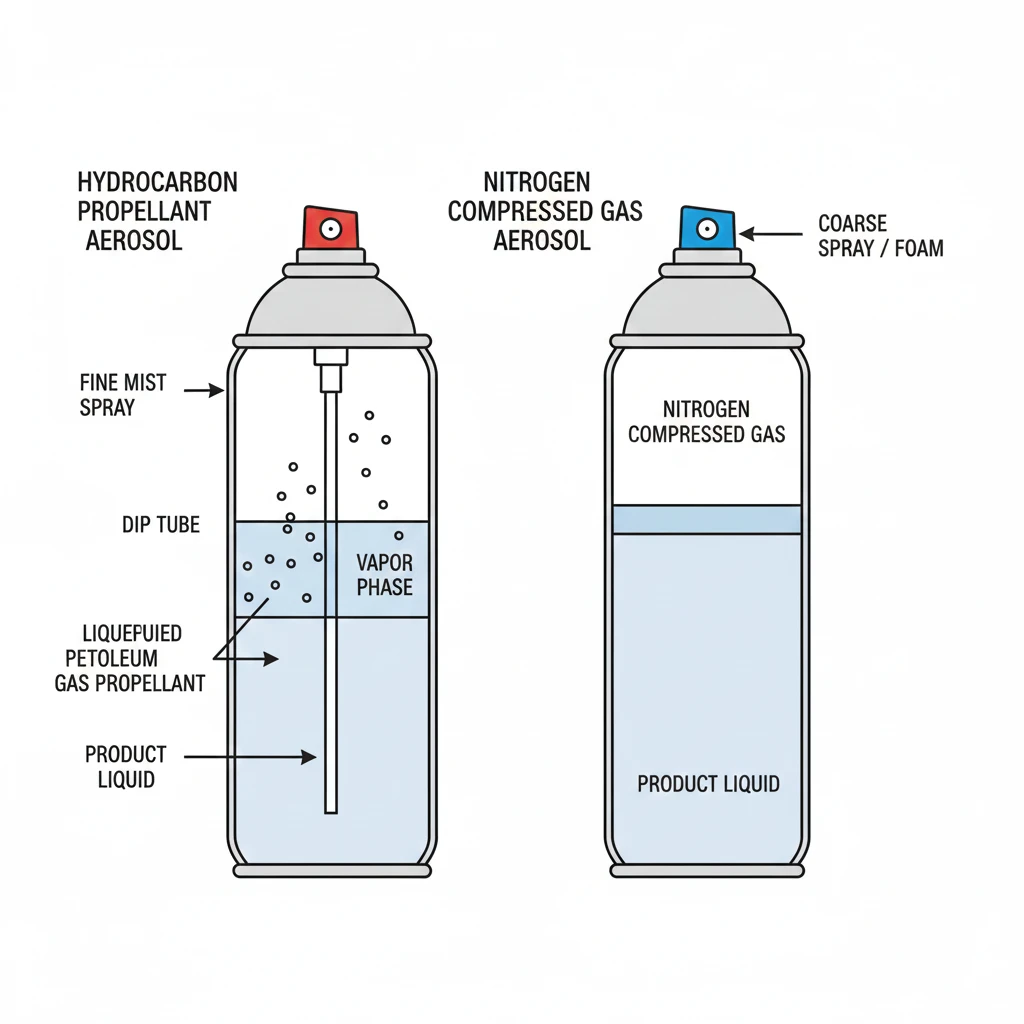
Hydrocarbon propellants offer excellent spray characteristics but lower safety margins. In contrast, compressed gases improve safety but increase can pressure and filling costs.
- Hydrocarbon propellants: best spray, highest fire risk
- Nitrogen/CO₂: highest safety, higher cost
- Solvent blend tuning is essential
Trade-Off Between Performance, Drying Speed & Safety
Fast-drying aerosols almost always rely on low flash point solvents. While this improves cleaning efficiency and film formation, it increases fire classification and transport restrictions.
Manufacturers must decide whether product performance or regulatory simplicity is the primary commercial driver, especially for export-oriented products.
- Faster drying = lower flash point
- Higher safety = slower evaporation
- Export markets prefer higher flash point
How Flash Point Affects Product Pricing & Export Approval
Products with low flash points incur higher costs throughout the supply chain due to hazardous goods transport, fire-compliant warehousing, and higher insurance premiums. Export compliance costs also rise due to additional documentation and packaging requirements.
In many markets, retail chains and institutional buyers restrict procurement of highly flammable aerosol products, directly affecting sales potential.
- Hazardous freight surcharges
- Higher insurance premiums
- Retail acceptance limitations
Common Mistakes Startups Make Regarding Flash Point
Several of these mistakes surface later as container-level failures rather than formulation complaints — see why aerosol cans leak and aerosol can safety explained for how they present.
Many early-stage aerosol manufacturers focus primarily on cleaning performance, fragrance, and appearance while neglecting safety engineering. Flash point is often treated as a formality instead of a design parameter.
This leads to regulatory delays, failed fire safety inspections, warehouse rejection, and cancelled export orders—often after significant capital investment has already been made.
Ignoring Flash Point During Formulation
Startups frequently copy benchmark products without analyzing their safety classifications. They replicate solvent systems without understanding why certain ingredients were originally selected.
This results in formulations that perform well but are extremely difficult or unsafe to manufacture at scale.
- Benchmark copying without safety analysis
- Lack of vapor phase testing
- Incomplete SDS preparation
Using Cheaper Low Flash Point Solvents
Cost pressure often drives startups to replace expensive high flash point solvents with cheaper flammable alternatives. While this reduces raw material cost, it dramatically increases downstream compliance cost and risk exposure.
The apparent cost saving usually disappears once insurance, compliance, and logistics expenses are added.
- Short-term raw material savings
- Long-term compliance cost escalation
- Increased accident liability
Improper Testing Before Commercial Filling
Many failures occur when only raw material flash points are reviewed and final product testing is skipped. Pressurized filling alters vapor behavior, making liquid-only data insufficient.
Filling large batches without full flash point testing creates legal and safety vulnerabilities.
- Raw material data insufficient
- Finished product testing mandatory
- Regulatory audits rely on final data
How to Control & Optimize Flash Point in Aerosols
Flash point can be engineered through intelligent formulation design. By selecting appropriate solvent blends, additives, and propellant systems, manufacturers can significantly improve safety without sacrificing performance.
Flash point optimization must always be supported by laboratory testing and not by theoretical estimation alone.
Using High Flash Point Solvents
Solvents such as glycol ethers, isoparaffinic hydrocarbons, and certain ester solvents provide solvency while maintaining higher flash point values. These are widely used in export-grade aerosols.
Their use improves regulatory acceptance and reduces fire classification severity.
- Glycol ethers for cleaning systems
- High flash point esters for coatings
- Isoparaffins for degreasers
Blending Techniques to Raise Flash Point
Blending low flash point solvents with higher flash point carriers increases the overall flash point of the mixture. However, the relationship is non-linear and must be experimentally verified.
Even small proportions of low flash point components can dominate vapor behavior.
- High flash point diluents
- Controlled low flash solvent ratios
- Mandatory blend testing
Safe Propellant Selection Strategy
Replacing hydrocarbon propellants with compressed gases such as nitrogen or CO₂ can dramatically improve aerosol fire safety classification. This approach is widely used in medical, food-grade, and export-focused products.
Although filling cost is higher, regulatory and insurance advantages often offset the initial expense.
- Nitrogen for highest safety
- CO₂ for moderate safety
- Hydrocarbons only where performance demands
Flash Point Case Study Examples (Real-World Learning)
Flash point variation across product categories explains why some aerosols are strictly regulated while others face fewer restrictions. These comparisons demonstrate how formulation purpose directly influences safety classification.
Brake Cleaner vs Penetrating Oil Flash Point Comparison
Brake cleaners typically use acetone, heptane, and similar solvents with flash points well below 0°C. Penetrating oils contain higher boiling hydrocarbons and corrosion inhibitors, resulting in higher but still flammable flash points.
- Brake cleaner: extremely flammable
- Penetrating oil: flammable but less volatile
- Different UN hazard sub-classes
Dashboard Polish vs Carb Cleaner Risk Class
Dashboard polishes often use silicone emulsions or higher flash point solvents, allowing safer classification. Carburetor cleaners rely on highly volatile hydrocarbon blends, placing them in the highest flammability class.
- Dashboard polish: moderate flammability
- Carb cleaner: extreme flammability
- Retail storage rules differ
Export Rejection Due to Low Flash Point – What Went Wrong
Many export failures occur when manufacturers design products for domestic markets without considering international transport limits. Products with excessively low flash point are often denied air freight or require expensive special handling.
Incorrect documentation magnifies the problem, leading to shipment seizure.
- Non-compliant UN classification
- Improper SDS data
- Carrier rejection at port
Final Takeaway – Why Flash Point Is a Non-Negotiable Safety Parameter
Flash point is the single most important indicator of fire and explosion risk in aerosols. It governs formulation design, regulatory acceptance, storage infrastructure, transport cost, export eligibility, and insurance liability.
For startups and manufacturers alike, treating flash point as a core engineering parameter rather than a paperwork requirement is essential for sustainable, legally compliant, and commercially scalable aerosol operations.
Frequently Asked Questions
What is flash point in simple terms?
Why is flash point critical for aerosol products specifically?
How is flash point measured?
What flash point makes an aerosol "flammable" under regulation?
Can changing the propellant change a product's flash point classification?
Does a low flash point mean a product is unsafe?
Need Technical Support for Aerosol Formulations?
Partner with Global Aerosols to audit, scale up, and troubleshoot your aerosol chemistry, canister pressure calculations, filling lines, and safety systems.
Email: consulting@globalaerosols.com
Website: https://www.globalaerosols.com
Phone: +91 9819548320 +91 8169102990
About the Specialist
Absar Khan is the founder and lead aerosol consultant at Global Aerosols. He possesses cross-disciplinary engineering expertise spanning aerosol flammability classification, propellant and solvent selection, regulatory compliance, and formulation safety. Absar leads scientific and engineering advisory teams supporting manufacturers globally in technology selection, GMP layouts, validation frameworks, and regulatory strategies.
LinkedIn Portfolio: Connect with Absar Khan on LinkedIn