Disinfectant Aerosols: Engineering for Efficacy, Kill Mechanisms, and Regulatory Compliance
Guide Contents
- 1. Introduction to Modern Disinfectant Aerosols
- 2. The Science of the "Kill": Understanding Mechanisms
- 3. Engineering for Coverage: Particle Size and Distribution
- 4. Navigating the Regulatory Landscape (Global & India)
- 5. Technical Formulation and Material Compatibility
- 6. Frequently Asked Questions
Disinfectant aerosols represent an essential tool in infection control, using pressurised packaging to project active biocidal concentrates onto contaminated surfaces with precision and repeatability that conventional trigger sprays cannot match. Unlike simple liquids, aerosolised disinfectants rely on precise droplet size control to form a continuous wet film — achieving consistent microbial log reductions as required by regulatory efficacy standards. Formulators must balance active antimicrobial chemistry, carrier solvents, and propellant systems to achieve the required surface coverage and dwell time without creating inhalation hazards or substrate damage. The underlying aerosol chemistry governing solvent–propellant interaction and atomisation is fundamental to understanding disinfectant aerosol performance.
1. Introduction to Modern Disinfectant Aerosols
In professional sanitation and industrial hygiene sectors, the transition from manual spray-and-wipe methods to specialised aerosolised delivery systems represents a significant advance in biosecurity protocol efficiency. For chemical entrepreneurs and process engineering students, the disinfectant aerosol represents a complex intersection of fluid dynamics, microbial science, and regulatory compliance — one of the most technically demanding product categories in the aerosol industry. Achieving a registered antimicrobial claim requires not just formulation efficacy but a validated delivery system that maintains the active concentration at the surface for the required dwell time under realistic use conditions.
The primary advantage of an aerosolised disinfectant over a trigger spray lies in its ability to achieve uniform coverage across a surface. Unlike trigger sprays, which often create localised pools and dry spots due to large, inconsistent droplet sizes, high-pressure aerosol systems dissipate a controlled volume of concentrate across a wide surface area. This ensures that the active antimicrobial agent maintains the required wet contact time across the entire substrate, including textured and vertical surfaces. The mechanics of how aerosol cans work — from propellant phase equilibrium to valve and actuator function — directly govern these surface coverage characteristics.
- No-touch protocol: Minimises mechanical cross-contamination during the sanitation process, critical in healthcare and food processing environments.
- Volumetric consistency: Factory-calibrated valve systems ensure a repeatable dosage with each actuation, unlike variable-output trigger systems.
- Actives preservation: The hermetically sealed aerosol environment prevents degradation of oxygen-sensitive or volatile actives such as ethanol and hydrogen peroxide, extending shelf life compared to open-dispensing systems.
Disinfectant aerosols are regulated as biocidal or pesticide products in most jurisdictions — not as simple cleaning products — which places them under more rigorous pre-market registration requirements than ordinary aerosol cleaners. Understanding this regulatory distinction is essential from the earliest stage of product development.
2. The Science of the "Kill": Understanding Mechanisms
The antimicrobial efficacy of a disinfectant is determined by its active chemical agents and their ability to disrupt vital cellular components — a measurable process characterised by the microbial log reduction achieved under defined conditions. Active ingredients such as quaternary ammonium compounds, alcohols, and oxidising acids target different structural or metabolic components in bacteria, viruses, and fungi, with distinct biochemical pathways that determine their spectrum of activity. The US EPA's antimicrobial pesticide programme provides authoritative guidance on required testing protocols for each major pathogen class.
Formulating a broad-spectrum disinfectant aerosol requires deep understanding of these kill pathways. While a basic sanitiser might merely inhibit growth (bacteriostasis), a hospital-grade disinfectant must effectively kill a predefined percentage of the microbial population within a strict dwell time. The three most common kill mechanisms are lipid envelope disruption, protein denaturation, and oxidative damage to genetic material.
2.1 Lipid Envelope and Cell Wall Disruption
For enveloped viruses (including SARS-CoV-2) and most vegetative bacteria, the lipid bilayer is the first line of structural defence. Active agents such as ethyl alcohol at concentrations above 60% or quaternary ammonium compounds (Quats) disrupt this bilayer — dissolving membrane lipids and puncturing the cell wall, causing intracellular leakage and immediate inactivation. This is the dominant mechanism for alcohol-based and Quat-based disinfectant aerosols and explains their broad efficacy against enveloped pathogens.
2.2 Protein Denaturation: The Structural Collapse
High-concentration alcohols and certain aldehydes work by coagulating or denaturing proteins within the microbe — irreversibly disrupting enzyme function and structural protein integrity. This process is particularly effective against non-enveloped viruses (which lack a lipid shield) and is the primary mechanism of action for IPA and ethanol above 70% concentration, as documented in microbiology literature accessible through PubMed (NIH). Once intracellular proteins are denatured, the pathogen's biological machinery stops permanently.
2.3 Oxidative Stress and DNA Interruption
Oxidising agents like hydrogen peroxide (H₂O₂) release free radicals that attack the genetic material and essential enzymes of target microorganisms. This oxidative damage is comprehensive enough to be effective even against bacterial spores at appropriate concentrations, provided the formulation is engineered for stability within the sealed aerosol can throughout its shelf life. Formulation of hydrogen peroxide aerosols requires careful attention to can lining and gasket compatibility to prevent degradation of the active during storage.
| Agent Type | Pathogen Target | Dominant Mechanism |
|---|---|---|
| Alcohol (Ethanol/IPA) | Bacteria, enveloped viruses | Protein denaturation & lipid dissolution |
| Quats (Benzalkonium Chloride) | Bacteria, fungi | Cell wall permeabilisation |
| Hydrogen Peroxide (oxidisers) | Spores, all viruses, bacteria | Oxidative damage to DNA and proteins |
Dwell time optimisation: The dwell time — the technical duration required for these chemical reactions to complete at the surface — is a critical formulation design parameter. An aerosol formulator must ensure that the evaporation rate of the spray maintains a wet film on the target surface for the full EPA or CDSCO mandated contact duration, typically 2 to 10 minutes depending on the active and target pathogen.
3. Engineering for Coverage: Particle Size and Distribution
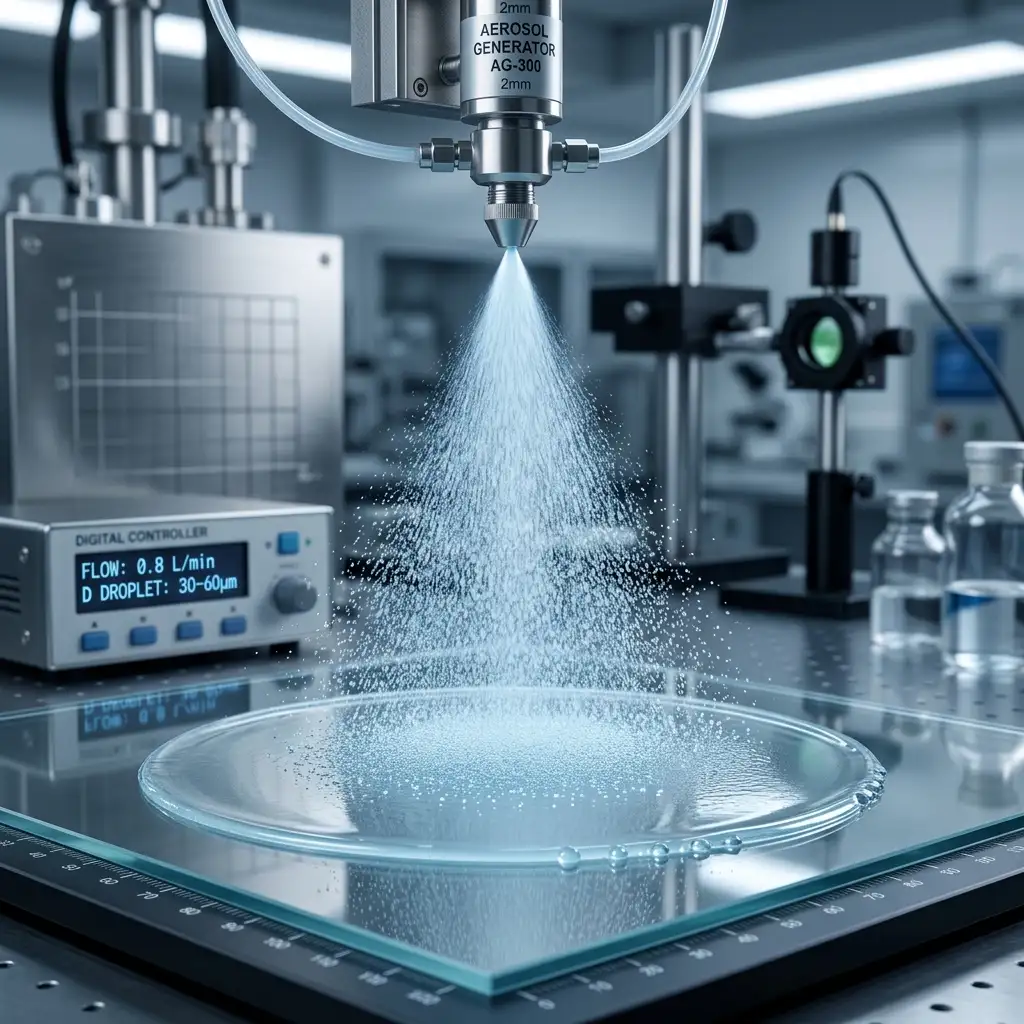
Aerosolised disinfectants must be engineered to deliver a specific droplet size range to maximise surface contact while minimising inhalation and runoff risks. The optimal droplet size for surface-acting disinfectant aerosols is typically between 40 and 80 microns. Droplets smaller than approximately 10 microns remain airborne as dry fog, failing to wet surfaces adequately and posing inhalation hazards. Droplets larger than 150 microns coalesce on impact, creating coalescence pooling on horizontal surfaces and runoff on vertical ones — wasting the active concentrate and potentially damaging sensitive electronic or polished surfaces in healthcare settings.
Droplet size is determined by the interaction between the formulation viscosity, propellant vapour pressure, and actuator orifice geometry. The aerosol's particle size distribution measurement — using laser diffraction or cascade impactor methods — is a key quality attribute that must be controlled during product development and validated during manufacturing. The engineering of surface coverage is therefore a physics and fluid dynamics problem as much as a chemistry one.
- Surface tension reduction: Professional formulations incorporate non-ionic surfactants to reduce contact angle on surfaces, allowing the droplet to spread into microscopic pits and textural features of the substrate.
- Pressure and valve dynamics: The internal can pressure, combined with the valve's vapour tap ratio, dictates the degree of mechanical break-up during the liquid-to-spray transition at the actuator orifice.
- Actuator selection: The final spray pattern — whether a fine mist, wide cone, or directed stream — is determined by the internal geometry of the actuator's swirl chamber and orifice diameter. For a detailed treatment, see our guide on aerosol actuator design and spray patterns.
4. Navigating the Regulatory Landscape (Global & India)
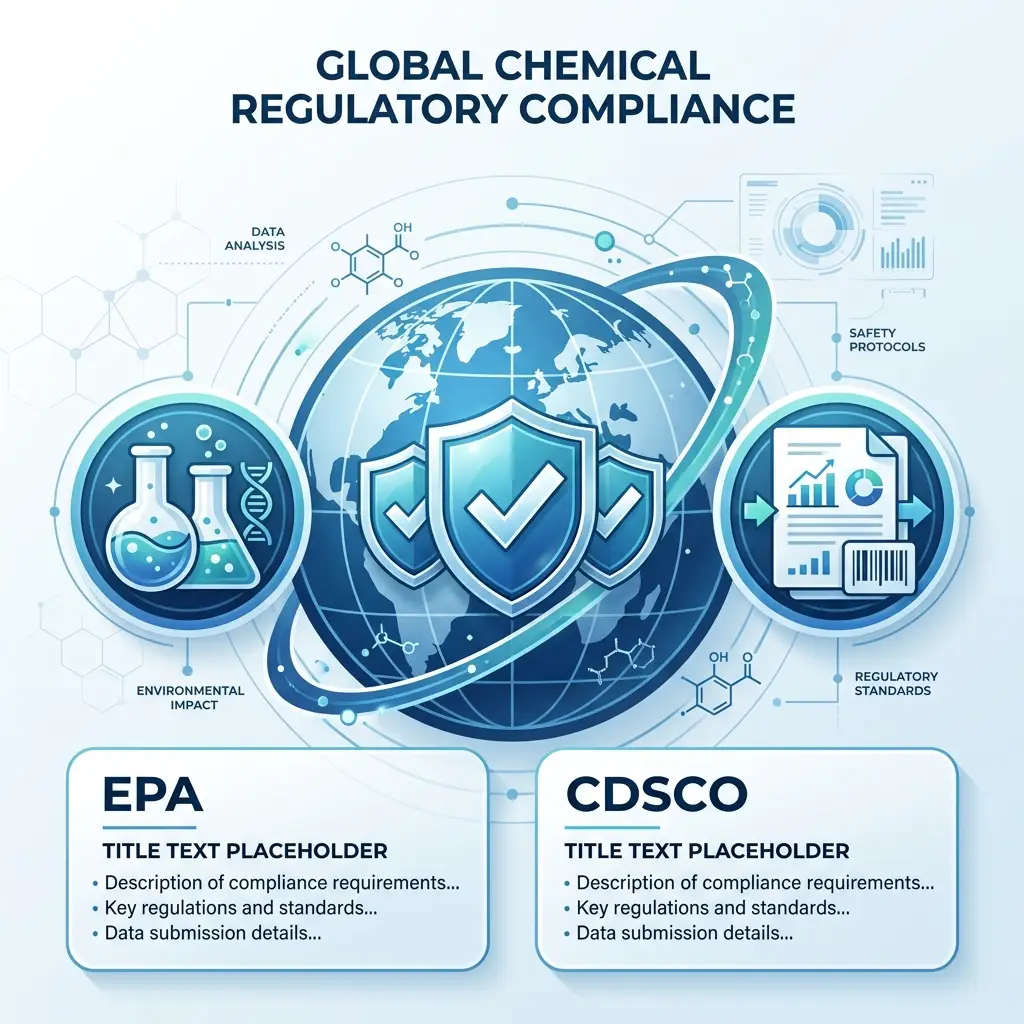
Aerosols designed for disinfection are classified as biocides or pesticide products, subjecting them to strict regulatory control globally and in India. Unlike conventional cleaning products, disinfectant aerosols must demonstrate quantified antimicrobial efficacy through standardised third-party testing before any antimicrobial claim can be made on the label or in marketing. In the US, the Environmental Protection Agency (EPA) manages disinfectant registrations under FIFRA, accessible through the EPA antimicrobial pesticides programme. In India, the CDSCO (Central Drugs Standard Control Organization) governs these products under the Drugs and Cosmetics Act, specifically under Schedule O for disinfectants.
Regulatory requirements also extend to the aerosol container itself — pressure vessel compliance under DOT, UN, and regional regulations applies regardless of the nature of the contents. Navigating these overlapping compliance frameworks early prevents costly reformulation or product recall after launch. Our guide on DOT and UN aerosol transport regulations covers the hazmat classification, Limited Quantity exemptions, and air transport rules that apply to disinfectant aerosols in the supply chain.
4.1 Indian Compliance: CDSCO and Schedule 'O'
Manufacturers targeting the Indian market must demonstrate compliance with Schedule 'O' standards, which specify testing against defined bacterial strains to minimum log-reduction benchmarks. The technical dossier for CDSCO registration must include stability data demonstrating active potency at end of shelf life and AOAC efficacy data. The Indian regulatory framework also requires product labelling to comply with the Drugs and Cosmetics Rules, including declaration of active ingredients and their concentrations.
4.2 EPA List N and Global Standards
Products intended for healthcare use in the US must be registered on specialised lists such as EPA List N for SARS-CoV-2 efficacy. This requires testing against designated harder-to-kill pathogen surrogates according to the AOAC 961.02 Germicidal Spray Test protocol, which proves 100% kill across specified replicates under defined conditions. EU-market products must additionally comply with the Biocidal Products Regulation (BPR) administered by the ECHA.
| Region | Primary Agency | Key Standard |
|---|---|---|
| India | CDSCO | Drugs & Cosmetics Act — Schedule O |
| United States | EPA | FIFRA / AOAC 961.02 |
| European Union | ECHA | Biocidal Products Regulation (BPR) |
5. Technical Formulation and Material Compatibility
The active chemical concentrate in a disinfectant aerosol must be compatible with all aerosol container components — valve, gasket, dip tube, and internal can lining — as well as the target surfaces it will contact. Corrosive disinfectants degrade elastomer valve gaskets over time, causing leakage and pressure loss; oxidising actives attack inadequately protected metal can walls, compromising structural integrity. Formulators use specific buffer systems, corrosion inhibitors, and carefully selected solvents to ensure product shelf life meets commercial requirements while maintaining substrate safety on the target surfaces. The broader context of aerosol can corrosion causes and control and formulation-driven corrosion mechanisms are covered in our dedicated two-part series.
Compatibility testing is a critical phase of the R&D cycle. High-alcohol formulations can cause solvent cracking in certain acrylic polymers used in medical equipment housings; oxidative disinfectants can corrode brass or low-grade steel hardware components. Professional formulators validate compatibility using accelerated exposure protocols — typically 12 weeks at elevated temperature — before committing to a manufacturing specification.
- Gasket and valve selection: Active chemicals like Dimethyl Ether (DME) as a co-solvent require EPDM or fluoropolymer gaskets to prevent swelling and seal failure. High-alcohol systems typically require EPDM rather than Buna-N (Nitrile), which swells in ethanol.
- Can linings: Tinplate and aluminium aerosol cans require internal epoxy-phenolic or modified epoxy coatings to resist chemical attack from the disinfectant concentrate — particularly important for oxidising actives and Quat-containing systems.
- Active concentration balance: The loading of the active ingredient must be sufficient for efficacy under worst-case dilution conditions (e.g., absorption into surfaces) while avoiding unacceptable residue or filming on polished or sensitive substrates at the intended use concentration.
For startups planning to develop disinfectant aerosols, the full technical path from laboratory proof-of-concept through compatibility testing, efficacy validation, and regulatory registration is lengthy and capital-intensive. Our guide on aerosol manufacturing fundamentals provides an essential technical foundation, and contract aerosol filling describes how outsourcing manufacturing can reduce initial capital requirements during the registration and market-entry phase.
Frequently Asked Questions
Why are disinfectant aerosols more effective than trigger sprays for surface coverage?
Disinfectant aerosols deliver a more uniform droplet distribution compared to trigger sprays because propellant pressure atomises the concentrate into a controlled droplet size range (typically 40–80 microns) that wets surfaces evenly without pooling or dry spots. Trigger sprays produce larger, more variable droplets that coalesce on textured surfaces and leave untreated areas. Consistent aerosol valve dosing also ensures the active ingredient is delivered at the correct concentration across the surface, essential for regulated log-reduction claims.
What is dwell time and why does it matter for disinfectant aerosols?
Dwell time — also called wet contact time — is the duration for which the disinfectant solution must remain in wet contact with the target surface for the active ingredient's kill mechanism to complete. EPA and CDSCO registration claims specify a minimum dwell time (typically 2–10 minutes) that must be achieved under normal use conditions. An aerosol formulator must ensure the solvent and propellant system evaporates slowly enough to maintain a wet film on the surface for the full required dwell time — validated during efficacy testing.
How do quaternary ammonium compounds (Quats) kill bacteria in disinfectant aerosols?
Quaternary ammonium compounds (Quats) kill bacteria primarily through cell membrane disruption. The positively charged quaternary nitrogen group is attracted to the negatively charged bacterial cell envelope, where it inserts into and disrupts the lipid bilayer. This causes loss of membrane integrity, leakage of intracellular contents, and cell death. Quats are effective against a broad spectrum of bacteria and fungi but less effective against non-enveloped viruses and bacterial spores, which require stronger oxidising agents.
What is the difference between EPA List N and CDSCO Schedule O for disinfectants?
EPA List N (USA) lists disinfectants registered as effective against SARS-CoV-2, evaluated under FIFRA protocols including the AOAC 961.02 Germicidal Spray Test, which requires 100% kill against specified surrogates across multiple replicates. CDSCO Schedule O (India) sets minimum standards for disinfectants under the Drugs and Cosmetics Act, requiring efficacy testing against specified bacterial strains to defined log-reduction levels and stability data showing active potency at end of shelf life. Both are mandatory pre-market registrations for products making antimicrobial claims.
Why must disinfectant aerosol droplets be between 40 and 80 microns?
The 40–80 micron droplet size range is optimal because droplets in this range are large enough to wet surfaces and achieve the required contact time, while small enough to distribute evenly without excessive coalescence and runoff. Droplets below approximately 10 microns remain airborne as dry fog and pose inhalation hazards. Droplets above 150 microns create puddling on horizontal surfaces and runoff on vertical ones, wasting active concentrate and leaving untreated areas.
What gasket and can lining materials are compatible with disinfectant aerosol formulations?
Gasket and can lining selection depends on the active ingredient and carrier system. High-alcohol formulations require EPDM or Neoprene gaskets rather than Buna-N, which swells in alcohol. Formulations containing DME as a propellant require fluoropolymer-compatible elastomers. Tinplate and aluminium cans require internal epoxy-phenolic or modified epoxy coatings to prevent corrosive attack by oxidising actives such as hydrogen peroxide or Quat-containing systems, particularly during water bath testing at 55°C.
Need Technical Support for Aerosol Formulations?
Partner with Global Aerosols to audit, scale up, and troubleshoot your aerosol chemistry, canister pressure calculations, filling lines, and safety systems.
Email: consulting@globalaerosols.com
Website: https://www.globalaerosols.com
Phone: +91 9819548320 +91 8169102990
About the Specialist
Absar Khan is the principal consultant and chemical formulation architect at Global Formulation. He possesses cross-disciplinary engineering expertise spanning aerosol gassing systems, pharmaceutical manufacturing, sterile injectables, cosmetics, and green chemical plant setups. Absar leads scientific and engineering advisory teams supporting manufacturers globally in technology selection, GMP layouts, validation frameworks, and regulatory strategies.
LinkedIn Portfolio: Connect with Absar Khan on LinkedIn