Cosmetic Aerosol Hair Products Explained: Hair Sprays, Color Sprays, Shampoos & Shine Systems
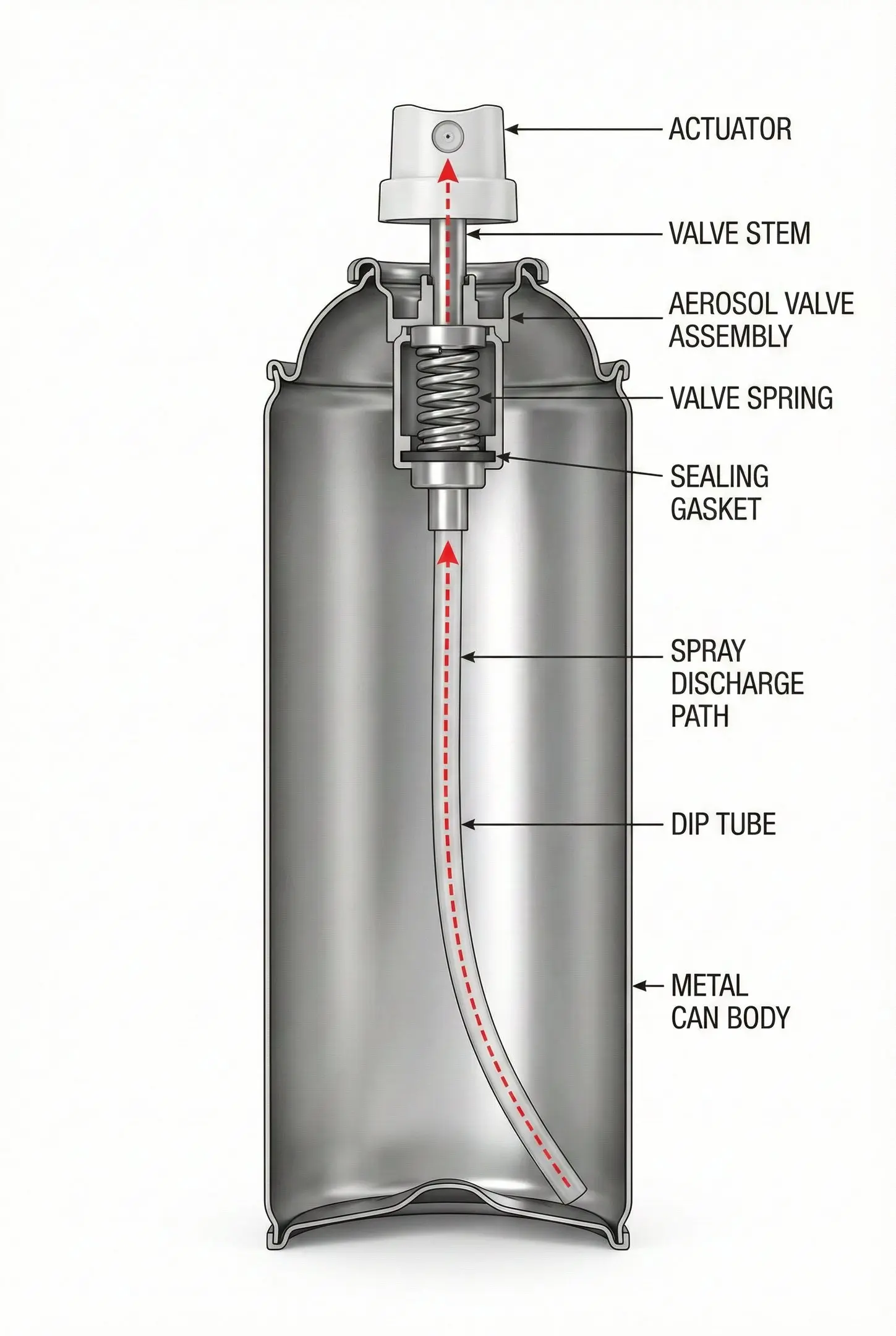
Guide Contents
- 1. Why Aerosol Hair Products Require Specialised Expertise
- 2. Understanding Cosmetic Aerosols in Haircare
- 3. Hair Spray Aerosols: Hold, Control & Styling
- 4. Temporary Hair Color Spray Aerosols
- 5. Aerosol Dry Shampoos and Cleansing Sprays
- 6. Hair Shine and Gloss Aerosol Sprays
- 7. Aerosol Chemistry Ecosystem in Hair Products
- 8. Manufacturing and Quality Considerations
- 9. Market Relevance: India and Global Perspective
- 10. Frequently Asked Questions
Cosmetic aerosol hair products represent one of the most advanced intersections of formulation chemistry, aerosol engineering, and consumer performance science. From styling and aesthetics to hygiene and sensory appeal, aerosol delivery systems enable precise, uniform, and hygienic application that conventional packaging cannot easily replicate. Globally and in India, aerosol hair products continue to grow due to urban lifestyles, instant grooming demand, and professional salon influence. This article explains the chemistry ecosystem, aerosol technology, performance mechanisms, manufacturing considerations, and market relevance of aerosol hair sprays, temporary hair color sprays, aerosol shampoos, and hair shine sprays — without revealing proprietary formulations. The broader context of personal care and cosmetic aerosol engineering is covered in our category guide.
Real-World Industry Context: Why Aerosol Hair Products Require Specialised Expertise
Cosmetic aerosol hair products are not generic cosmetic items — they are pressurised engineered systems that combine formulation chemistry, mechanical hardware, and regulatory compliance. Unlike conventional hair products, aerosol failures can lead to spray inconsistency, clogging, pressure loss, corrosion, or safety recalls if not properly engineered. The regulatory framework for cosmetic aerosols spans multiple jurisdictions: in the EU, the Cosmetics Regulation (EC) No 1223/2009 governs ingredient safety, while the EU Aerosol Dispensers Directive 75/324/EEC controls pressure vessel requirements. In the US, the FDA oversees cosmetic aerosols as both cosmetics and, where relevant, as drugs. Resources from the FDA — Cosmetic Products division are essential reading for formulation teams targeting US markets.
In professional practice, most performance issues in hair spray formulations, temporary hair colour formulations, or aerosol shampoo systems originate not from ingredients alone, but from misalignment between chemistry, propellant behaviour, and aerosol hardware. This makes aerosol hair products a highly specialised domain requiring cross-disciplinary expertise rather than trial-and-error development. Three core areas of expertise are non-negotiable for professional aerosol hair product development:
- Proven aerosol formulation and scale-up experience — understanding how laboratory prototype performance translates to commercial filling conditions.
- Understanding of valve–actuator–formulation interaction — spray rate, droplet size, and pattern are mechanical outcomes that the formulation must be designed around.
- Compliance with cosmetic, transport, and pressure vessel regulations — requirements that vary significantly across India, the EU, and the US.
Understanding Cosmetic Aerosols in Haircare
Cosmetic aerosols are pressurised delivery systems designed to dispense haircare formulations in controlled spray patterns using propellant energy. Unlike pump sprays, aerosols provide fine atomisation, consistent dose delivery, and minimal microbial exposure during use. This makes them ideal for styling, cosmetic coverage, and surface modification of hair fibres. The atomisation process is governed by the interplay between propellant vapour pressure, valve and actuator orifice geometry, and formulation rheology — all of which must be specified together rather than in isolation. European industry guidance from the FEA (European Aerosol Federation) provides technical and market data useful for understanding the scale and technical standards of the cosmetic aerosol sector.
From a formulation science perspective, aerosol hair products rely on a balance between polymers, solvents, conditioning agents, pigments or absorbents, and propellants — all engineered for stability and safety across the product's shelf life. Compatibility between formulation components and aerosol hardware is critical: instability can lead to clogging, pressure loss, inconsistent spray, or product separation. The mechanical principles behind how aerosol cans work — covering propellant physics, valve mechanics, and actuator design — provide the foundation for understanding the engineering constraints of hair aerosol systems.
Hair Spray Aerosols: Hold, Control, and Styling Performance
Hair spray aerosols are designed to provide mechanical hold, shape retention, and environmental resistance while maintaining acceptable sensory feel. Hair spray formulations function by depositing a thin polymeric film on hair fibres, creating temporary bonding and stiffness without permanent chemical alteration of hair structure. The degree of hold is determined primarily by the polymer's glass transition temperature (Tg), molecular architecture, and concentration — all selected to produce the desired rigidity range without brittleness or flaking. The performance of aerosol hair sprays also depends heavily on atomisation quality, polymer film formation behaviour, solvent evaporation rate, and propellant pressure stability.
| Hair Spray Category | Performance Objective | Key Formulation Consideration |
|---|---|---|
| Light-hold styling spray | Volume and movement, reworkable | Low-Tg polymer, lower concentration |
| Medium-hold hair spray | Shape retention without stiffness | Balanced polymer Tg, moderate load |
| Strong-hold hair spray | Maximum rigidity, humidity resistance | High-Tg polymer, higher film-former concentration |
| Flexible-hold spray | Hold with natural movement, no crunch | Elastomeric polymer, plasticiser balance |
Propellant selection directly governs spray fineness and drying speed: LPG blends produce fine, fast-drying mists suited to styling sprays, while compressed nitrogen is sometimes used in more sensitive formulations where hydrocarbon propellant solvency conflicts with the polymer system. For detailed propellant selection guidance, our propellants comparison guide covers LPG, DME, HFC, N₂, and CO₂ performance characteristics in depth.
Temporary Hair Color Spray Aerosols
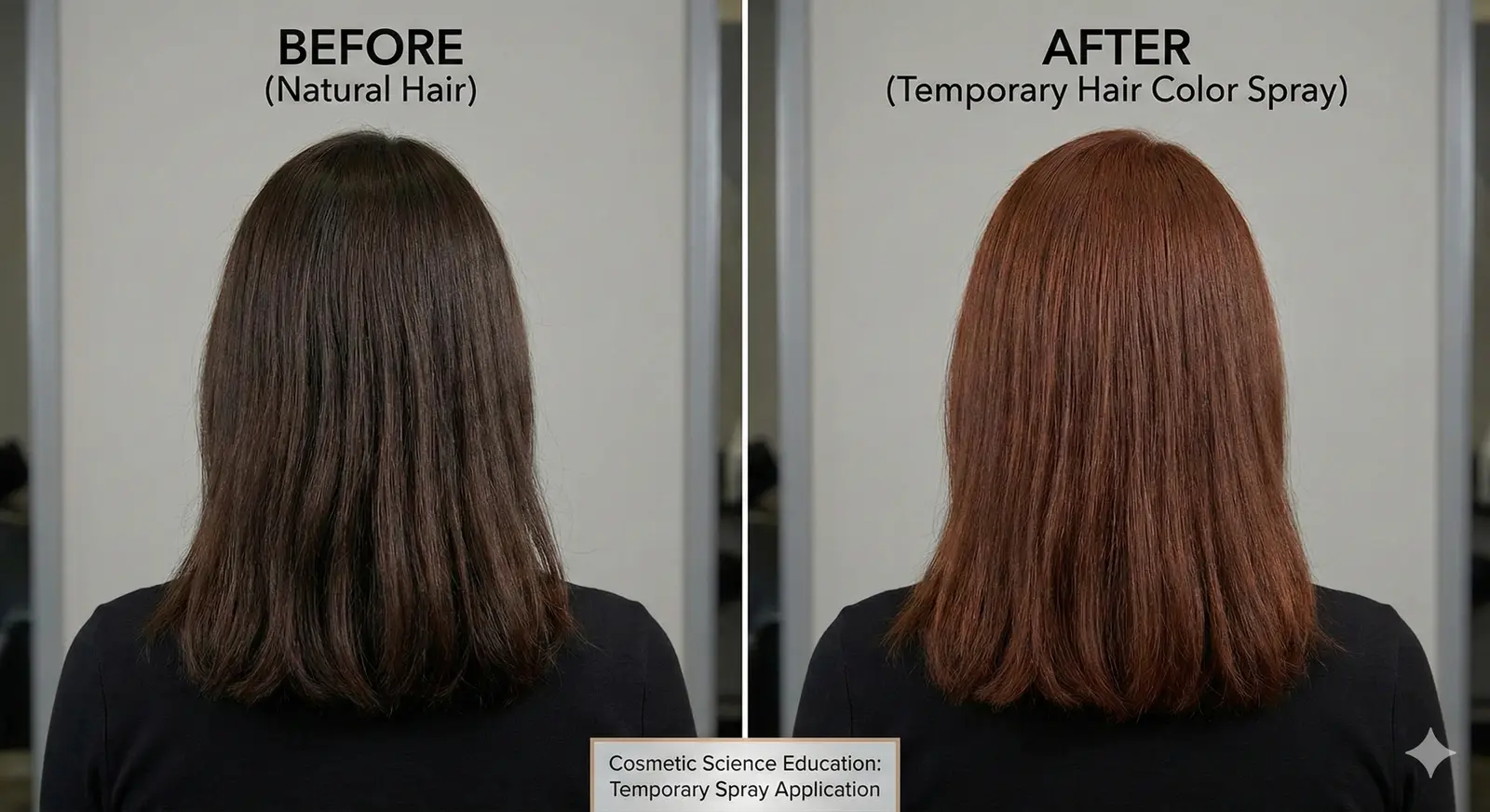
Temporary hair color sprays provide instant cosmetic coverage without chemical dye reactions. These systems deposit pigments or certified colour lakes onto the hair surface, enabling quick shade changes, grey coverage, or fashion styling effects that wash out with shampooing. The formulation challenge is distributing insoluble pigment particles uniformly at the valve and actuator without clogging while maintaining shelf-stable suspension throughout the product's life. Aerosol delivery is critical for uniform pigment distribution, controlled colour intensity, and reduced patchiness on the hair shaft.
The pigments used in temporary hair colour aerosols must comply with applicable cosmetics regulations — in the EU, only pigments listed in Annex IV of the EU Cosmetics Regulation are permitted for use on hair. In India, approved colorants are governed by the Cosmetics Rules under the Drugs and Cosmetics Act, and guidance is available from regulatory bodies including the European Chemicals Agency (ECHA) for EU-targeted products. Suspension valve systems — with agitator balls and wide-orifice stems — are standard hardware for temporary colour aerosols, and their design must be validated against the specific pigment particle size distribution used in the formulation.
Aerosol Dry Shampoos and Cleansing Sprays
Aerosol dry shampoos, the fastest-growing segment of the hair aerosol category, are formulated to absorb excess sebum, refresh hair appearance, and improve manageability without water. These systems rely on absorbent powder particles — starches such as tapioca, corn, or rice starch, and silica derivatives — suspended in a volatile carrier propelled by LPG or DME. The aerosol format ensures even powder dispersion across the scalp and hair roots, minimising localised buildup and improving cosmetic finish. Spray force and droplet dynamics must be tuned to prevent visible white residue while ensuring sufficient powder delivery for effective oil absorption.
Formulation of aerosol dry shampoos involves managing powder suspension stability throughout the can's life — a technical challenge involving particle size control, dispersant chemistry, and agitation system design. The starch particle size and surface chemistry must be optimised to remain uniformly dispersed under propellant pressure without agglomeration, which would cause valve clogging. For context on how these engineering trade-offs relate to broader aerosol particle size distribution and measurement principles, our dedicated guide covers laser diffraction, MMAD, and spray characterisation in detail. A closely related product category — dedicated aerosol dry shampoo systems with starch and silica selection criteria — is covered in our dry shampoo aerosol formulation guide.
Hair Shine and Gloss Aerosol Sprays
Hair shine sprays are designed to enhance optical reflectivity and smooth the hair surface, creating a polished and healthy appearance. These systems deposit lightweight conditioning agents — typically silicone oils, dimethicone derivatives, or natural oil blends — and gloss enhancers that modify surface roughness and increase the specular reflectance of hair fibres. The principle is established in surface physics: smoother surfaces with lower roughness values scatter less light and produce higher specular gloss readings. Aerosol delivery ensures fine, controlled deposition without excessive coating that would weigh down the hair or create a greasy feel.
Shine spray performance is closely linked to spray pattern uniformity, solvent evaporation control, and residue transparency. If the conditioning agent deposit is too heavy, it creates a greasy appearance and weighed-down feel; too light, and the gloss effect is imperceptible. The conditioning agent concentration and propellant ratio must be balanced to produce an optimal deposit weight across the target hair type. This is a quantitative engineering problem, not a qualitative one, and commercial shine spray development requires spray characterisation testing.
Aerosol Chemistry Ecosystem in Hair Products
While formulations are proprietary, the chemistry ecosystem behind cosmetic aerosol hair products is well-established and regulated. These systems involve a structured interaction between film-forming polymers, solvents, conditioning agents, pigments or absorbents, and propellants — all engineered for stability and safety. Compatibility between formulation components and aerosol hardware is critical, and instability manifests as clogging, pressure loss, inconsistent spray, or product separation over shelf life. The relevant chemistry domains include:
- Hair spray formulation chemistry: Film-former polymer selection, plasticiser balance, solvent evaporation rate, and humidity-resistance engineering.
- Temporary hair colour formulation systems: Pigment suspension stability, certified colorant selection, and film-former-pigment matrix design.
- Cosmetic solvent–polymer interaction science: Ensuring the polymer remains fully dissolved or stably dispersed in the solvent-propellant mixture under can pressure conditions.
- Surface chemistry of hair fibres: Understanding the electrostatic and hydrophobic interactions that govern how polymers, conditioning agents, and pigments deposit and adhere to the hair cuticle.
Propellants and Spray Physics in Hair Aerosols
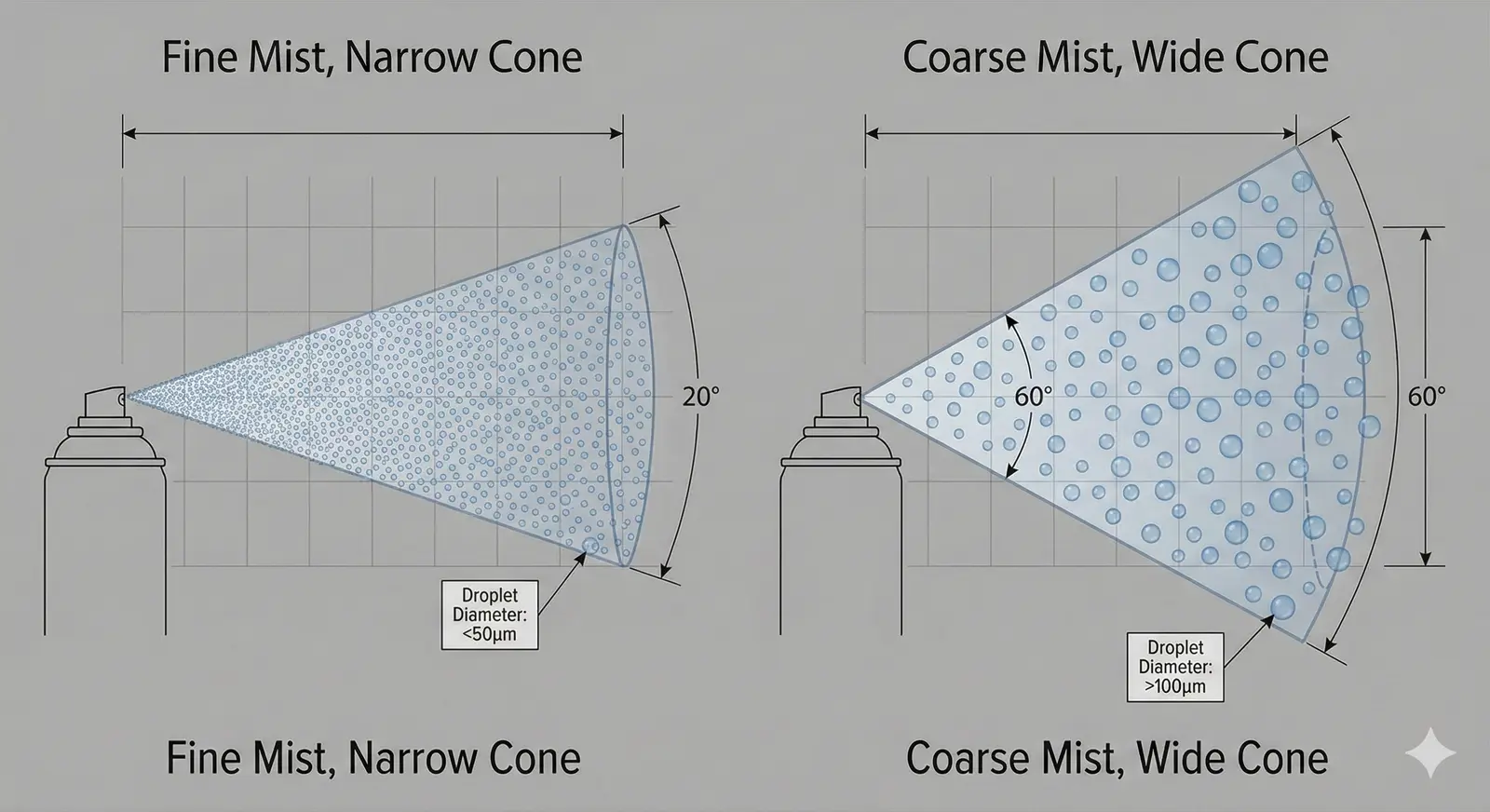
Propellants provide the driving force for atomisation and delivery of hair aerosol products. Different propellant systems produce different spray characteristics — influencing droplet size, spray angle, wetness, and deposition efficiency — making propellant selection both a technical and a regulatory decision. The propellant blend formulation and vapour pressure control guide explains how binary LPG mixture ratios are used to tune spray pressure for specific product applications, including cosmetics.
Manufacturing and Quality Considerations
Cosmetic aerosol hair products require controlled manufacturing environments, precision filling equipment, and strict quality systems. Consistency in fill weight, pressure, spray rate, and valve performance is essential for both safety and brand reputation. Aerosol manufacturing for cosmetics must comply with Good Manufacturing Practice (GMP) requirements applicable in the target market — in India under CDSCO guidelines, in the EU under ISO 22716 (Cosmetics GMP), and in the US under FDA cosmetics guidance. Quality control extends beyond formulation to include can integrity testing, valve crimping accuracy, propellant purity verification, and finished product stability testing across multiple temperature conditions.
Why Aerosol Hair Products Fail Without Process Control
In industrial settings, aerosol hair product failures are rarely caused by a single factor. Instead, they result from cumulative deviations in filling accuracy, crimp quality, propellant purity, or formulation-packaging compatibility. Even technically sound hair spray formulations fail if manufacturing controls are inadequate, since valve crimp depth directly controls the leak rate and spray rate simultaneously. Process failures in aerosol hair product manufacturing are documented in the aerosol industry literature and are avoidable through validated processes and documented quality systems. The aerosol filling line guide covering crimping, gassing, and leak detection describes the specific process controls that prevent these failures. Cosmetic aerosol manufacturing quality considerations also apply to cosmetics aerosol manufacturing more broadly, and that guide provides useful comparative context.
Market Relevance: India and Global Perspective
The cosmetic aerosol hair product sector represents a rapidly expanding market globally and in India, driven by high demand for styling products, temporary coloring systems, and dry shampoos. Industry data from the British Aerosol Manufacturers' Association (BAMA) and the FEA document sustained growth in personal care aerosol volumes across European markets, with similar trends in Asian markets driven by urbanisation. In India, aerosol hair products are driven by growing grooming awareness, salon influence on retail consumers, and premium personal care trends in urban centres. Startups and entrepreneurs entering this space must understand aerosol science, compliance, and performance expectations before commercialisation, as the capital requirements for validated aerosol manufacturing infrastructure are substantial. Our guide to scaling aerosol products from lab to commercial launch covers the technical and commercial pathway from prototype to production.
Frequently Asked Questions
How does aerosol delivery improve hair spray performance compared to pump sprays?
Aerosol delivery provides finer, more uniform atomisation than pump sprays because propellant pressure converts the concentrate into a consistent fine mist at a fixed particle size range. This produces more even polymer film deposition across hair fibres, better hold uniformity, and lower visible residue. Pump sprays rely on mechanical action, producing larger, less consistent droplets that can result in localised over-deposition and flaking.
What polymers are used in aerosol hair spray formulations for different hold levels?
Aerosol hair spray formulations use film-forming polymers tailored to the desired hold level. Flexible-hold sprays rely on low-Tg (glass transition temperature) polymers that maintain some mobility after film formation, while strong-hold sprays use higher-Tg polymers that form a rigid, locked film. Polymer molecular weight, acid number, and hydrophilicity also influence humidity resistance, combability, and flake formation. Specific polymer classes include acrylates, PVP copolymers, and polyurethane dispersions.
How do aerosol dry shampoos absorb scalp oil?
Aerosol dry shampoos work by depositing absorbent powder particles — typically starches such as tapioca or rice starch, or silica derivatives — onto the scalp and hair roots via the aerosol spray. These particles physically adsorb sebum and surface lipids from the hair shaft, transferring them away from the scalp surface. After application, the powder is worked through the hair and brushed or combed out along with the absorbed oil.
Why do temporary hair color sprays require aerosol delivery?
Aerosol delivery achieves uniform pigment distribution across the hair surface because propellant atomisation produces fine, consistent droplets that deposit evenly without pooling or streaking. Conventional applicators cannot maintain pigment suspension uniformity or achieve the fine deposition required for smooth colour coverage, particularly on longer hair. The aerosol format also enables volatile carrier solvents that evaporate quickly after deposition, producing a dry, even colour finish.
What propellants are used in cosmetic hair aerosols?
Cosmetic hair aerosols commonly use LPG blends, Dimethyl Ether (DME), and compressed gases such as nitrogen. LPG blends deliver consistent spray pressure throughout the product's life and produce the fine mist preferred for styling. DME has useful solvency properties and produces particularly fine particle sizes. Compressed nitrogen is used in sensitive formulations where hydrocarbon propellants are incompatible. Propellant choice directly influences spray force, droplet size, drying speed, and flammability classification.
What manufacturing controls are critical for aerosol hair product quality?
Critical manufacturing controls include: valve crimp integrity, fill weight accuracy for both concentrate and propellant, spray rate and particle size verification, pressure testing at 55°C per transport regulations, and stability testing under accelerated conditions. Filling environments must maintain separation between solvent-handling and propellant-gassing zones with explosion-proof electrical systems wherever flammable propellants are in use.
Need Technical Support for Aerosol Formulations?
Partner with Global Aerosols to audit, scale up, and troubleshoot your aerosol chemistry, canister pressure calculations, filling lines, and safety systems.
Email: consulting@globalaerosols.com
Website: https://www.globalaerosols.com
Phone: +91 9819548320 +91 8169102990
About the Specialist
Absar Khan is the principal consultant and chemical formulation architect at Global Formulation. He possesses cross-disciplinary engineering expertise spanning aerosol gassing systems, pharmaceutical manufacturing, sterile injectables, cosmetics, and green chemical plant setups. Absar leads scientific and engineering advisory teams supporting manufacturers globally in technology selection, GMP layouts, validation frameworks, and regulatory strategies.
LinkedIn Portfolio: Connect with Absar Khan on LinkedIn