Dry Shampoo Aerosol Formulation: Starch & Propellant
Guide Contents
- 1. Dry Shampoo Aerosol Formulation: Core Principles
- 2. Dry Shampoo Starch Type Selection and Particle Sizing
- 3. Rice Starch vs Corn Starch Aerosol Performance
- 4. Suspension Chemistry and Non-Aqueous Solvent Carriers
- 5. Dry Shampoo Propellant Interaction and Atomization Physics
- 6. Laboratory Characterization and Oil Absorbing Aerosol Testing
- 7. Frequently Asked Questions
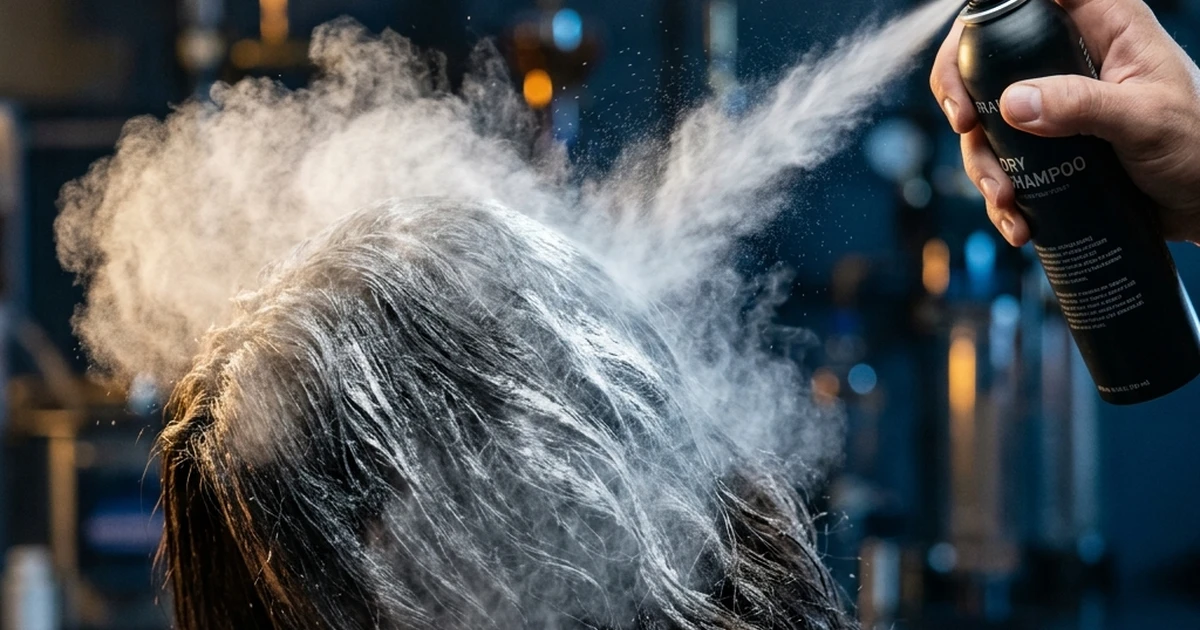
A professional dry shampoo aerosol formulation is a suspension of fine oil-absorbing powders in a liquefied propellant gas designed to cleanse hair without water. It works by wicking excess sebum from the scalp through solid-state adsorption, allowing the powder to be brushed or blown away easily. This matters for cosmetic manufacturers because creating stable powder suspensions prevents valve clogging, ensures consistent dosing, and controls visible white residue on hair. To understand the baseline physics of aerosol spray delivery, consult our guide on how aerosol cans work.
Because dry shampoo is a heterogeneous, solid-in-liquid suspension rather than a clear solution, it presents formulation challenges that solution-based personal care aerosols like hairsprays or body mists do not share. The suspended starch particles are denser than the surrounding liquid carrier and propellant, so without careful rheological control they settle, cake, and eventually block the dip tube or valve orifice — a failure mode unique to powder aerosols. Getting particle size, carrier viscosity, and propellant selection to work together as one stable system is what separates a dry shampoo that redisperses cleanly with a single shake from one that clogs on the shelf.
Dry Shampoo Aerosol Formulation: Core Principles
Designing a dry shampoo aerosol formulation requires balancing powder suspension stability, solvent drying kinetics, and propellant expansion ratios. Unlike solution-based aerosols, dry shampoos are heterogeneous suspensions that tend to sediment over time. Formulators must ensure that the starch particles remain dispersed or easily re-suspendable upon shaking to prevent hard-packing at the bottom of the canister. To examine the manufacturing facilities and filling equipment used to produce cosmetic aerosols, refer to our detailed guide on cosmetic aerosol manufacturing.
A typical dry shampoo formulation contains three primary phases: the active powder absorbent, a liquid carrier solvent, and the propellant blend. The active powder binds to sebum, while the volatile carrier solvent acts as a temporary vehicle to disperse the powder during spraying. The propellant provides the kinetic energy to atomize the liquid carrier, creating a dry shampoo powder spray. As the spray travels through the air, the volatile solvent evaporates, leaving a dry, fine mist of oil-absorbing particles on the hair fibers.
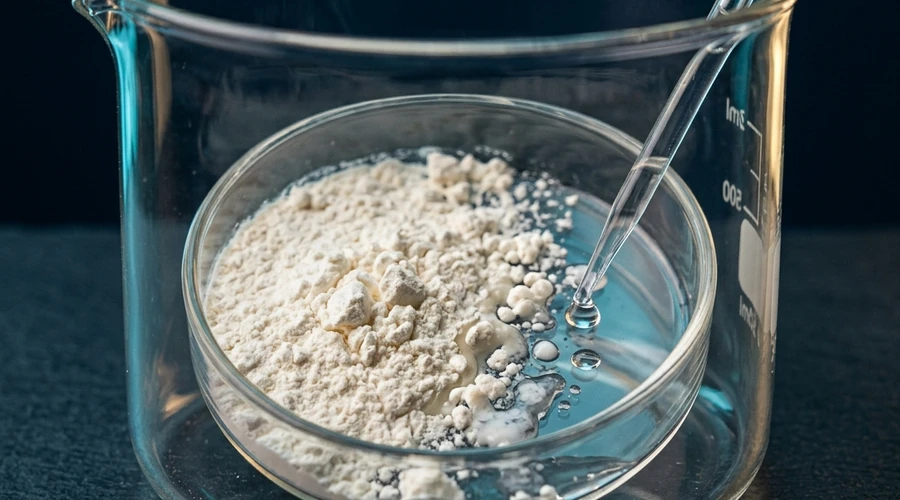
Figure 1: Laboratory testing of starch powder structures, evaluating bulk densities and moisture properties under controlled humidity.
Dry Shampoo Starch Type Selection and Particle Sizing
Selecting the appropriate dry shampoo starch type is critical for oil absorption capacity and sensory properties. The ideal starch must have high porosity, a low moisture content, and a narrow particle size distribution. If the particles are too large, they scatter light and leave a noticeable white residue on dark hair. If they are too small, they can become inhaled hazards and pack tightly, clogging the valve cup. For a complete analysis of ingredient selection in cosmetic spray products, read our guide on cosmetic aerosol hair products.
Formulators often choose modified starches to optimize hydrophobic oil affinity. Aluminum starch octenylsuccinate, for example, is modified to introduce hydrophobic chains, improving sebum absorption. Untreated natural starches like corn starch tend to clump under humid conditions due to hydrogen bonding between glucose chains. Hydrophobic modification reduces this clumping, ensuring that the powder particles remain separate and flow freely through the dip tube during actuation.
| Starch Type (INCI Name) | Mean Particle Size (D50) | Oil Absorption Index | Visible Residue Profile |
|---|---|---|---|
| Oryza Sativa (Rice) Starch | 2 – 8 μm | High | Excellent (Micro-fine, easily dispersed) |
| Zea Mays (Corn) Starch | 12 – 20 μm | Moderate | Moderate (Visible on darker hair shades) |
| Tapioca Starch | 10 – 15 μm | Moderate | Moderate (Soft texture, average absorption) |
| Aluminum Starch Octenylsuccinate | 10 – 18 μm | Very High | Good (Hydrophobic modification improves wicking) |
Rice Starch vs Corn Starch Aerosol Performance
When comparing a rice starch vs corn starch aerosol, rice starch is preferred for high-end formulations due to its small particle size. Rice starch granules range from 2 to 8 micrometers, while corn starch granules average 12 to 20 micrometers. This difference in size changes how light scatters off the hair surface. The smaller rice starch particles distribute evenly, absorbing oil while remaining nearly invisible to the naked eye. In contrast, larger corn starch particles reflect more light, creating a white cast that is difficult to brush out of dark hair. To understand the physical properties of surfactants and additives in suspensions, consult aerosol chemistry 101.
The small size of rice starch also increases its surface-area-to-volume ratio, giving it a higher sebum absorption rate per gram. However, these fine particles are prone to agglomeration inside the can due to electrostatic forces. To prevent this, formulators include anti-caking agents like colloidal silica or magnesium stearate. These agents coat the starch particles, creating physical barriers that keep them separated and free-flowing.
Suspension Chemistry and Non-Aqueous Solvent Carriers
The stability of a dry shampoo aerosol formulation depends on suspension chemistry and the selection of the non-aqueous carrier solvent. Because starch is insoluble in liquefied propellants, the particles tend to settle over time. According to Stokes' Law, the sedimentation rate is determined by the particle radius, the density difference between the solid and liquid phases, and the viscosity of the liquid carrier. Because liquefied propellants have low densities (around 0.5 to 0.6 g/cm³) and low viscosities, starch particles (density ~1.5 g/cm³) settle quickly. To study how manufacturing facilities handle raw material properties and quality testing, refer to cosmetic aerosol manufacturing.
To slow this settling, formulators add volatile solvents like denatured alcohol (Ethanol) or light esters. These solvents increase the viscosity of the liquid phase and act as carriers for the starch. Rheological modifiers, such as disteardimonium hectorite, are also added to build a weak gel network inside the can. This gel keeps the starch particles suspended during storage, but breaks down under the shear forces of shaking, allowing the product to dispense cleanly. The solvent must also evaporate quickly upon spraying; if it evaporates too slowly, it will wet the hair, defeating the purpose of a dry shampoo.
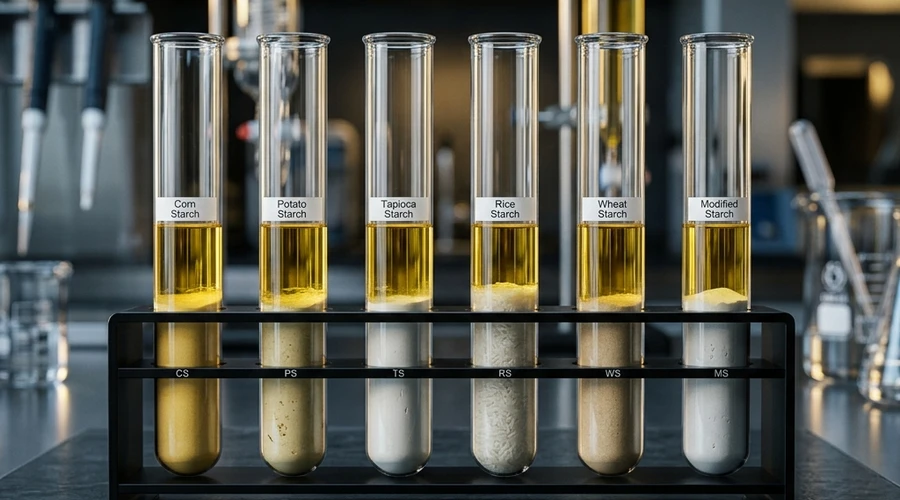
Figure 2: Infographic showing the comparative sebum absorption test setup and wicking rates of rice, corn, and modified starches.
Dry Shampoo Propellant Interaction and Atomization Physics
The selection of the dry shampoo propellant dictates the pressure profiles and spray characteristics of the final product. Liquefied hydrocarbons, such as the butane, isobutane, and propane mixtures covered in our guide to aerosol propellants explained, are the standard choice for dry shampoos. These gases have high solubility in alcohol carriers, which reduces the viscosity of the liquid phase. During spray discharge, the propellant evaporates rapidly, breaking the liquid stream into a fine dry shampoo powder spray. Propellant choices also carry implications for VOC regulations and environmental compliance.
In regions with strict limits on Volatile Organic Compounds (VOCs), manufacturers are adopting alternative propellants. Dimethyl ether (DME) and hydrofluoroolefins like HFO-1234ze are being used to reduce carbon emissions while maintaining sufficient pressure for proper atomization. However, DME has higher polar solvency than hydrocarbons, which can cause swelling in standard valve gaskets. To prevent leaks, manufacturers use compatible elastomer gaskets like butyl or chloroprene rubber. The valve actuator must also feature a mechanical breakup nozzle to ensure the powder is dispersed evenly, preventing clumping.
Laboratory Characterization and Oil Absorbing Aerosol Testing
To bring a dry shampoo formulation to market, laboratory characterization and safety testing are essential. The dynamic behavior of the suspension is monitored using optical analyzers to measure sedimentation rates under accelerated conditions. Spray pattern analysis and particle size distribution are also measured to ensure the spray remains uniform over the life of the can. These testing protocols must align with global safety standards, including the EU Aerosol Dispensers Directive, which governs pressure tolerances, filling volumes, and labeling for commercial aerosols.
Efficacy is evaluated by measuring the sebum absorption capacity of the starch on synthetic hair swatches. Using infrared spectroscopy, researchers track the reduction of lipids on the hair fibers after treatment, a methodology consistent with peer-reviewed sebum and skin-lipid research indexed on PubMed. Additionally, flammability testing, including ignition distance and enclosed space ignition tests, is mandatory to meet the hazard classification requirements outlined in our aerosol can safety guide. These evaluations ensure that the dry shampoo is safe for consumer use and performs consistently under different storage conditions.
Frequently Asked Questions
Which starch is preferred for a dry shampoo aerosol formulation to minimize visible residue?
Oryza Sativa (rice) starch is highly preferred in dry shampoo aerosol formulations due to its exceptionally small and uniform particle size, typically ranging from 2 to 8 micrometers. This small particle diameter allows the starch to distribute evenly over the hair shaft, absorbing excess sebum while scattering less light, which dramatically reduces the unsightly white residue common with larger-grained starches.
How does dynamic viscosity affect the suspension stability of dry shampoo concentrates?
The stability of the non-aqueous powder suspension inside the aerosol can is governed by Stokes' Law. Since the starch particles do not dissolve, dynamic viscosity of the liquid carrier must be carefully optimized, often using rheological modifiers like disteardimonium hectorite. This prevents rapid sedimentation, hard-packing, and valve clogging during storage.
What are the common propellant options for dry shampoo aerosols?
Liquefied hydrocarbon propellants such as propane, butane, and isobutane blends are standard due to their low density and high vapor pressure, which aid in flash atomization. Increasingly, eco-friendly low-GWP options like dimethyl ether (DME) or HFO-1234ze are being adopted to comply with regional VOC standards while maintaining sufficient pressure for proper powder dispersion.
Why are specific ingredient percentages omitted in dry shampoo formulation discussions?
Exact ingredient percentages and phase ratios are kept confidential as proprietary trade secrets to protect intellectual property. Technical resources focus instead on ingredient functions, particle size characterizations, solvent polarity parameters, and suspension mechanisms to explain how dry shampoos perform without revealing commercial manufacturing recipes.
How does sebum absorption capacity vary among different starch types?
Sebum absorption capacity is determined by the starch's porous surface structure and oil absorption index. Modified starches like aluminum starch octenylsuccinate exhibit high hydrophobic affinity, drawing oil rapidly. Rice starch has a high surface-area-to-volume ratio due to its tiny size, yielding excellent absorption weight-for-weight compared to larger corn or potato starches.
What quality control tests are critical for dry shampoo aerosols?
Critical tests include pressure-testing according to the EU Aerosol Dispensers Directive (75/324/EEC) and spray pattern characterization to ensure uniform particle dispersion. The sedimentation rate is monitored under accelerated aging, and shake-and-spray checks are performed to verify that the suspension redisperses cleanly without packing the dip tube or clogging the valve.
Need Technical Support for Aerosol Formulations?
Partner with the Global Aerosols team to audit, scale up, and troubleshoot your aerosol chemistry, canister pressure calculations, filling lines, and safety systems.
Email: consulting@globalaerosols.com
Website: https://www.globalaerosols.com
Phone: +91 9819548320 +91 8169102990
About the Specialist
Absar Khan is the principal consultant and chemical formulation architect at Global Aerosols. He possesses cross-disciplinary engineering expertise spanning aerosol gassing systems, pharmaceutical manufacturing, sterile injectables, cosmetics, and green chemical plant setups. Absar leads scientific and engineering advisory teams supporting manufacturers globally in technology selection, GMP layouts, validation frameworks, and regulatory strategies.
LinkedIn Portfolio: Connect with Absar Khan on LinkedIn