Hair Mousse Aerosol Technology: Polymer Types, Hold Classification & Foam Structure
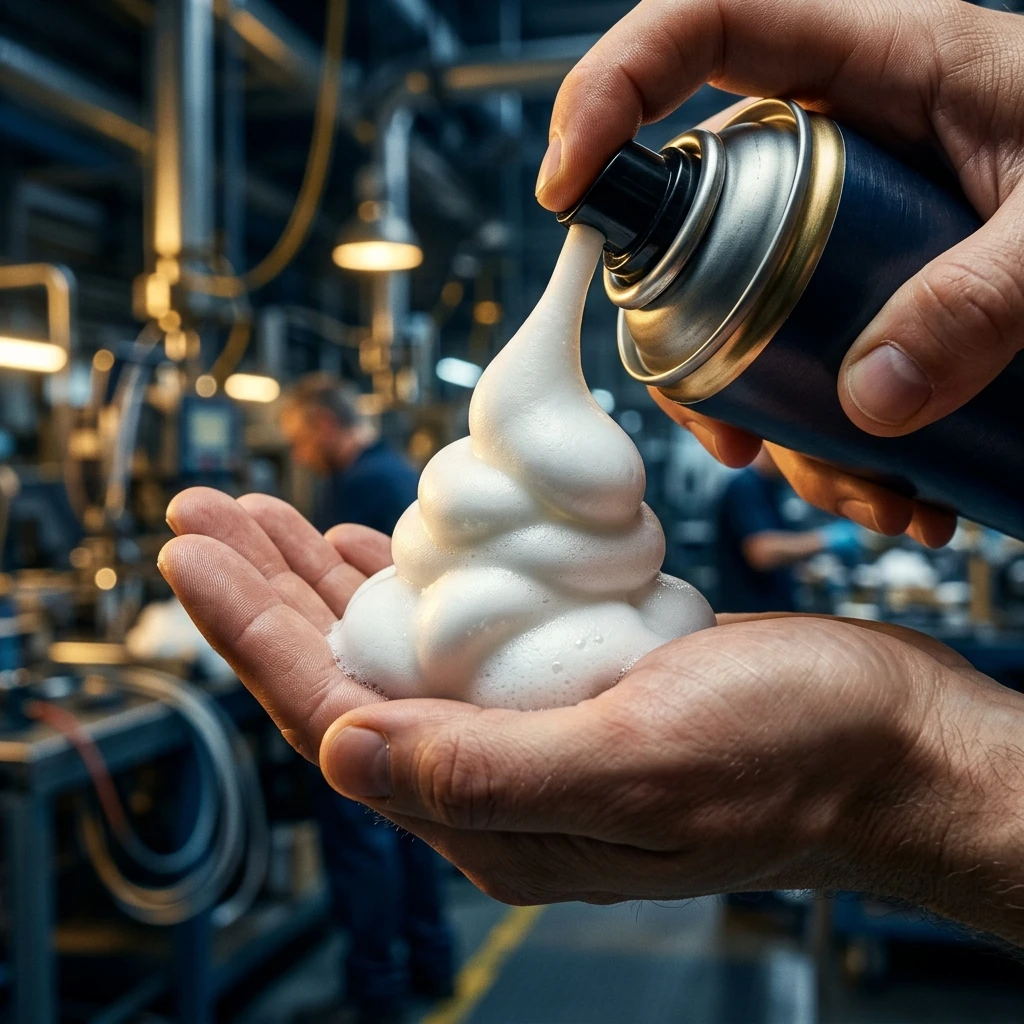
The formulation of a premium cosmetic hair mousse relies heavily on advanced hair mousse aerosol technology. Unlike traditional pump sprays or liquid gels, an aerosol mousse utilizes a pressurized propellant to act as a highly efficient volumetric delivery mechanism. By expanding a liquid polymer solution into a stiff, aerated matrix, the product allows for rapid, even distribution of styling resins across a large surface area of hair fibers. Understanding the underlying chemistry—from polymer selection and surfactant stability to propellant interaction—is crucial for cosmetic chemists aiming to control the styling mousse foam structure and define the ultimate aerosol mousse hold classification.
The Physics of Styling Mousse Foam Structure
A styling mousse foam structure is fundamentally a two-phase colloidal system in which a large volume of gas (the propellant) is dispersed throughout a continuous liquid phase (the polymer and surfactant solution). When the actuator valve is depressed, the pressure drop causes the liquefied propellant suspended in the emulsion to boil and expand rapidly. This mechanical action whips the aqueous surfactant matrix into a voluminous lather. The stiffness, density, and drainage rate of this foam are highly dependent on the air-to-liquid ratio and the critical micelle concentration of the surfactant system. A perfectly engineered foam will hold its shape in the palm but collapse effortlessly under the sheer force of hand application, allowing the styling resins to spread evenly along the hair shaft without leaving sticky localized deposits.
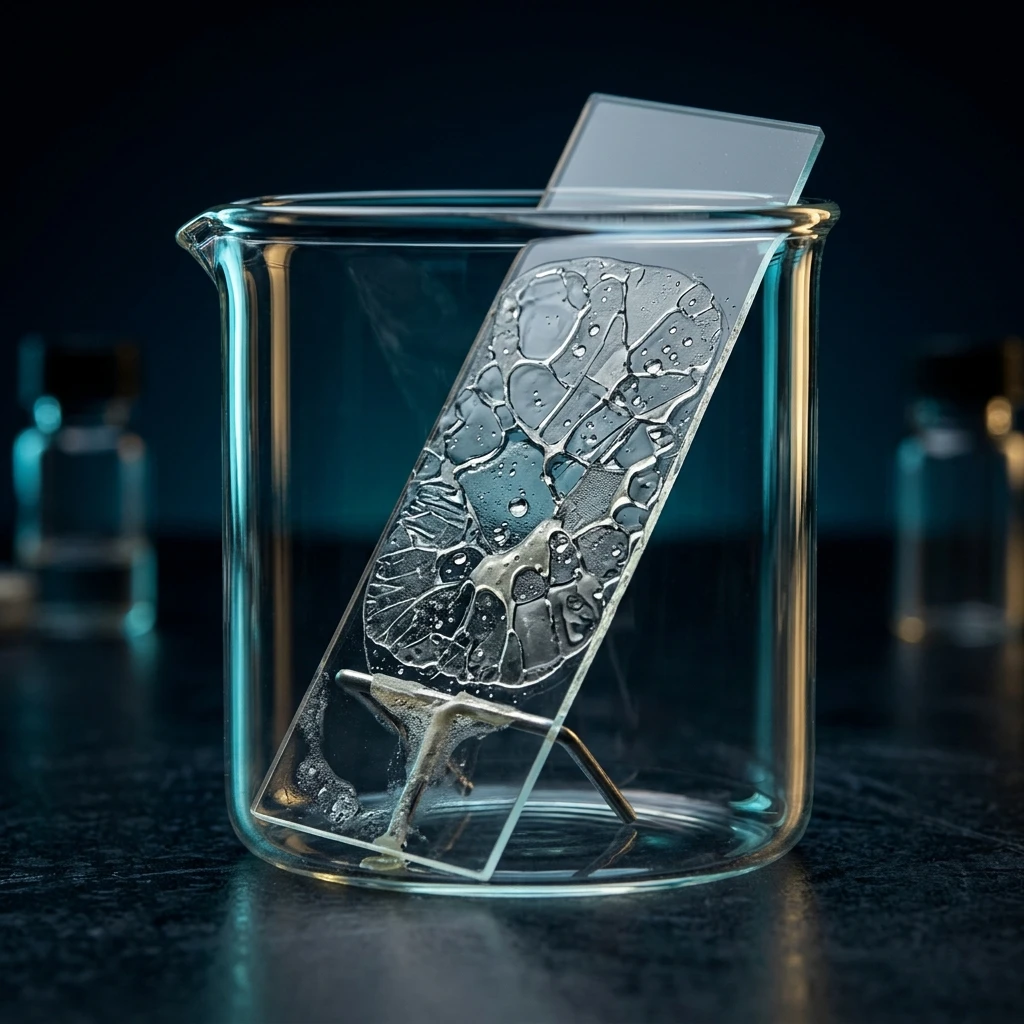
Microscopic evaluation of polymer film formation and drying characteristics from a hair mousse aerosol sample.
Hair Mousse Polymers: VP/VA & Polyquaterniums
The core active ingredient in any hair mousse formulation is the styling resin. The most prevalent resin used in modern cosmetic aerosols is the VP copolymer hair aerosol system—specifically Polyvinylpyrrolidone/Vinyl Acetate (VP/VA) copolymer. This synthetic polymer forms a continuous, clear, and flexible film over the hair cuticles as the water and solvent evaporate. VP/VA is favoured because the ratio of VP to VA can be finely tuned; higher VP content yields excellent adhesion and washability but is highly hygroscopic (prone to absorbing moisture), whereas higher VA content provides superior humidity resistance. To enhance conditioning, formulators frequently blend these non-ionic resins with cationic Polyquaternium compounds (e.g., Polyquaternium-11 or Polyquaternium-4), which bind selectively to negatively charged, damaged hair shafts, providing anti-static properties and thermal protection.
| Polymer Class | Primary Function | Typical Characteristics | Common Examples |
|---|---|---|---|
| Non-ionic (VP/VA) | Film formation, primary hold | Flexible, high clarity, water-soluble | VP/VA Copolymer |
| Cationic (Polyquaterniums) | Conditioning, anti-static, substantivity | Binds to damaged hair, smooths cuticle | Polyquaternium-4, Polyquaternium-11 |
| Anionic | Extreme stiff hold, humidity resistance | Rigid film, requires neutralization | Acrylates Copolymer |
| Amphoteric | Versatile hold with conditioning | pH-dependent charge, good compatibility | Octylacrylamide/Acrylates |
Surfactant Selection for Emulsion Stability
In hair mousse aerosol technology, the surfactant system must perform a delicate balancing act. It must stabilize the liquid emulsion inside the can, preventing the non-polar aerosol propellants from separating out, while simultaneously generating a rich, creamy lather upon dispensing. Formulators typically rely on non-ionic surfactants, such as Polysorbate 20 or PEG-40 Hydrogenated Castor Oil, as well as mild amphoterics like Cocamidopropyl Betaine. These surfactants must be carefully selected to avoid reacting with the cationic conditioning polymers, which could cause precipitation. An unstable emulsion will lead to premature propellant expulsion or a "soupy" mousse that fails to expand into a structural foam.
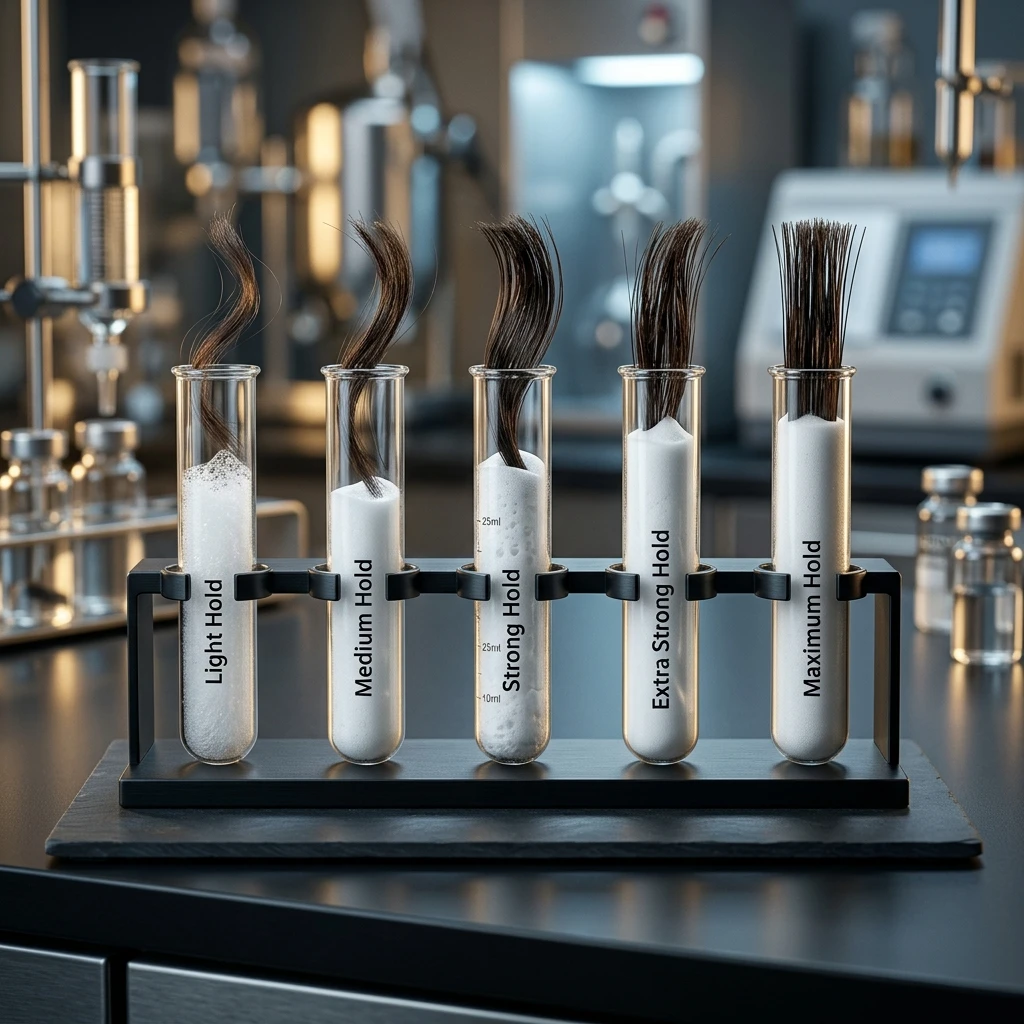
Comparison of varying polymer concentrations dictating the final aerosol mousse hold classification.
Aerosol Mousse Hold Classification
The aerosol mousse hold classification—ranging from light, flexible hold to ultra-stiff, architectural hold—is determined entirely by the glass transition temperature (Tg) and the molecular weight of the selected hair mousse polymer blend. Light hold mousses utilize lower molecular weight VP/VA copolymers at lower concentrations (typically 2-4% active resin), allowing the hair to retain natural movement. Conversely, extreme or "mega-hold" mousses rely on high-molecular-weight anionic polymers (such as Acrylates copolymers) at concentrations exceeding 6%. These rigid resins form hard welds between intersecting hair fibers. However, high-hold formulations require meticulous plasticization; without additives like propylene glycol or specific silicones, the high-Tg polymer films become brittle and will cause unsightly "flaking" (white particulate residue) when the hair is brushed.
Propellant Systems for Hair Mousses
Unlike traditional hairsprays that often use Dimethyl Ether (DME) for its solvent properties, cosmetic aerosol hair mousses almost exclusively utilize Liquefied Petroleum Gas (LPG) blends, such as Isobutane or Propane/Isobutane mixtures (commonly A-46). The propellant typically makes up only 4% to 8% of the total formulation weight. Because LPG is highly non-polar and virtually insoluble in the aqueous polymer base, it exists as a dispersed liquid emulsion within the can. The specific ratio of propellant directly dictates the foam density; a lower propellant ratio yields a wetter, heavier foam ideal for curly hair hydration, while a higher propellant ratio creates a dry, extremely stiff, airy foam preferred for volumizing fine hair.
Manufacturing & Quality Considerations
The transition from lab to commercial launch for a hair mousse requires stringent manufacturing controls. The concentrate must be mixed under high shear to properly hydrate the polymers and prevent "fisheyes" (un-hydrated polymer clumps) that can clog the sensitive aerosol valve housing. Furthermore, the pH of the formulation must be strictly buffered; an improper pH can destabilize the cationic polymers or accelerate aerosol can corrosion in tinplate containers. Most premium mousses are packed in aluminum cans with robust internal polyamide-imide or epoxy coatings to ensure total compatibility with the aqueous, surfactant-heavy environment over the product's shelf life.
Frequently Asked Questions
What defines the styling mousse foam structure?
How does a VP copolymer hair aerosol function in mousse formulations?
How is aerosol mousse hold classification determined?
Why are Polyquaternium compounds used in hair mousse formulations?
What role does the propellant play in hair mousse aerosol technology?
What causes an aerosol hair mousse to turn to liquid prematurely?
Expert Formulation Consulting
Need assistance optimizing polymer hold levels, resolving emulsion instability, or navigating complex propellant interactions? Our technical experts specialize in cosmetic aerosol engineering.
Get Technical Support