Aerosol Body Mist vs Fine Fragrance Spray: Alcohol Concentration, Projection & Stability
Guide Contents
Aerosol body mist formulation is built around a lighter fragrance oil load and higher water content than fine fragrance sprays, producing a cooler, diffuse scent suited for all-over application. Fine fragrance aerosol sprays instead concentrate fragrance oil in a higher-proof alcohol base to maximize solubility and projection. This distinction in alcohol concentration, propellant selection, and droplet engineering shapes how each product performs — from initial burst to dry-down — and determines the stability, safety classification, and consumer experience of the finished aerosol.
Body Mist vs Fine Fragrance Formulation
Body mists and fine fragrance aerosol sprays occupy different tiers of fragrance intensity, and that difference begins with fragrance oil concentration. Body mists are typically formulated at eau fraiche to eau de cologne strength, meaning the fragrance oil represents a small proportion of the total formula, diluted heavily into an alcohol-water base. This produces a light, transient scent designed for frequent, generous application across large areas of skin.
Fine fragrance aerosol sprays sit closer to eau de toilette or eau de parfum strength, carrying a substantially higher fragrance oil concentration relative to the solvent system. Because more oil must be held in solution, these formulations require a higher-proof denatured alcohol base to prevent the aromatic compounds from separating or clouding. The higher oil load also means fine fragrance aerosols are formulated for targeted application to pulse points rather than broad body coverage.
Both categories rely on the same fundamental principles of solvent-carrier-propellant systems used across aerosol chemistry, but the ratios are tuned to deliver very different sensory outcomes. For a foundational look at how solvents, active ingredients, and propellants interact across aerosol categories, see our guide to aerosol chemistry 101. The choice between these two formulation tiers also has downstream implications for packaging, as discussed in our cosmetics and personal care aerosols guide.
Alcohol Concentration & Solubility
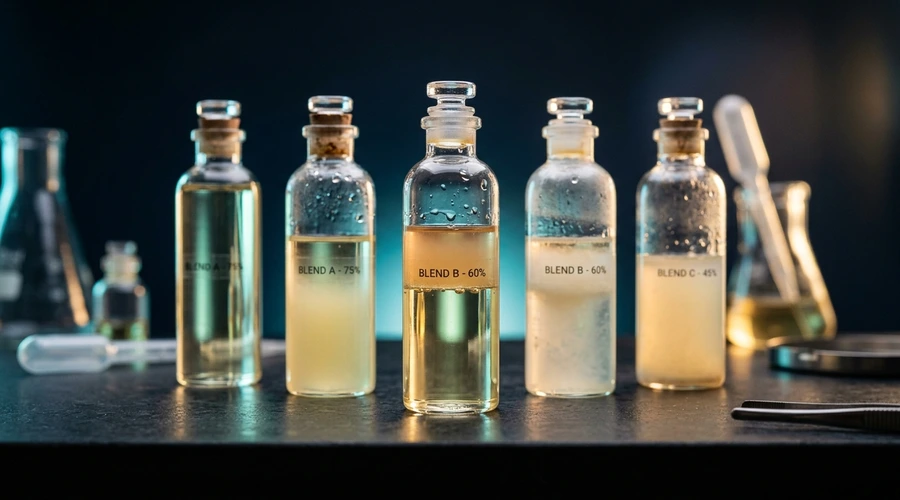
Denatured ethanol is the primary solvent in most aerosol fragrance formulations because it fully solubilizes fragrance oils while evaporating cleanly from skin without leaving residue. The alcohol concentration in the formula directly governs how much fragrance oil can remain in a single, clear phase — higher alcohol content supports higher oil loads, which is why fine fragrance aerosols lean toward higher-proof bases than body mists.
Alcohol concentration also controls evaporation kinetics, which shapes how a fragrance is perceived over time. A higher-alcohol formulation flashes off quickly, releasing top notes in a sharp initial burst before settling into heart and base notes. Body mists, formulated with more water relative to alcohol, evaporate more slowly and deliver a cooler, softer sensory profile on application — a deliberate trade-off since body mists are designed for frequent reapplication rather than long-wear projection.
| Formulation Tier | Relative Fragrance Oil Load | Relative Alcohol Base | Sensory Profile |
|---|---|---|---|
| Body Mist | Low (eau fraiche / cologne strength) | Lower, higher water ratio | Light, cooling, diffuse, short-lived |
| Fine Fragrance Aerosol | High (eau de toilette / parfum strength) | Higher-proof denatured alcohol | Strong initial burst, targeted, longer wear |
Chemical property data for common fragrance solvents and denatured alcohol grades, including solubility parameters and vapor pressure, can be referenced through the National Institutes of Health's PubChem Database, which formulators use to evaluate solvent compatibility during development.
Propellant Selection & Atomization
The propellant system in an aerosol fragrance product must generate sufficient vapor pressure to atomize the alcohol-water-fragrance mixture into a fine, even mist without disrupting the scent profile. Most body mists and fine fragrance aerosols use liquefied petroleum gas blends of butane, isobutane, and propane, or dimethyl ether (DME), chosen for their compatibility with alcohol-based systems and cost efficiency at scale.
Premium fine fragrance aerosols occasionally use compressed gas propellants, such as nitrogen, instead of liquefied hydrocarbon gases. Compressed gas propellants carry no inherent odor and do not condense back into the product, which avoids introducing any hydrocarbon note into a carefully balanced fragrance composition. This choice requires higher fill pressures and valve components engineered for constant-pressure delivery, since compressed gas systems lose pressure progressively as the can empties rather than maintaining the near-constant pressure of a liquefied gas system.
For a deeper comparison of how compressed and liquefied propellant systems behave under use, see our guide on compressed gas vs liquefied gas aerosols. The full range of propellant chemistries available to formulators, including their vapor pressure and compatibility characteristics, is detailed in our aerosol propellants explained resource.
Projection & Droplet Size Engineering
Droplet size distribution, controlled primarily through actuator orifice geometry and valve design, determines how a fragrance aerosol behaves once it leaves the can. Body mists are typically engineered for smaller, more dispersed droplets that create a diffuse cloud suited to light, all-over application across the arms, torso, and legs. This fine atomization spreads the lower fragrance oil concentration evenly, avoiding localized over-saturation.
Fine fragrance aerosols are often engineered with a slightly coarser, more directed spray pattern so a greater proportion of product lands precisely on the target application zone, such as the neck or wrists. This improves fragrance longevity and perceived projection strength, since more of the higher-concentration oil is deposited where it will be detected throughout the day rather than dispersed into the surrounding air.
Peer-reviewed research on aerosol droplet formation and spray dynamics is available through the National Institutes of Health's PubMed database, which covers atomization physics relevant to consumer aerosol engineering. To understand how orifice geometry and actuator design influence spray coverage across all aerosol categories, read our detailed breakdown of aerosol spray pattern engineering.
Stability Testing for Fragrance Aerosols
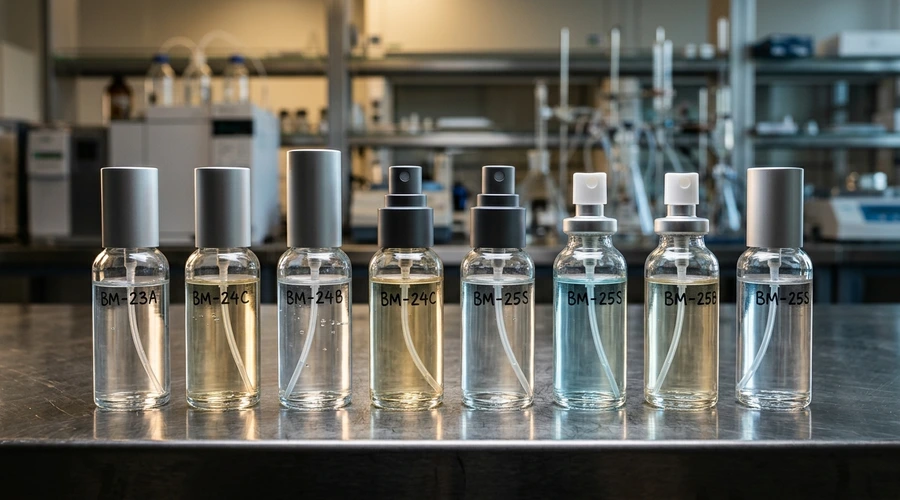
Increasing water content in a fragrance aerosol formulation, as is common in body mists, raises the risk of fragrance oil falling out of solution, since most aromatic compounds have limited water solubility on their own. Formulators address this by incorporating solubilizers, such as polysorbates or hydrogenated castor oil derivatives, which form micelles that hold fragrance oil molecules in a stable dispersion within a higher-water system.
Stability is verified through accelerated testing protocols that expose samples to elevated temperatures, freeze-thaw cycling, and extended storage periods to confirm the formulation remains clear, homogeneous, and free of precipitation or phase separation throughout its intended shelf life. Fine fragrance aerosols, with their higher alcohol content, generally exhibit more inherent stability due to the superior solvency of alcohol for fragrance oils, but they must still be tested for compatibility with valve gaskets and can linings over time.
For a full overview of how gasket materials and packaging components interact with alcohol- and water-based cosmetic formulations, see our guide on aerosol packaging compatibility for cosmetics.
Regulatory & Safety Considerations
Aerosol body mists and fine fragrance sprays are classified as flammable aerosols under both the Global Harmonized System (GHS) and NFPA fire safety criteria, a result of their combination of high alcohol content and hydrocarbon propellants. This classification requires specific hazard pictograms, signal words, and precautionary statements to appear on the product label, along with compliance in warehousing and transport.
In the United States, fragrance aerosols marketed with cosmetic claims fall under FDA cosmetic labeling requirements, while flammability and workplace handling are governed by OSHA standards. Manufacturers must also comply with warehouse storage classifications outlined in NFPA 30B, which dictates sprinkler design and maximum storage quantities based on the aerosol's flammability level. For details on how FDA rules apply specifically to personal care aerosols, see the official FDA Cosmetics resource.
To understand storage classification requirements that apply to flammable fragrance aerosols at scale, read our guide on NFPA 30B warehouse storage classification, and for a complete picture of hazard labeling obligations, consult our aerosol can safety resource.
Frequently Asked Questions
What is the main formulation difference between a body mist and a fine fragrance aerosol spray?
The main difference is fragrance oil concentration and the resulting alcohol-to-water-to-propellant ratio. Body mists carry a lower fragrance oil load, typically formulated as an eau fraiche or eau de cologne strength, and lean on a higher water content for a lighter, cooling sensory profile. Fine fragrance aerosol sprays carry a higher fragrance oil concentration, closer to eau de toilette or eau de parfum strength, and are built on a higher-proof denatured alcohol base to fully solubilize the oil and support stronger projection.
Why does alcohol concentration matter so much in aerosol fragrance formulation?
Alcohol concentration controls fragrance oil solubility, evaporation rate, and skin-feel. Denatured ethanol acts as the primary solvent that keeps aromatic compounds in a single clear phase. Higher alcohol content speeds initial evaporation, which sharpens top-note release and projection, while lower alcohol, higher water formulations evaporate more slowly and feel cooler and lighter on skin, which is why body mists use less alcohol than fine fragrance sprays.
Can water-based aerosol fragrances cause stability problems?
Yes. Increasing water content raises the risk of fragrance oil separating out of solution, since most aromatic compounds have limited water solubility. Formulators manage this using solubilizers such as polysorbates or hydrogenated castor oil derivatives, and by running accelerated stability testing at elevated and low temperatures to confirm the formulation stays clear and homogeneous throughout shelf life.
What propellant systems are used in aerosol fragrance and body mist products?
Aerosol fragrance and body mist products commonly use liquefied petroleum gas blends (butane/isobutane/propane) or DME as the propellant, generating enough vapor pressure to atomize the alcohol-water-fragrance mixture into a fine mist. Some premium fine fragrance aerosols use compressed gas, such as nitrogen, to avoid altering the scent profile with hydrocarbon odor notes, though this requires a higher fill pressure and different valve engineering.
How does droplet size affect fragrance projection and skin feel?
Smaller droplet sizes disperse further from the skin and create a diffuse cloud, which is desirable for body mists intended for light, all-over application. Fine fragrance sprays are typically engineered for a slightly coarser, more directed spray pattern so more product lands on the target zone, improving longevity and projection intensity where the fragrance is meant to persist.
Are aerosol fragrance sprays classified as flammable under safety regulations?
Most aerosol fragrance sprays and body mists are classified as flammable aerosols under GHS and NFPA criteria because of their high alcohol content combined with hydrocarbon propellants. This classification requires specific hazard pictograms, signal words, and precautionary statements on the label, along with compliance with storage and transport regulations such as NFPA 30B and DOT hazmat rules.
Need Expert Aerosol Consulting?
Our team provides end-to-end aerosol technical consultancy — from formulation development and propellant selection to filling line setup, regulatory compliance, and market launch strategy.
Related Articles
- Dry Shampoo Aerosol Formulation Starch types, oil absorption, and propellant selection.
- Cosmetics & Personal Care Aerosols The full landscape of personal care aerosol systems.
- Aerosol Manufacturing 101 The ultimate guide to commercial aerosol manufacturing.
- How Aerosol Cans Work Explore valve, pressure, and actuator physics.
- Aerosol Propellants Explained LPG vs DME vs HFC vs N₂ vs CO₂ propellants compared.
- Aerosol Chemistry 101 Solvents, binders, surfactants, and additives.
- From Lab to Commercial Launch R&D scale-up to commercial aerosol production.
- Choosing a Product Consultant How to select the right technical expert.
Absar Khan
Founder & Lead Aerosol Consultant, Global Aerosols
Absar Khan is a senior aerosol industry consultant with deep expertise spanning aerosol formulation, propellant technology, valve engineering, filling line setup, and regulatory compliance across global markets. His work integrates aerosol chemistry, GMP manufacturing practices, safety and flammability assessment, quality systems, and regulatory strategy for markets including India, the EU, and the US. As Founder and Lead Consultant at Global Aerosols, Absar leads technical and engineering teams delivering end-to-end aerosol solutions — from initial formulation and lab trials through pilot-scale testing, commercial manufacturing setup, and full market launch.
Connect on LinkedIn →