Aerosol Mold Release Agents: Silicone vs Non-Silicone Types & Surface Compatibility
Guide Contents
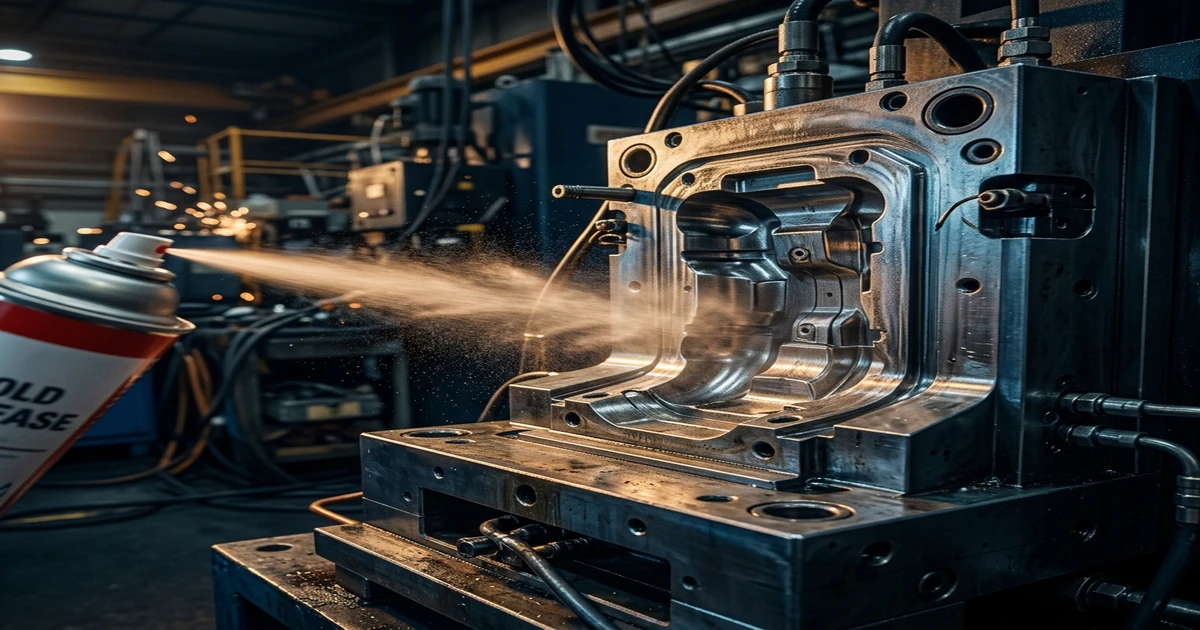
An aerosol mold release agent is a specialized chemical spray designed to prevent molded components from adhering to mold cavities during industrial shaping processes. In modern manufacturing, these agents are critical for maximizing throughput, protecting tooling surfaces, and ensuring consistent cosmetic finishes for plastics, rubbers, and composites. Selecting the appropriate chemistry requires evaluating the thermal requirements of the molding process and assessing post-mold finishing compatibilities, particularly the choice between silicone and non-silicone active agents.
Industrial Release Agent Chemistry
Industrial mold release chemistry operates by establishing a microscopic, low-surface-energy barrier between the chemical matrix of the molding resin and the metallic tooling substrate. The release agent must wet-out the mold surface uniformly, forming a continuous, defect-free dry film that resists high thermal and mechanical stresses. If this film breaks down, the molten resin will establish direct physical contact with the metal, resulting in adhesion and part damage upon ejection.
The formulation typically comprises three primary components: the active release polymer, a volatile organic carrier solvent, and a compressed or liquefied gas propellant. The carrier solvent dissolves the active polymer, allowing it to be sprayed uniformly, and then evaporates (or flashes off) rapidly once it hits the heated mold surface. The propellant provides the necessary pressure to atomize the mixture, generating a fine mist that covers intricate tooling cavities. Modern release agents must be engineered to balance chemical stability with rapid solvent flash-off to maintain cycle times on high-speed production lines.
Furthermore, the physical behavior of these active agents is highly dependent on the surface chemistry of the tooling. Tooling surfaces made of steel, aluminum, or composite materials exhibit distinct surface energies and microscopic textures. The release agent must be formulated to chemically adhere to the tooling substrate while remaining chemically inert toward the molding resin. For a comprehensive overview of chemical carriers, viscosity-modifying solvents, and active polymer structures used in specialty sprays, read our foundational guide on aerosol chemistry 101.
Silicone Mold Release Spray Properties
Silicone mold release sprays represent the most widely used category of release agents due to their exceptional lubricity, high thermal stability, and low surface tension. The active ingredient is typically polydimethylsiloxane (PDMS), a linear synthetic polymer consisting of alternating silicon and oxygen atoms with organic methyl side groups. PDMS films can withstand continuous temperatures exceeding 260°C without oxidizing or degrading, making them ideal for high-temperature plastic injection molding.
The high molecular flexibility of the silicone backbone allows it to establish an extremely slippery interface, resulting in low ejection forces and reducing wear on ejector pins. However, this high lubricity comes with a severe drawback: silicone transfer. A microscopic layer of silicone is inevitably transferred to the surface of the molded component during the separation process. Because silicones possess extremely low surface energy, they resist wetting by subsequent coatings, leading to severe defects in downstream operations.
For chemical and molecular properties of silicones, including their thermodynamic characteristics and surface tension coefficients, chemical engineers refer to databases such as the National Institutes of Health's PubChem Database. Understanding these properties is crucial when designing molding processes that incorporate silicone formulations. To learn more about the specific applications and operational risks associated with industrial silicone sprays, consult our detailed analysis of aerosol silicone spray applications and risks.

Non-Silicone Release Agent Alternatives
Non-silicone release agent aerosols are formulated specifically to address the post-mold finishing limitations of silicone sprays. These alternative agents utilize active compounds such as synthetic waxes, heavy-duty fluoropolymers (PTFE), or biological lecithins. Because these active compounds do not possess the same spreading characteristics as silicones, they do not interfere with post-mold painting, printing, or adhesive bonding, allowing parts to bypass solvent washing steps.
Fluoropolymer-based sprays establish a dry, chemical-resistant coating on the mold surface that is chemically inert and does not transfer to the molded part. This makes them highly effective for molding epoxies, urethanes, and other reactive thermoset resins. Wax-based release agents, while requiring more frequent application, are highly economical and form a robust barrier suitable for composite molding. Selecting the correct chemistry is vital for optimizing process efficiency and reducing scrap rates, as shown in the comparison table below.
| Active Polymer Type | Thermal Stability Limit | Post-Mold Paintability | Primary Application Area |
|---|---|---|---|
| Polydimethylsiloxane (PDMS) | High (Up to 260°C+) | Poor (Requires extensive cleaning) | Thermoplastics, rubbers, rubber-metal bonding |
| Fluoropolymers (PTFE / Telomers) | Excellent (Up to 280°C+) | Excellent (No surface transfer) | Reactive thermosets, epoxies, urethanes |
| Synthetic Waxes / Oleins | Moderate (Up to 120°C) | Good (Requires light cleaning) | FRP composites, polyurethane foams |
Food-Grade Aerosol Propellant Valve Design and Packaging Materials
The physics of mold release is governed by the principles of surface energy and wetting behavior. According to the Young-Dupré equation, the adhesion between two surfaces is determined by their surface energies. To achieve a clean release, the surface energy of the mold cavity must be significantly lower than the surface tension of the liquid molding resin. This thermodynamic mismatch prevents the resin from wetting the mold, facilitating mechanical separation.
Tooling metals like steel and aluminum possess very high surface energies, making them highly receptive to adhesion. By spraying an aerosol release agent, the metal surface is covered with a thin layer of low-surface-energy molecules. Polydimethylsiloxane (PDMS) films exhibit a surface energy of approximately 21 mN/m, while fluoropolymers drop even lower, to around 18 mN/m. Liquid resins like epoxies or polyurethanes typically have surface tensions above 40 mN/m, preventing them from adhering to the low-energy release coating.
For research and testing protocols, ASTM International publishes standards that outline methods for measuring coating adhesion and surface tension parameters, which can be found in the official ASTM Standards Database. Understanding these surface energy relations helps engineers troubleshoot sticking issues and optimize release agent application rates on the line. For a detailed review of commercial manufacturing lines, gassing processes, and quality systems, read our foundational guide on aerosol manufacturing 101.
Industrial Aerosol Safety & Regulations
Industrial mold release aerosols contain hazardous chemicals that require strict handling and safety compliance. Most formulations utilize flammable solvents (such as heptane or hexane) and liquefied petroleum gas (LPG) propellants to achieve rapid drying and fine atomization. Consequently, these aerosol cans are classified as Level 3 Aerosols under fire safety standards, representing the highest flammability hazard class.
Manufacturing facilities must comply with OSHA hazard communication standards, ensuring that Safety Data Sheets (SDS) are accessible to operators. Workplace safety protocols demand adequate local ventilation to prevent the accumulation of toxic solvent vapors, and ignition sources must be eliminated. The Global Harmonized System (GHS) outlines specific labeling requirements for toxic and flammable chemical sprays. To review OSHA safety guidelines, GHS labeling protocols, and safety data sheet standards, visit the official OSHA Hazard Communication portal.
Environmental regulations also govern the volatile organic compound (VOC) content of mold release sprays. Regulatory bodies enforce strict limits on VOC emissions to minimize ozone formation. In addition, chemical compliance under frameworks like REACH requires the registration of active ingredients, ensuring they do not contain substances of very high concern (SVHCs) that could pose toxic risks during manufacturing.
Application Techniques in Molding
Maximizing the efficiency of an aerosol mold release agent requires precise application techniques. Prior to spraying, the mold cavity must be cleaned to remove any residual resin, grease, or degraded release agent. The aerosol can must be shaken thoroughly to distribute the active release polymer uniformly within the solvent and propellant mixture before spraying.
The operator should hold the aerosol can 25 to 30 cm from the mold surface and apply a thin, uniform coat using overlapping strokes. Applying excessive release agent must be avoided, as it leads to "release pooling," resulting in surface blemishes on the molded component and accelerating mold buildup. After spraying, the mold must remain open for a designated flash-off period, allowing the carrier solvent to evaporate completely. If the mold is closed or the resin is injected before the solvent has flashed off, the trapped solvent will gasify, creating cosmetic voids or structural bubbles in the finished part.

Proper integration of these application protocols into standard operating procedures reduces reject rates and extends tool life. Advanced manufacturing facilities utilize automated robotic spraying systems to ensure consistent application thickness and eliminate human error. For more details on manufacturing processes and technical standards, the European Aerosol Federation (FEA) provides guidelines on industrial spray applications and process safety.
For further reading on industrial aerosol systems, explore our comprehensive guide on aerosol propellants and valves, our analytical review of types of aerosol systems, and our safety handbook on aerosol can safety.
Frequently Asked Questions
What is the primary difference between silicone and non-silicone mold release agents?
The primary difference lies in post-processing compatibility. Silicone-based release agents provide superior lubricity and high thermal resistance but leave a persistent low-surface-energy residue that interferes with subsequent painting, printing, or adhesive bonding. Non-silicone release agents, formulated from waxes, fluoropolymers, or synthetic resins, allow molded parts to be painted or bonded without extensive solvent washing.
Why do silicone release sprays interfere with painting and bonding?
Silicone molecules, specifically polydimethylsiloxane (PDMS), possess extremely low surface tension. When transferred to a molded part, they create a low-surface-energy barrier. Paints and adhesives, which have higher surface tensions, cannot wet-out this silicone-contaminated surface, resulting in structural bonding failure or finish defects such as fish-eyes or orange peel.
When should fluoropolymer release agents be used instead of silicone?
Fluoropolymer release agents should be selected when molding demanding materials like epoxies, polyurethanes, or thermoset resins, where silicone transfer would destroy post-mold finishing compatibility. Fluoropolymers establish a dry, chemical-resistant release film that does not transfer to the part surface, maintaining post-mold paintability while resisting high processing temperatures.
How does mold temperature affect aerosol release agent performance?
Mold temperature directly influences carrier solvent evaporation rate and release agent film formation. If the mold is too cold, the solvent evaporates slowly, resulting in a runny, uneven release film that causes cosmetic defects or part sticking. If the mold exceeds the thermal threshold of the release agent, the active release polymer will degrade, leading to mold buildup and release failure.
What safety precautions must be taken when spraying industrial mold release aerosols?
Industrial mold release aerosols typically contain flammable propellants (such as liquefied hydrocarbons or DME) and volatile organic solvents. Operators must ensure adequate local exhaust ventilation, eliminate ignition sources, and wear appropriate personal protective equipment (PPE), including chemical-resistant gloves and organic vapor respirators, in compliance with OSHA safety standards.
What causes release agent buildup on molds, and how is it prevented?
Buildup is caused by applying excessive release agent, incomplete carrier solvent evaporation, or operating molds above the release agent's thermal stability limit. It is prevented by applying thin, uniform coats, allowing sufficient flash-off time, maintaining consistent mold temperatures, and executing scheduled mold cleaning cycles with specialized solvent cleaners.
Need Expert Aerosol Consulting?
Our team provides end-to-end aerosol technical consultancy — from formulation development and propellant selection to filling line setup, regulatory compliance, and market launch strategy.
Related Articles
- Aerosol Silicone Spray Industrial applications and risks of silicone sprays.
- Aerosol Chemistry 101 Solvents, active ingredients, and surfactants.
- Aerosol Manufacturing 101 The ultimate guide to commercial aerosol manufacturing.
- How Aerosol Cans Work Explore valve, pressure, and actuator physics.
- Aerosol Propellants Explained LPG vs DME vs HFC vs N₂ vs CO₂ propellants compared.
- From Lab to Commercial Launch R&D scale-up to commercial aerosol production.
- Choosing a Product Consultant How to select the right technical expert.
- Aerosol Can Safety Guidelines NFPA storage and handling specifications.
Absar Khan
Founder & Lead Aerosol Consultant, Global Aerosols
Absar Khan is a senior aerosol industry consultant with deep expertise spanning aerosol formulation, propellant technology, valve engineering, filling line setup, and regulatory compliance across global markets. His work integrates aerosol chemistry, GMP manufacturing practices, safety and flammability assessment, quality systems, and regulatory strategy for markets including India, the EU, and the US. As Founder and Lead Consultant at Global Aerosols, Absar leads technical and engineering teams delivering end-to-end aerosol solutions — from initial formulation and lab trials through pilot-scale testing, commercial manufacturing setup, and full market launch.
Connect on LinkedIn →