Aerosol Insect Repellent Chemistry: DEET vs Picaridin vs IR3535 vs Natural Actives
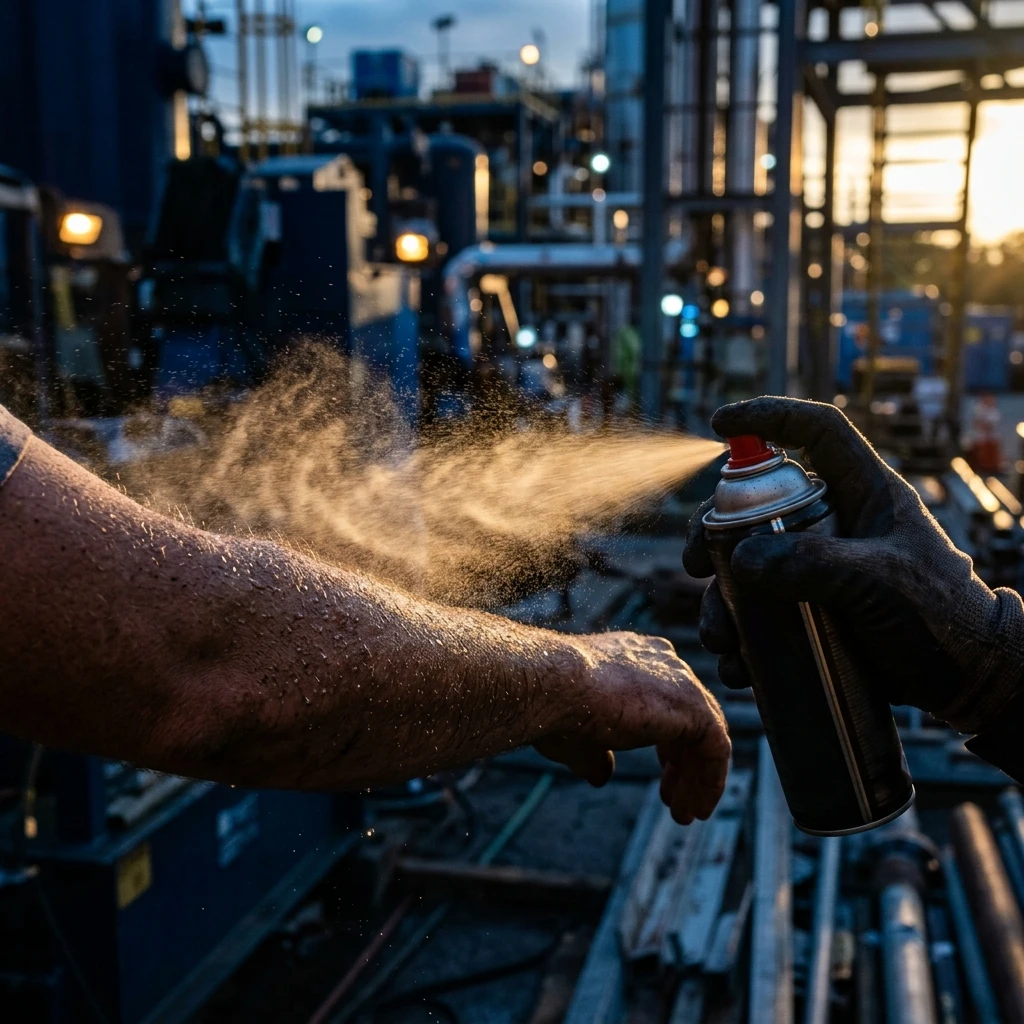
Modern aerosol insect repellent chemistry leverages volatile organic compounds and synthetic active ingredients to disrupt the sensory electrophysiology of biting arthropods. It works by releasing controlled vapor plumes that bind to mosquito odorant receptors, inhibiting host-seeking behavior and land-and-bite responses. This matters for cosmetic chemists, aerosol formulators, and brand managers because balancing active ingredient choice—such as DEET, Picaridin, IR3535, or plant-derived PMD—determines protection duration, skin feel, plasticizer compatibility with consumer gear, and global regulatory registration pathways.
Vector-borne diseases transmitted by mosquitoes, ticks, and biting midges drive growing worldwide demand for convenient personal protection products. Aerosol delivery systems remain the preferred choice for consumers due to their continuous, fine-mist coverage and rapid drying characteristics. However, formulating insect repellent aerosols presents complex chemical engineering challenges, from solvent-active compatibility and polymer plasticization to valve elastomer swell and flammability classification.
Olfactory Disruption Mechanisms & Active Repellent Chemistry
Insects locate vertebrate hosts primarily through specialized olfactory sensory neurons (OSNs) housed inside microscopic sensilla on their antennae and maxillary palps. Female mosquitoes detect human presence by following cues such as carbon dioxide plumes, skin surface warmth, moisture, and volatile organic kairomones including L-lactic acid, 1-octen-3-ol, ammonia, and short-chain carboxylic acids.
Aerosol repellents function by interfering with this chemo-sensory navigation system through distinct pharmacological mechanisms. Peer-reviewed research indexed in PubMed demonstrates that top-tier active ingredients operate through dual pathways:
- Direct Receptor Inhibition: Active molecules bind to specific Odorant Receptors (ORs) and the co-receptor Orco complex, suppressing the neural firing triggered by human attraction kairomones.
- Vapor Shield Repulsion: Volatile active vapors form a localized physical evaporation zone surrounding the skin, activating specific repellent-sensitive gustatory or olfactory receptors that induce avoidance behavior.
- Sensing Confusion: High-affinity active compounds over-stimulate multiple sensilla types simultaneously, jamming the mosquito's directional navigation algorithms.
Because repellents must evaporate continuously from the skin surface to maintain protective vapor density, their volatility profile dictates longevity. Actives with excessively high vapor pressure evaporate rapidly, providing brief protection; actives with very low vapor pressure remain trapped in the liquid film, failing to establish an effective protective vapor barrier. For fundamental principles on formulation solvents and carrier systems, see our core article on Aerosol Chemistry 101.
DEET Aerosol Repellent vs Picaridin Aerosol Spray & IR3535 Performance
Formulators select among four primary active chemical classes registered for personal protection applications. Each active exhibits unique physical properties, toxicity profiles, solvency traits, and sensory characteristics on the skin. Selecting the right active dictates solvent choice, aerosol valve selection, and packaging compatibility.
DEET (N,N-Diethyl-meta-toluamide) remains the gold standard synthetic repellent introduced in the 1950s. A yellow-tinted liquid aromatic amide, DEET offers unmatched broad-spectrum protection against mosquitoes, ticks, chiggers, and biting flies. However, DEET acts as a powerful organic solvent that plasticizes synthetic polymers, acrylic watch crystals, synthetic garments, and painted surfaces. This physical limitation led to the development of modern alternatives like Picaridin and IR3535.
Picaridin aerosol spray formulations utilize hydroxyethyl isobutyl piperidine carboxylate (Icaridin). Picaridin provides vector protection equal or superior to DEET against Aedes, Anopheles, and Culex species without dissolving plastics or synthetic gear. It is non-greasy, virtually odorless, and exhibits low dermal absorption, making it an increasingly popular choice for premium cosmetic aerosol formulations. IR3535 (Ethyl butylacetylaminopropionate) represents a synthetic amino acid derivative offering excellent safety profiles, widely favored in European personal care markets for family and sensitive-skin repellents.
| Property / Metric | DEET | Picaridin (Icaridin) | IR3535 | PMD (Lemon Eucalyptus) |
|---|---|---|---|---|
| Chemical Class | Aromatic Amide | Piperidine Carboxylate | Substituted Beta-Alanine | Menthane Diol Terpenoid |
| Vapor Pressure (25°C) | 0.0016 mmHg | 0.0004 mmHg | 0.0011 mmHg | 0.0022 mmHg |
| Plasticizing / Melting Effect | Severe (Polymer solvent) | None (Plastic safe) | Minimal to None | Moderate (Solvent dependent) |
| Skin Feel & Odor | Oily, characteristic odor | Light, dry, odorless | Smooth, low odor | Cooling, herbal/pine odor |
| Target Protection Duration | 6 – 10+ Hours | 6 – 12 Hours | 4 – 8 Hours | 4 – 6 Hours |
| EPA / ECHA Registration | Registered (Conventional) | Registered (Conventional) | Registered (Biopesticide) | Registered (Biopesticide) |

Laboratory apparatus evaluating chemical phase separation and vapor release dynamics of active insect repellents in glass test vessels.
Polymer Plasticization & Solvent Carrier Solvency Dynamics
A major technical hurdle when formulating a DEET aerosol repellent is controlling its aggressive solvency toward synthetic materials. As a liquid aromatic amide with a high Hansen solubility parameter match for polar polymers, DEET readily penetrates polycarbonate eye protection, nylon webbing, rayon clothing, leather finishes, and polyurethane coatings, causing swelling, softening, and permanent surface clouding.
According to chemical data hosted on PubChem, DEET's solvent power stems from its dual polar carbonyl oxygen and hydrophobic aromatic ring. Formulators addressing plasticizer damage often explore natural insect repellent aerosol alternatives like p-Menthane-3,8-diol (PMD) or transition to Picaridin systems. When DEET cannot be substituted due to military or high-intensity vector protection specs, solvency is managed by blending high-flash isoparaffin solvents or silicones that buffer active contact with sensitive substrates.
In addition to consumer material safety, active solvency directly affects internal canister integrity. High concentrations of aromatic actives can permeate standard internal can linings or degrade valve stem elastomers over time. For more on commercial scale manufacturing considerations, read our overview of Cosmetic Aerosol Manufacturing Practice.

Controlled laboratory efficacy testing evaluating complete protection time against mosquito vectors in exposure chambers.
Film-Forming Polymers & Microencapsulated Extended Release
Extending the protection duration of an aerosol insect repellent spray without increasing active payload requires advanced film-forming polymers and encapsulation technologies. Unmodified liquid repellents applied to skin are subject to rapid loss via dermal absorption, evaporation, rub-off against clothing, and wash-off from perspiration.
Formulators incorporate hydrophobic, water-resistant film formers to lock active ingredients into a semi-permeable matrix on the stratum corneum:
- Acrylates / Octylacrylamide Copolymers: Provide sweat resistance and water repellency, forming a continuous flexible film that retards rapid active absorption into the epidermis.
- Trimethylsiloxysilicate (Resin Silicones): Establishes a highly durable, non-transferable hydrophobic barrier that locks PMD or Picaridin onto skin during high-exertion outdoor activity.
- Microencapsulation Systems: Polyurea or polyurethane micro-capsules encapsulate volatile active droplets, releasing active vapor gradually through mechanical friction or sustained membrane diffusion over 12+ hours.
Regulatory frameworks published under US EPA Guidelines govern claims for water-resistant and extended-wear repellents, requiring rigorous clinical trial evidence demonstrating sustained efficacy after water immersion or sweat exposure.
Aerosol Delivery Dynamics: Valve Selection & Propellant Interactions
Achieving ideal spray breakup for an insect repellent aerosol involves balancing bulk liquid viscosity, propellant flash pressure, and valve orifice geometry. The goal is delivering a soft, non-chilling mist with a mean mass aerodynamic diameter (MMAD) between 30 and 60 microns. Droplets below 10 microns risk inhalation into respiratory passages, while droplets above 100 microns cause liquid dripping and uneven skin coverage.
The primary propellant options for personal care repellents include:
- Hydrocarbon Propellants (LPG / Isobutane / Propane): Provide excellent solvency for active compounds and waxy film formers. Instant propellant flashing at the actuator orifice yields fine atomization and wide spray coverage.
- Dimethyl Ether (DME): Highly soluble in alcohol-water systems, enabling crystal-clear single-phase formulations. However, DME requires specialized elastomer gaskets (such as EPDM or fluoroelastomers) to prevent valve swell.
- Compressed Gases (CO₂ / N₂ / Compressed Air): Used in Bag-on-Valve (BOV) barrier systems. BOV isolates the active concentrate inside a multi-layer laminate bag, allowing continuous 360-degree spray orientation while eliminating flammable propellants from touching skin.
Valve hardware selection requires careful stem and vapor tap sizing. Incorporating a vapor tap (0.013 to 0.020 inches) bleeds propellant gas into the expansion chamber prior to discharge, enhancing mechanical breakup and preventing wet stream spattering.
EPA & ECHA Regulatory Registration & Arm-in-Cage Efficacy Testing
Insect repellents applied to human skin are classified as biopesticides or conventional pesticides under global regulatory frameworks. In the United States, repellents are regulated by the Environmental Protection Agency (EPA) under the Federal Insecticide, Fungicide, and Rodenticide Act (FIFRA). In the European Union, products fall under the Biocidal Products Regulation (BPR, Regulation (EU) No 528/2012).
To secure commercial registration, formulators must submit comprehensive toxicology, environmental safety, product chemistry, and efficacy test dossiers. Standardized efficacy testing follows EPA OPPTS 810.3700 protocols (arm-in-cage laboratory trials and field testing):
- Arm-in-Cage Testing: Human volunteers apply a measured dose of aerosol repellent to the forearm and insert the treated arm into a cage containing disease-free vector mosquitoes (such as Aedes aegypti or Anopheles stephensi) for 5 minutes every 30–60 minutes.
- Complete Protection Time (CPT): The primary efficacy metric, defined as the total time elapsed from product application until the first confirmed landing or bite.
- Field Efficacy Validation: Testing conducted in natural wetland or forest habitats to verify performance against wild mosquito populations, ticks (Ixodes scapularis), and biting midges.
Detailed regulatory compliance, product chemistry validation, and SDS documentation are mandatory before submitting registration files. For more on navigating cosmetic and personal care aerosol standards, visit our resource center on Cosmetics & Personal Care Aerosols.
Frequently Asked Questions
How does DEET differ from Picaridin in aerosol repellent formulations?
Why does DEET melt or soften certain plastics and synthetic fabrics?
What is the primary mode of action of chemical insect repellents on mosquito receptors?
Are natural insect repellent actives like Oil of Lemon Eucalyptus (PMD) effective in aerosols?
How does aerosol valve selection prevent nozzle clogging in spray repellents?
What testing standard is used to measure protection time for EPA registration?
Need Expert Aerosol Consulting?
Our team provides end-to-end aerosol technical consultancy — from formulation development and propellant selection to filling line setup, regulatory compliance, and market launch strategy.
Get a Free ConsultationRelated Articles
- Cosmetic Aerosol Manufacturing: Standards & GMP Quality
- Aerosol Manufacturing 101: The Complete Technical Guide
- How Aerosol Cans Work: Propellant, Pressure, Valve & Spray Dynamics
- Aerosol Propellants Explained: LPG vs DME vs HFC vs N₂ vs CO₂
- Aerosol Chemistry 101: Solvents, Binders, Surfactants & Additives
- From Lab to Factory: Aerosol R&D to Commercial Manufacturing
- How to Choose the Right Aerosol Product Consultant
Absar Khan
Absar Khan is a senior aerosol industry consultant with deep expertise spanning aerosol formulation, propellant technology, valve engineering, filling line setup, and regulatory compliance across global markets. His work integrates aerosol chemistry, GMP manufacturing practices, safety and flammability assessment, quality systems, and regulatory strategy for markets including India, the EU, and the US. As Founder and Lead Consultant at Global Aerosols, Absar leads technical and engineering teams delivering end-to-end aerosol solutions — from initial formulation and lab trials through pilot-scale testing, commercial manufacturing setup, and full market launch.