Foam Aerosol Engineering: Surfactant Selection, Foam Density & Drain Rate
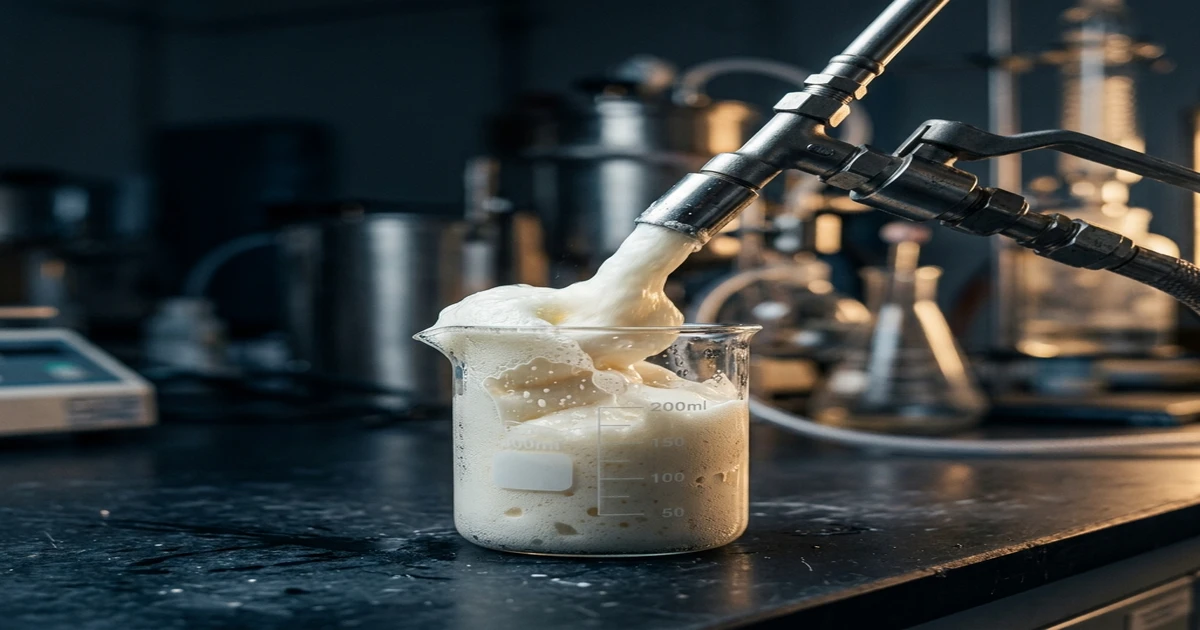
Guide Contents
- 1. Chemical Foundations of Aerosol Foam Surfactants
- 2. Thermodynamics of Propellant Expansion and Foam Generation
- 3. Understanding Foam Density and Optimization Strategies
- 4. Foam Drain Rate Testing and Stability Diagnostics
- 5. Aerosol Shave Foam Chemistry and Formulation Dynamics
- 6. Key Parameters for a Stable Foam Aerosol Formulation
- 7. Frequently Asked Questions
Foam aerosol engineering is the science of designing pressurized dispensing systems that generate stable, high-quality foam structures upon actuation. It works by combining surfactant-based concentrates, propellant expansion kinetics, and actuator nozzle geometry to control the gas-liquid interface. This matters for chemical and process engineers because it determines the foam density, drainage kinetics, and rheological profile necessary for applications ranging from cosmetic shave foams to industrial cleaners and pharmaceutical products. The formulation must be balanced to ensure the gaseous phase is evenly dispersed within the liquid phase without premature collapse. For a foundational exploration of aerosol formulations, solvents, and binders, see our comprehensive guide on aerosol chemistry 101.
Chemical Foundations of Aerosol Foam Surfactants
The selection of the primary and secondary aerosol foam surfactant is the most critical decision in foam aerosol engineering. Surfactants are amphiphilic molecules containing both hydrophilic (water-attracting) and lipophilic (oil-attracting) groups. When dissolved in water, they migrate to the air-water interface, reducing the surface tension of the aqueous phase. This reduction in surface tension decreases the mechanical work required to generate a large surface area of bubbles during propellant expansion. Common surfactant classes utilized in pressurized foam systems include anionic soaps (such as sodium, potassium, or triethanolamine stearates), cationic conditioning agents (such as Behentrimonium Methosulfate or Cetrimonium Chloride), and nonionic emulsifiers (like Polysorbate 20 or Laureth-23). Each class imparts distinct surface rheology, bubble sizes, and film strengths. To understand the broader classification of aerosol packaging and delivery mechanisms, read our guide on types of aerosol systems explained.
- Anionic Surfactants: Provide excellent flash foaming and initial volume, forming dense, creamy lather ideal for shave preparations.
- Nonionic Surfactants: Enhance emulsion stability and skin mildness, serving as secondary stabilizers that pack tightly between anionic heads.
- Cationic Surfactants: Substantive to hair and skin keratin, forming conditioning foams used in salon styling mousse formulations.
- Amphoteric Surfactants: Reduce ocular and dermal irritation, commonly selected for mild baby cleansers and facial wash aerosols.
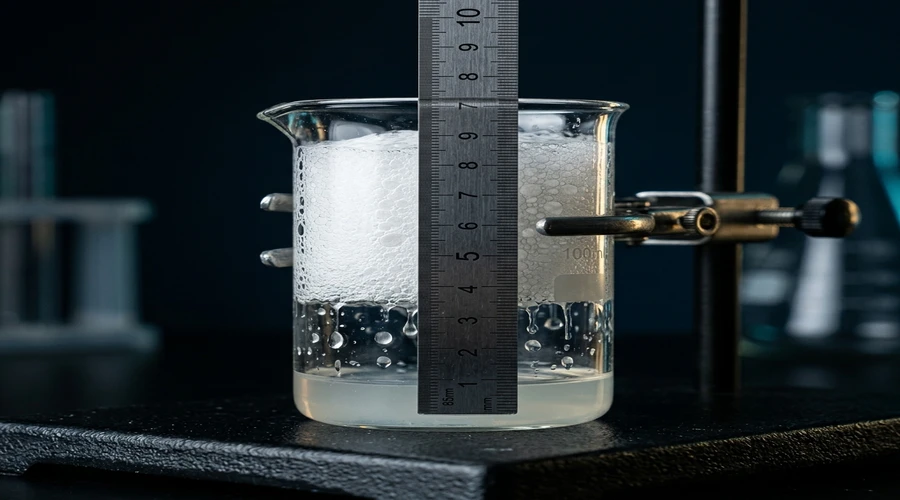
Figure 1: Measurement of foam drainage rate and liquid separation over time in a laboratory environment.
Thermodynamics of Propellant Expansion and Foam Generation
The transition of a liquid concentrate into a structured foam is driven by the rapid thermodynamic expansion of liquefied gas propellants. Inside the sealed aerosol container, liquefied hydrocarbon propellants (such as butane, isobutane, and propane blends) exist in a state of dynamic equilibrium. A portion of the propellant dissolves into the aqueous surfactant concentrate, facilitated by emulsifiers, while the remainder occupies the headspace as vapor. When the valve is actuated, the internal pressure drops abruptly to atmospheric pressure. This pressure differential causes the dissolved propellant to undergo flash boiling. The liquid propellant instantly vaporizes, generating millions of tiny gas bubbles within the escaping surfactant solution. The chemistry of these propellants and their vapour pressure behaviors are detailed in our guide on aerosol propellants explained. For chemical property data and thermodynamic parameters of these propellants, refer to the PubChem chemical database.
To ensure uniform bubble size and prevent sputtering, the propellant must be finely emulsified as a dispersed phase within the continuous aqueous phase. If the emulsion is unstable, the propellant will separate and escape as free gas, resulting in a thin, watery spray instead of a rich foam. The expansion ratio—the volume of foam generated relative to the volume of liquid concentrate—is directly proportional to the concentration and vapor pressure of the propellant blend. Hydrocarbon propellants with lower vapor pressures (such as pure isobutane) tend to generate denser, more stable foam matrices than high-pressure propane-heavy blends, which produce light, quick-breaking foams.
Understanding Foam Density and Optimization Strategies
Optimizing the foam density aerosol product represents a key performance target in industrial design. Foam density is defined as the mass of the foam per unit volume (typically expressed in grams per milliliter, g/mL). It directly dictates the sensory characteristics, cushioning effect, and application thickness of the dispensed product. A dense foam (0.05 to 0.09 g/mL) feels rich, luxurious, and holds its shape under pressure, whereas a light foam (0.01 to 0.04 g/mL) spreads quickly and collapses easily upon contact with surfaces. Adjusting the ratio of liquefied propellant to concentrate is the primary leverage point for controlling density; higher propellant loading increases the gas volume fraction, thereby reducing density. Additionally, the incorporation of fatty alcohols (such as cetyl or stearyl alcohol) builds viscosity in the continuous phase, strengthening the liquid lamellae surrounding the gas bubbles and preventing premature bubble coalescence.
| Product Application | Target Density (g/mL) | Surfactant Strategy | Propellant Concentration |
|---|---|---|---|
| Aerosol Shave Cream | 0.075 – 0.095 | TEA Soaps + Cetyl Alcohol | Low (3% – 5%) |
| Hair Styling Mousse | 0.045 – 0.065 | Cationic polymers + Nonionic ethoxylates | Medium (6% – 8%) |
| Quick-Break Sanitizer Foam | 0.020 – 0.035 | Ethoxylated surfactants + High alcohol load | High (8% – 12%) |
Foam Drain Rate Testing and Stability Diagnostics
Evaluating the thermodynamic stability of a foam requires standardized foam drain rate testing. As soon as a foam is generated, gravity forces the liquid trapped in the bubble walls (lamellae) to drain downwards through the intersection channels known as Plateau borders. Simultaneously, capillary pressure differences drive liquid from thin film regions to thicker channel intersections, eventually leading to film rupture and bubble collapse. Drain rate is typically quantified as the time required for 50% of the liquid mass to separate from the foam structure, known as the foam half-life. Standardized testing apparatus utilizes a graduated cylinder or funnel setup to isolate and measure the drained liquid over precise intervals. For reference standards on test methods and physical aerosol diagnostics, see the ASTM International standards portal.
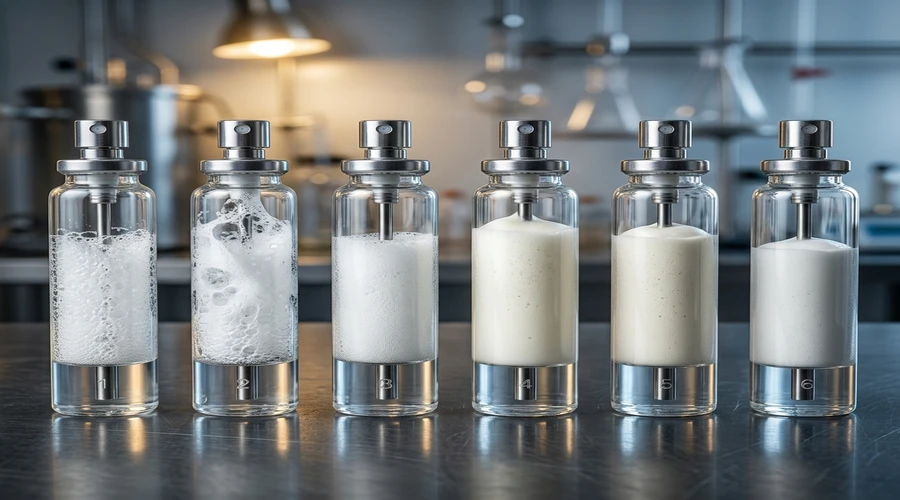
Figure 2: Infographic showcasing foam bubble stability, drainage pathways, and the impact of surfactant structure.
Aerosol Shave Foam Chemistry and Formulation Dynamics
Understanding aerosol shave foam chemistry requires analyzing the molecular interaction between fatty acid soaps and water. A typical shave foam relies on a combination of stearic, myristic, and palmitic acids neutralized in situ with triethanolamine (TEA) or potassium hydroxide. These long-chain carboxylate soaps self-assemble into complex micellar structures. When combined with fatty alcohols, they form a crystalline gel network that traps water molecules within its layers. This gel network increases the mechanical strength of the bubble walls, providing the necessary cushion and lubrication to protect the skin during shaving. Humectants, such as glycerin or propylene glycol, are added to prevent the foam from drying out on the skin surface before the shaving process is complete.
Key Parameters for a Stable Foam Aerosol Formulation
Achieving a stable foam aerosol formulation requires meticulous optimization of several physical-chemical parameters. First, the emulsion must be stable at elevated temperatures to prevent phase separation within the canister, which would lead to inconsistent gassing and variable foam delivery. Second, the propellant blend must be selected to provide a constant vapor pressure throughout the life of the product, ensuring the final spray behaves the same from the first actuation to the last. Third, the internal container surface must be compatible with the aqueous concentrate. Aqueous foams require corrosion-resistant tinplate or lined aluminum cans to prevent chemical oxidation and rust. For market data and general aerosol packaging standards, consult the European Aerosol Federation (FEA).
Formulators must also verify the compatibility of the valve cup gasket. Liquefied propellants, particularly DME, can cause certain rubber elastomers to swell, leading to valve leakage or actuator failure. EPDM or specialized neoprene gaskets are commonly selected for DME-based formulations to maintain seal integrity over time. Extensive stability trials, including freeze-thaw cycles and high-temperature storage testing (45°C for 3 months), are mandatory to validate the long-term physical and chemical stability of the aerosol foam system before mass manufacturing.
Frequently Asked Questions
What is foam aerosol engineering?
Foam aerosol engineering is the technical discipline of designing pressurized systems that produce stable, structured foam upon actuation. It requires balancing surfactant types, emulsion stability, and propellant thermodynamics to control bubble size, expansion ratio, and foam density.
How does surfactant selection affect aerosol foam stability?
Surfactant selection determines the surface tension reduction and the mechanical strength of the bubble walls. Anionic soaps provide rapid foaming and rich lather, while nonionic co-surfactants pack tightly between ionic heads to stabilize the liquid lamellae against drainage.
What is foam drain rate testing?
Foam drain rate testing is a laboratory method used to measure the time required for liquid to drain from the foam structure. It is typically expressed as the foam half-life, which indicates how long the foam remains stable before gravity and capillary pressure trigger bubble collapse.
Why is foam density a critical parameter in aerosol products?
Foam density dictates the texture, spreadability, and cushion of the dispensed foam. Lower density foams are light and break down quickly, which is ideal for sanitizers, while higher density foams provide a rich lather suitable for shaving and styling applications.
What role do liquefied gas propellants play in foam generation?
Liquefied gas propellants dissolve in the liquid concentrate under pressure and flash boil upon actuation. This sudden expansion disperses the surfactant solution into millions of micro-bubbles, forming the gas phase of the resulting foam matrix.
How does container compatibility impact stable foam aerosol formulations?
Since foam concentrates are typically water-based, they pose a high risk of container corrosion. Formulators must select lined aluminum or epoxy-coated tinplate cans to prevent oxidation, chemical reactions, and propellant leakage over the shelf life of the product.
Need Technical Support for Aerosol Formulations?
Partner with the Global Aerosols team to audit, scale up, and troubleshoot your aerosol chemistry, canister pressure calculations, filling lines, and safety systems.
Email: consulting@globalaerosols.com
Website: https://www.globalaerosols.com
Phone: +91 9819548320 +91 8169102990
About the Specialist
Absar Khan is the principal consultant and chemical formulation architect at Global Aerosols. He possesses cross-disciplinary engineering expertise spanning aerosol gassing systems, pharmaceutical manufacturing, sterile injectables, cosmetics, and green chemical plant setups. Absar leads scientific and engineering advisory teams supporting manufacturers globally in technology selection, GMP layouts, validation frameworks, and regulatory strategies.
LinkedIn Portfolio: Connect with Absar Khan on LinkedIn