Aerosol Self-Tanning Products: DHA Spray Delivery & Skin Colour Development
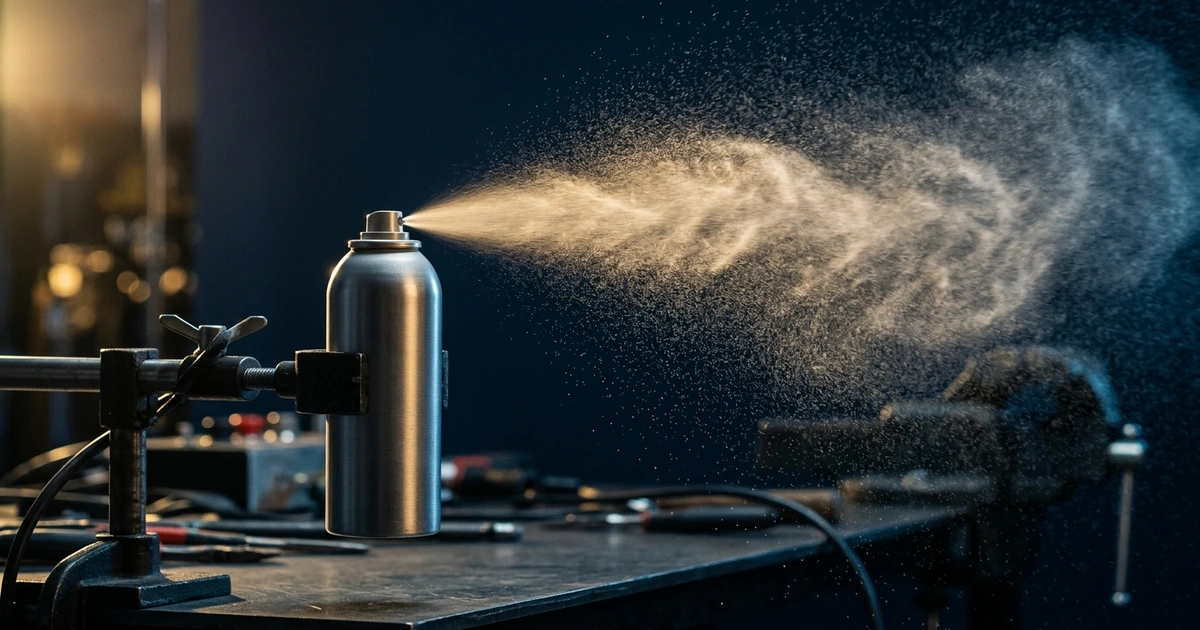
Aerosol self-tanning formulation is the science of delivering dihydroxyacetone (DHA), a colour-developing active, as a fine, even mist that reacts with surface skin proteins to produce a temporary bronzed appearance without UV exposure. It works by combining a reactive sugar chemistry with an aerosol delivery system engineered for droplet uniformity, propellant compatibility, and colour-guide visibility. For product developers and startup formulators entering the sunless tanning category, understanding how DHA chemistry, spray pattern engineering, and propellant selection interact is essential to producing a stable, even-developing, market-ready aerosol product.
How Aerosol Self-Tanning Formulation Works
The active mechanism behind every self-tanning aerosol is the Maillard reaction — a well-documented, non-enzymatic browning reaction between a reducing sugar and free amino groups. In sunless tanning products, dihydroxyacetone reacts with amino acids present in keratin proteins in the stratum corneum, the outermost, non-living layer of the epidermis. This reaction produces brown-to-orange polymeric pigments called melanoidins, which is why a DHA-developed tan is chemically distinct from a UV-induced melanin tan and provides no photoprotective benefit. Because the reaction depends on skin surface chemistry rather than living cellular processes, colour development continues for several hours after application and is strongly influenced by the condition of the stratum corneum at the time of use.
- Reaction site: Outer keratinised skin layer (stratum corneum), not living epidermal cells
- Reaction type: Maillard (non-enzymatic browning) reaction between DHA and skin amino acids
- Onset: Visible colour begins within 1–2 hours; full development within 24 hours
- Fade mechanism: Natural desquamation (skin cell turnover) removes the coloured outer layer over several days
Because the tan sits entirely within the stratum corneum, pre-application exfoliation is a well-established variable affecting both evenness and depth of colour — thicker, drier skin regions such as elbows, knees, and ankles typically absorb more DHA and develop darker, which formulators and consumers alike must account for. For a broader grounding in how active ingredients interact with delivery systems across the category, see our Cosmetics & Personal Care Aerosols guide.
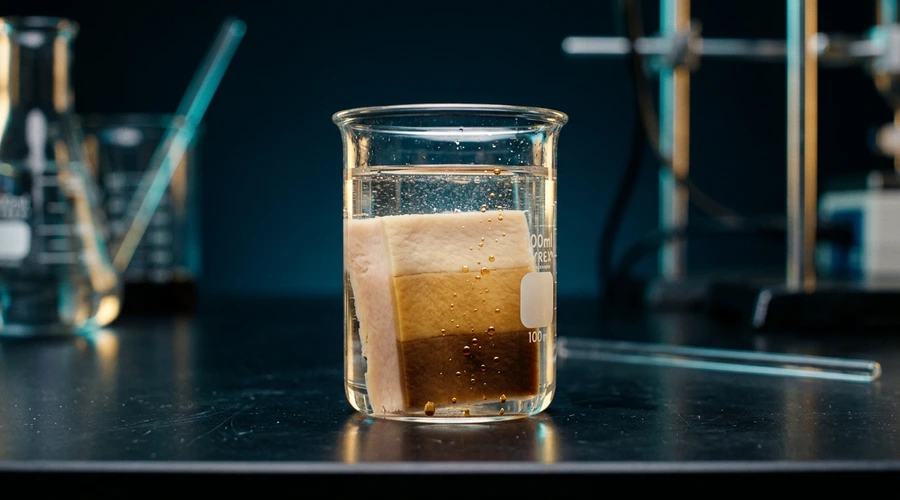
Laboratory comparison of DHA colour development on skin model substrates, illustrating how reaction depth and exposure time influence the final bronzed tone.
DHA vs Erythrulose: Comparing Self-Tan Active Chemistry
Dihydroxyacetone is the primary colour-developing active across virtually all sunless tanning products, aerosol or otherwise, and its chemistry and safety profile are well documented. According to PubChem chemical data, DHA (CID 670) is a small three-carbon ketose sugar with high water solubility, which supports its rapid diffusion into the stratum corneum but also makes it reactive and pH-sensitive during formulation and storage. Erythrulose, a four-carbon sugar, undergoes the same Maillard chemistry but at a measurably slower rate, which formulators use to extend colour development and shift the final hue. Combining the two actives is a well-established formulation strategy for a more natural-looking, longer-developing result.
| Property | DHA (Dihydroxyacetone) | Erythrulose |
|---|---|---|
| Carbon chain length | 3-carbon ketose (triose) | 4-carbon ketose (tetrose) |
| Reaction rate | Fast — visible colour within 1–2 hours | Slower — colour builds over 24–48 hours |
| Typical resulting tone | Warmer, orange-leaning brown | Cooler, more neutral brown |
| Common formulation role | Primary active, fast colour | Secondary active, colour longevity and tone correction |
| Regulatory status (US) | FDA-approved colour additive for external cosmetic use | Permitted cosmetic ingredient; not separately FDA colour-additive listed |
The primary keyword driving formulation decisions in this category — aerosol self-tanning formulation — depends heavily on getting this active ratio right, because DHA-erythrulose blends behave differently in terms of dry time, tackiness, and staining risk on fabric, all of which are amplified or dampened by the aerosol delivery format compared to lotions or gels. Selection of active concentration and ratio remains a formulation-specific decision guided by target tone and desired development speed, not a fixed industry formula.
Aerosol Delivery & Spray Pattern Engineering
Converting a DHA solution into a well-performing aerosol product requires spray pattern engineering distinct from other personal care aerosol categories. Unlike a hairspray or deodorant, where a slightly uneven mist has minimal visible consequence, self-tanning aerosols reveal deposition inconsistency directly as visible streaking or patchiness once colour develops. Valve orifice diameter, actuator design, and propellant vapour pressure jointly determine droplet size distribution and spray cone geometry, all of which must be tuned for even coverage at typical application distance.
Droplet Size and Coverage
Finer droplet distributions generally produce more even coverage but slower drying and greater risk of overspray drift, while coarser droplets dry faster but risk visible mottling if overlap is inconsistent. Formulators balance this trade-off against the practical constraint that self-tanning aerosols are typically applied at arm's length across large body surface areas, unlike more localised personal care sprays. As covered in our Aerosol Chemistry 101 guide, carrier solvent choice also affects droplet formation at the valve orifice, which is a further variable specific to self-tanning formulation work.
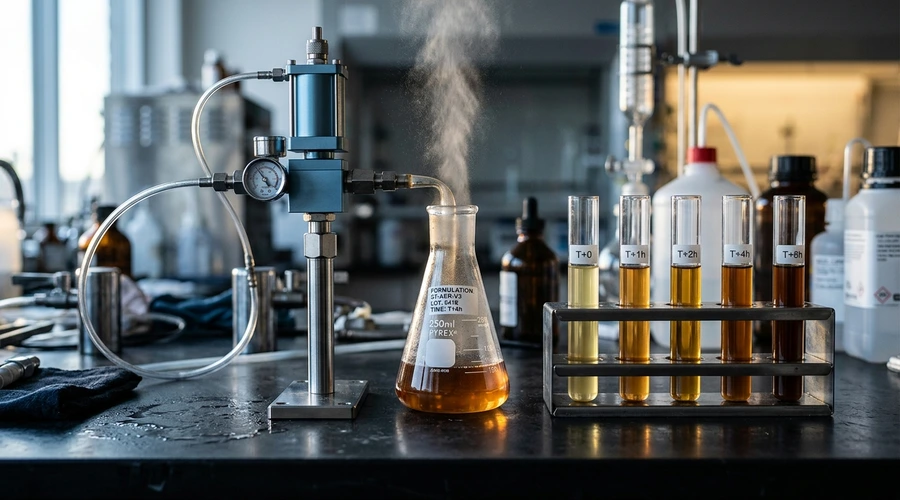
Sunless tanning aerosol formulation samples showing the characteristic brown Maillard development reaction as DHA concentration and reaction time are varied.
Propellant Selection for DHA-Stable Aerosol Systems
Propellant selection for a DHA aerosol tanning spray must satisfy the same physical performance requirements as any cosmetic aerosol — appropriate vapour pressure, spray characteristics, and can compatibility — while also avoiding chemical interaction with a reactive sugar active. DHA is prone to degradation through the same Maillard pathway that creates the tan; elevated temperature, moisture ingress, and certain pH conditions can trigger premature browning inside the can before the product ever reaches the skin. Propellant and carrier system choice must therefore account for long-term chemical compatibility, not just spray mechanics.
Hydrocarbon propellant blends (isobutane/propane systems) remain common in cosmetic aerosols generally, offering fine, consistent mist characteristics well suited to even DHA deposition. Compressed gas systems using nitrogen are also used in some sunless tanning aerosols, particularly where formulators want to minimise propellant contact with the DHA-active phase, since compressed gases in a bag-on-valve configuration physically separate propellant from product. NIST WebBook thermodynamic data on hydrocarbon propellant vapour pressure curves informs the can pressure and spray rate targets formulators use when validating a new self-tan aerosol system.
Regulatory Compliance for Sunless Tanning Aerosols
Regulatory treatment of self-tanning aerosols differs meaningfully between the United States and the European Union, and product developers targeting both markets must account for both frameworks from the outset of formulation work. In the US, the FDA regulates DHA as an approved cosmetic colour additive for external application, but has specifically noted that it has not evaluated DHA safety for use in a spray or mist format that could result in incidental inhalation or contact with eyes and mucous membranes — a distinction directly relevant to any aerosol self-tanning product, since spray delivery inherently creates airborne exposure that lotion or gel formats do not.
- US: DHA approved as external cosmetic colour additive (FDA); no separate aerosol-specific DHA clearance, but general cosmetic aerosol labeling and safety requirements apply
- EU: Regulated under EU Cosmetics Regulation 1223/2009, requiring a Cosmetic Product Safety Report and CPNP notification before market placement
- Ingredient classification: DHA and other formulation ingredients must be checked against the ECHA REACH registration database for any market where the product will be sold
Because aerosol delivery inherently produces airborne droplets, formulators should design application instructions — recommended spray distance, avoidance of the face, and use in ventilated areas — that reduce inhalation exposure risk, and should reference current FDA guidance directly rather than assuming lotion-format DHA safety data extends automatically to spray formats. This is a category-specific compliance consideration that distinguishes aerosol self-tanning products from other DHA delivery formats.
Formulation Stability & Shelf-Life Considerations
DHA's reactivity is a double-edged sword for formulators: the same Maillard chemistry that creates the desired tanning effect on skin will also slowly darken the product itself in the can if pH, temperature, and moisture are not controlled. Aerosol self-tanning products typically require pH buffering to slow premature DHA degradation, protection from elevated storage temperatures, and packaging materials confirmed compatible with the active system to prevent catalytic degradation from trace metal contact. Accelerated stability testing under standard cosmetic industry temperature-cycling protocols is the primary method for establishing a validated shelf life before commercial launch.
Colour Guide and Bronzer Additives
Because DHA-driven colour takes hours to become visible, many aerosol self-tanning formulations incorporate a temporary cosmetic bronzer or colour guide — typically a wash-off pigment or water-soluble dye — so users can see exactly where product has landed during application and avoid streaking or missed patches. This guide colour is chemically independent of the DHA reaction and rinses away on first contact with water, while the true DHA-developed tan remains on the skin. Formulators must verify that any guide colourant is compatible with the aerosol delivery system and does not interfere with DHA stability or staining behaviour on skin, hair, and fabric.
For teams moving from lab-scale DHA formulation trials to a commercial aerosol production run, the transition introduces additional variables — fill line compatibility with a reactive active, batch consistency validation, and packaging material qualification — that are covered in more depth in our lab-to-commercial launch guide. Manufacturers evaluating co-packing or private-label aerosol production specifically for cosmetic actives should also review our cosmetic aerosol manufacturing overview and, where UV-protective claims are being considered alongside a self-tan line, our dedicated guide to aerosol sunscreen spray formulation for the distinct regulatory and stability requirements that apply to SPF products.
Frequently Asked Questions
What is DHA and how does it create a tan in aerosol self-tanning products?
How long does it take for an aerosol self-tanner to develop colour?
Why do aerosol self-tanning sprays use erythrulose alongside DHA?
Is the propellant system in a self-tanning aerosol different from other cosmetic aerosols?
Why do some self-tanning aerosols include a colour guide or bronzer?
What causes uneven colour or streaking in aerosol self-tanning application?
Are aerosol self-tanning products regulated as cosmetics or drugs?
Can aerosol self-tanning sprays be formulated without alcohol?
Need Expert Aerosol Consulting?
Our team provides end-to-end aerosol technical consultancy — from formulation development and propellant selection to filling line setup, regulatory compliance, and market launch strategy.
Get a Free Consultation